On a familiar walk, you might notice more leaves on the ground, the light reaching a different part of the fence, or a seed caught on your sleeve. Each gives you something to look for when you come back.
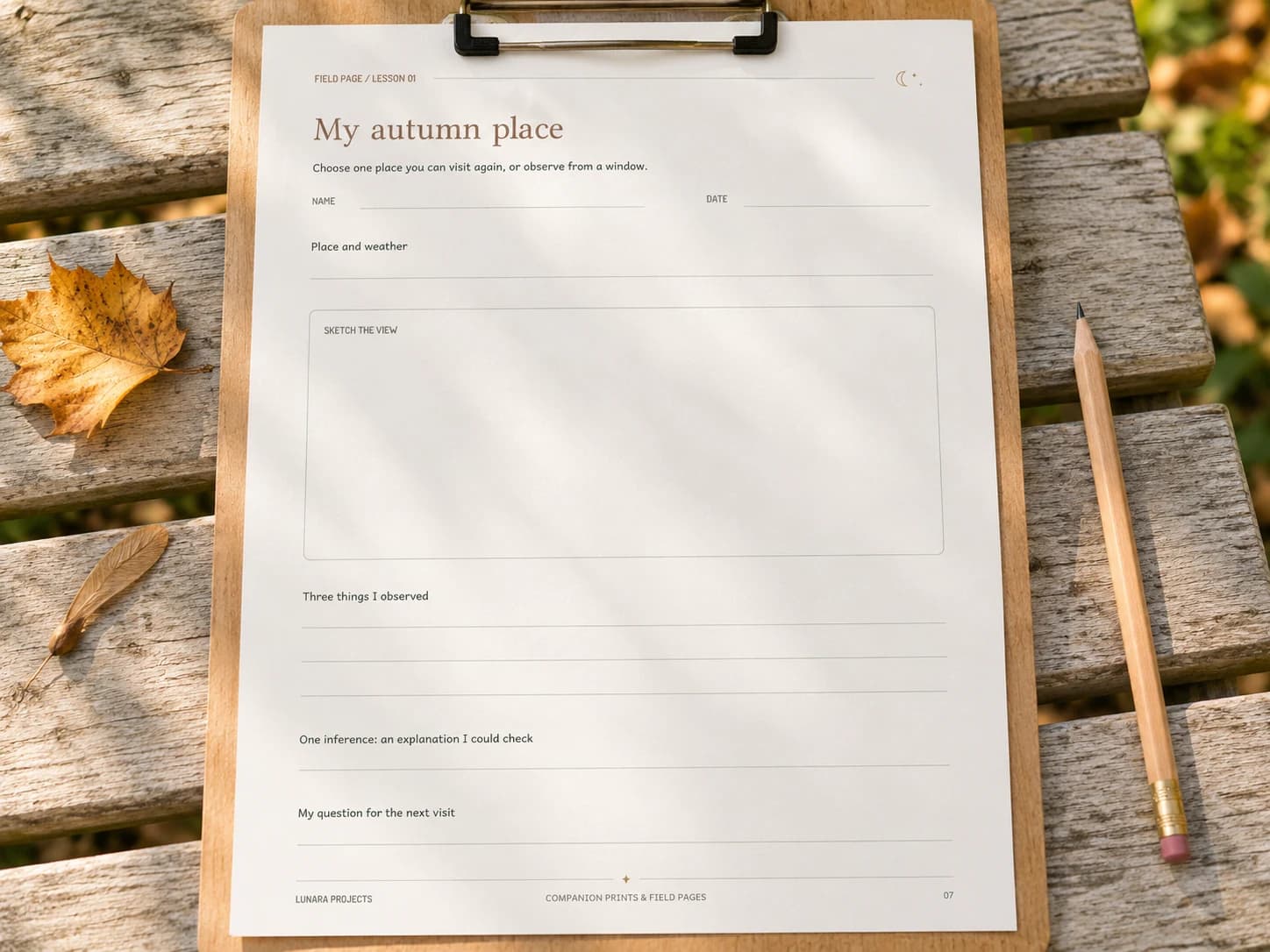
Choose a place you already pass and jot down a few things you notice, along with the date. When you come back, bring that page with you so you can compare what you see with your earlier notes.
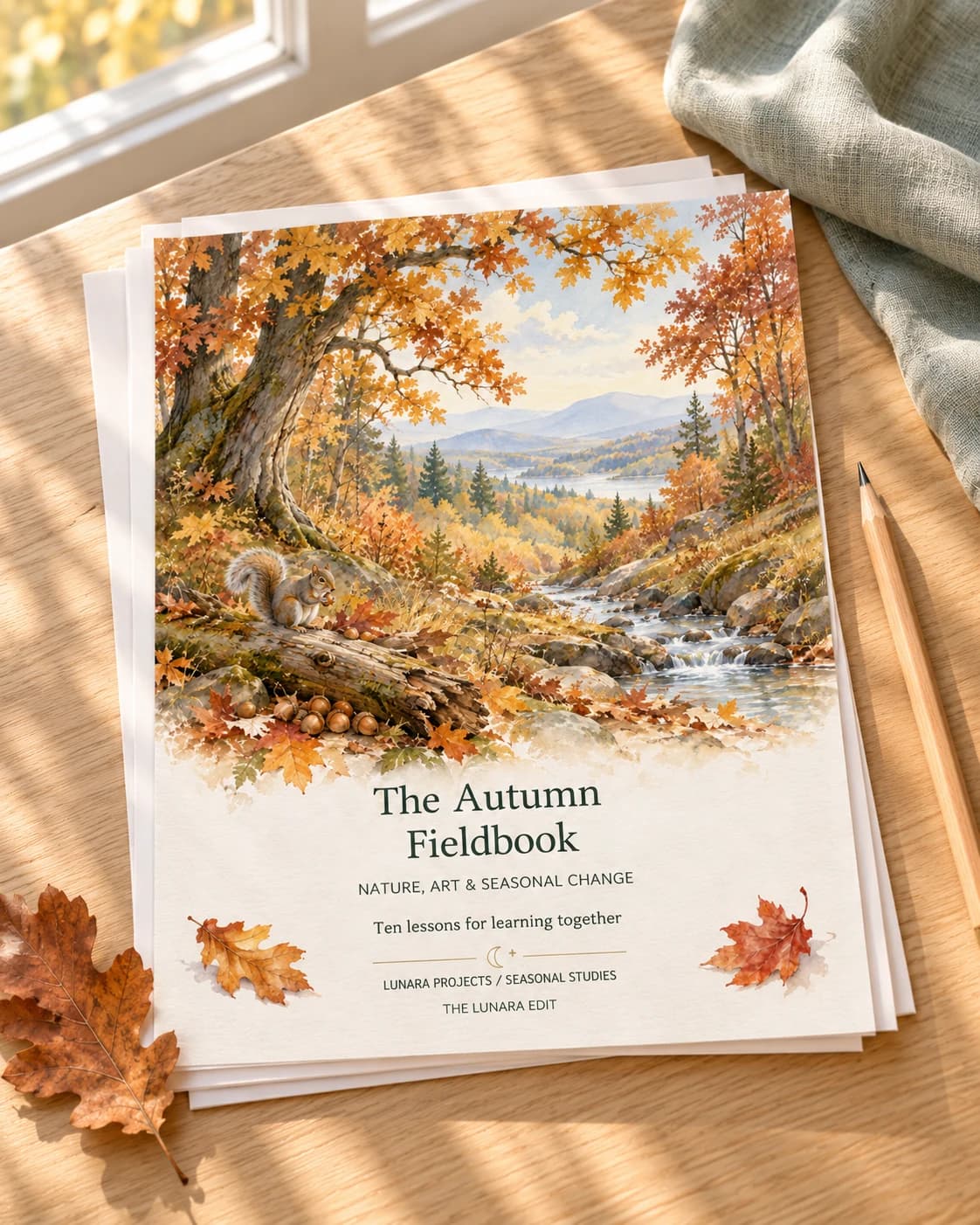
The Autumn Fieldbook builds on these repeat visits. It’s a printable nature and art study from Lunara Projects. You can try the observation below on ordinary paper. The full Fieldbook adds readings, art prints, field pages, and parent guidance for following the season further.
An activity to begin with
Choose one place you can visit again.
A tree, a small park, a patch of garden, or a window view will do. Choose somewhere you can observe comfortably and return to without arranging a whole expedition. Returning to the same spot lets you follow what happens there over time.
Bring paper and a pencil. On the first visit, make a short record:
- Date and place. Add a brief weather note, such as cloudy, breezy, or recently wet.
- A quick sketch. Put the tree, fence, path, or another recognizable feature on the page.
- Three things you noticed. Name a color, sound, shape, movement, or texture.
- One question. Keep something you would like to check when you return.
A child can draw, dictate while you write, or tell you what to record. Someone who enjoys writing can add more detail. Aim for a record you’ll both understand when you come back.
When you return after a few days or whenever it fits your week, bring the earlier page. Ask what looks different and what still seems the same. Keep the dates visible, even when the answer is “I didn’t notice a change today.”
When your child has an explanation.
Children often move straight from seeing something to explaining it. “The leaf has a hole” can quickly become “A caterpillar ate it.” That is a useful possibility to keep, and a chance to ask what else you would need to know.
A CONVERSATION TO TRY
Child: “A caterpillar ate this leaf.”
Adult: “A caterpillar could have made it. Did we see one eating the leaf, or are we guessing from the hole?”
Next question: “What could we look for that would help us check?”
Write the visible detail under what we noticed and the explanation under what we think might have happened. A photograph, a closer look, or a reference book may help. If you’re still unsure, write “We don’t know yet” and leave the question on the page to come back to.
If you’ve looked at a few leaves from one tree, keep your explanation that specific. Help an older learner describe what they saw: “The three leaves we looked at had more yellow on the second visit.”
Follow what catches your attention.
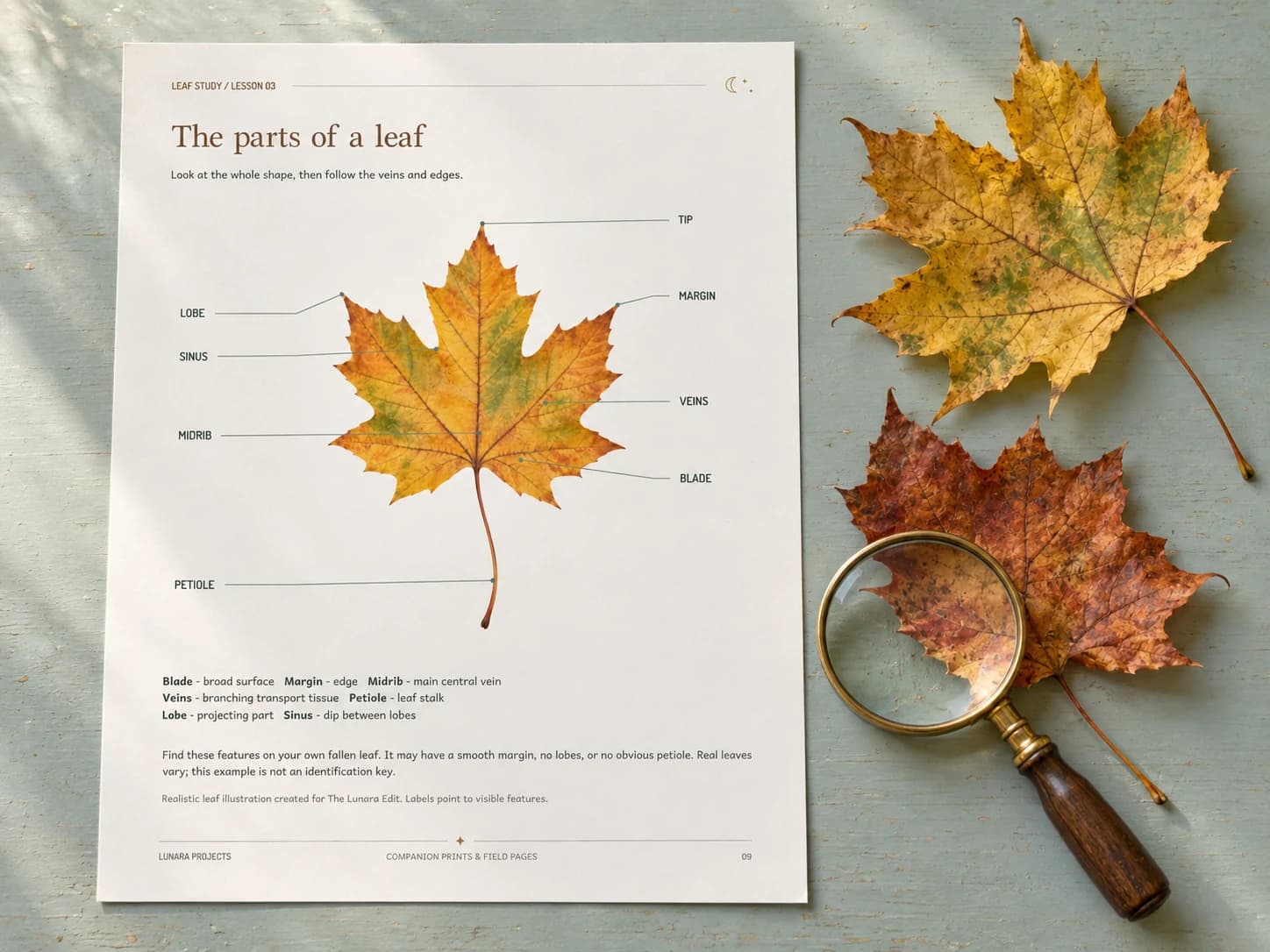
Try drawing a fallen leaf: follow its edge, notice where veins branch, and compare its shape with another leaf. If you spot a squirrel, watch for a while and record what it does, even if it disappears before you see where it goes. Leave wildlife and their stores undisturbed.
You can follow changes in daylight, too. Use local sunrise and sunset times to compare the length of daylight across several dates. Keep the location and source consistent. The Fieldbook examples focus on temperate Northern Hemisphere autumn; your records should reflect the place where you live, including an autumn that stays green.
You can also bring an observation into words. Start a short poem with something concrete: the sound of a dry leaf, a color against the fence, or a squirrel pausing on a wall. It can rhyme, but it doesn’t have to.
Look at autumn through two painters’ eyes.
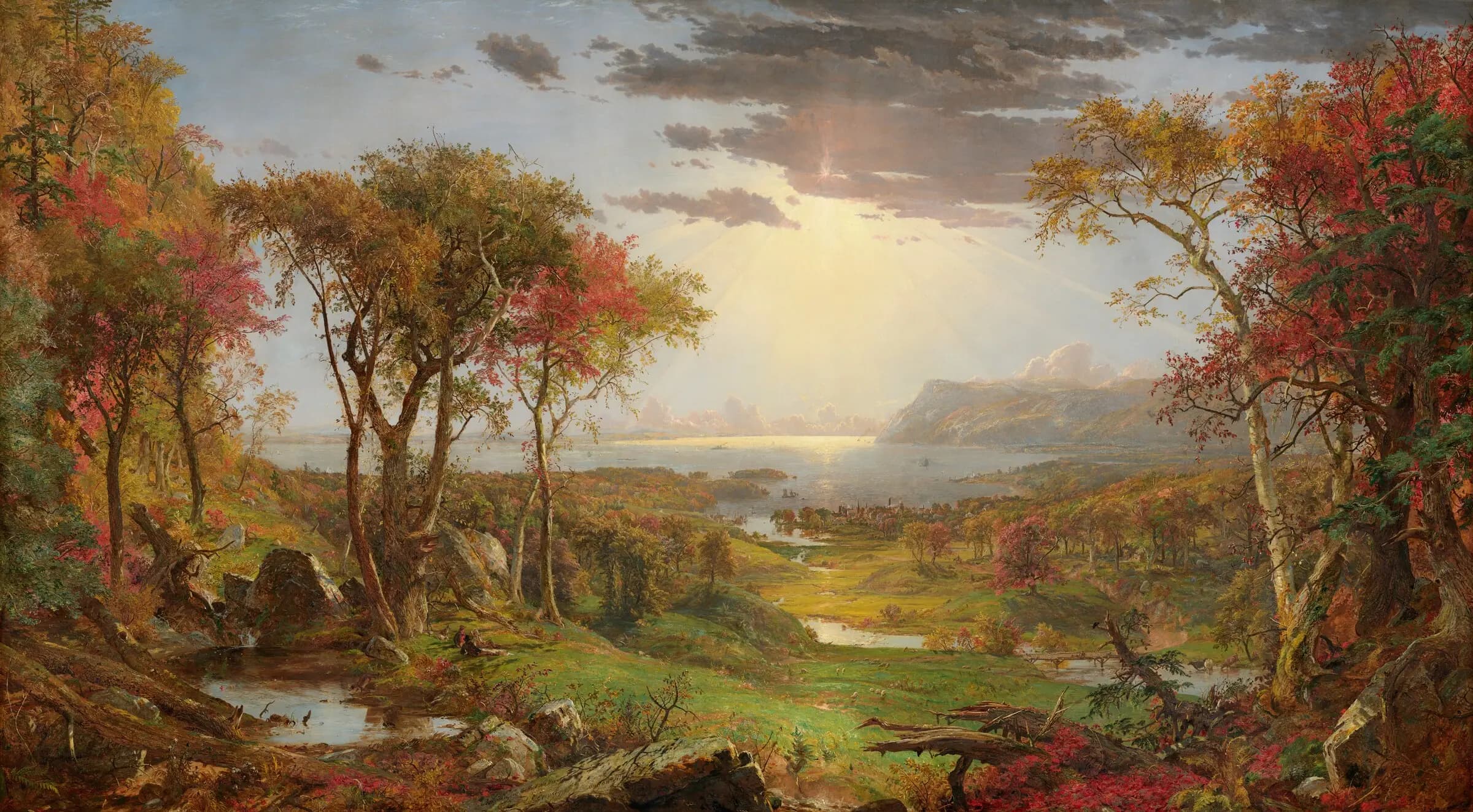
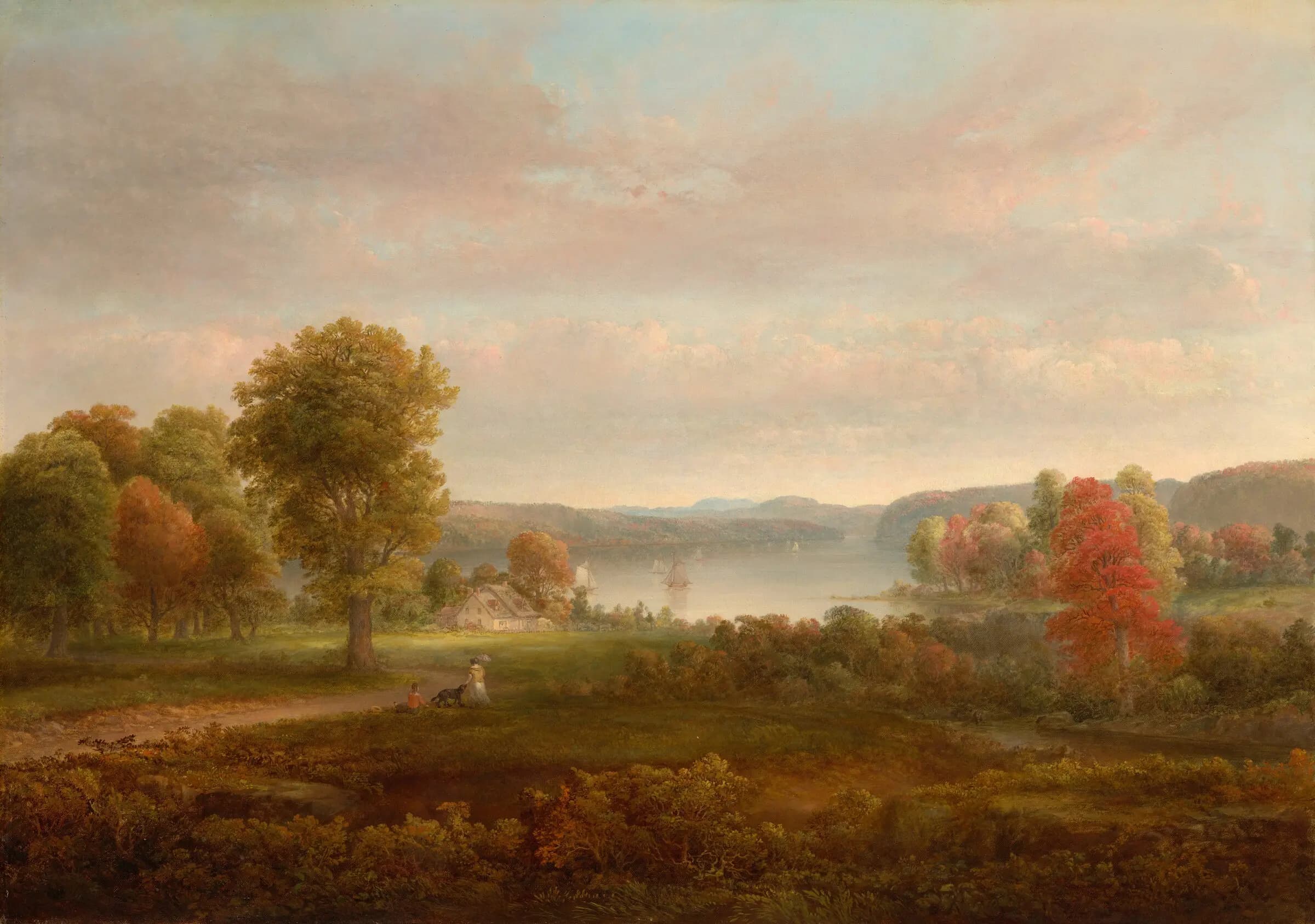
Nature study and art study give you different ways of paying attention to a landscape. The Fieldbook pairs Jasper Francis Cropsey’s Autumn – On the Hudson River (1860) with Thomas Doughty’s View on the Hudson in Autumn (1850). Both images come from the National Gallery of Art’s public-domain collection.
Give each painting a quiet first look. Ask your child where their eye goes, which colors they can find, and which detail they would like someone else to notice. Then compare the two. “This sky takes up more space” or “I found a tiny person here” is a good place to begin.
If you want to make something afterward, mix a small palette inspired by one painting, then use those colors in a drawing or painting of your own place. You can discuss the choices an artist made while keeping your field observations as records of what you saw.
Fit the study into your week.
The full Fieldbook offers ten lessons. Two a week gives you a five-week route, and you can spend longer with a question that catches your attention. Most lessons can begin with 25–40 minutes together; making and later observations can happen on another day.
For a shorter route, choose the familiar-place observation, the paintings, and the leaf study. Or choose one lesson for an afternoon. You can read the guide on a screen and print the field pages you will use.
The guide includes simpler ways to join in, extensions for older learners, and parent prompts for conversations that need a little help. Family members can work from the same question while drawing, dictating, writing, or talking it through.
The fuller study
What is inside The Autumn Fieldbook?
A 31-page family guide and a 21-page companion: 52 pages in two US Letter PDFs. The guide holds the readings and teaching notes. The companion holds the two historical art prints, diagrams, field records, and cut-apart labels.
- A place to return to
- Autumn through a painter’s eyes
- The architecture of a leaf
- The colors that emerge
- The turning of the light
- A squirrel’s hidden stores
- Seeds on a journey
- Life beneath the leaves
- Autumn in words
- A small autumn museum
The squirrel lesson includes a two-round cup-and-token cache game with a separate A–F label sheet. It invites children to try a remembering strategy and discuss what happened. The final museum lesson gathers records, drawings, found objects, and an open question into a small display.
This is a secular study designed mainly for ages 6–12. It is a digital download; no physical book is mailed. Both files use 8.5 × 11 inch pages. Print at Actual Size / 100%, or use Fit to Printable Area if your printer clips an edge.
Explore Lunara Projects on Etsy (opens in a new tab)Put together a small autumn museum.
At the end of your study, choose a few things that tell the story of your place: an early sketch, a later record, a leaf drawing, or a short poem. Add a date and a label explaining what you noticed. Use photographs or drawings when an object needs to stay outdoors.
Invite someone to look around and ask what they notice. Include a question you’re still wondering about; you can come back to it on your next walk.
Tomorrow I will walk this way
From “Along the Same Path,” The Autumn Fieldbook
to find what changed
and what did stay.
For another small investigation, try our pumpkin nature study. For a lighter approach to seasonal plans, read how to use seasonal learning without turning it into more school.