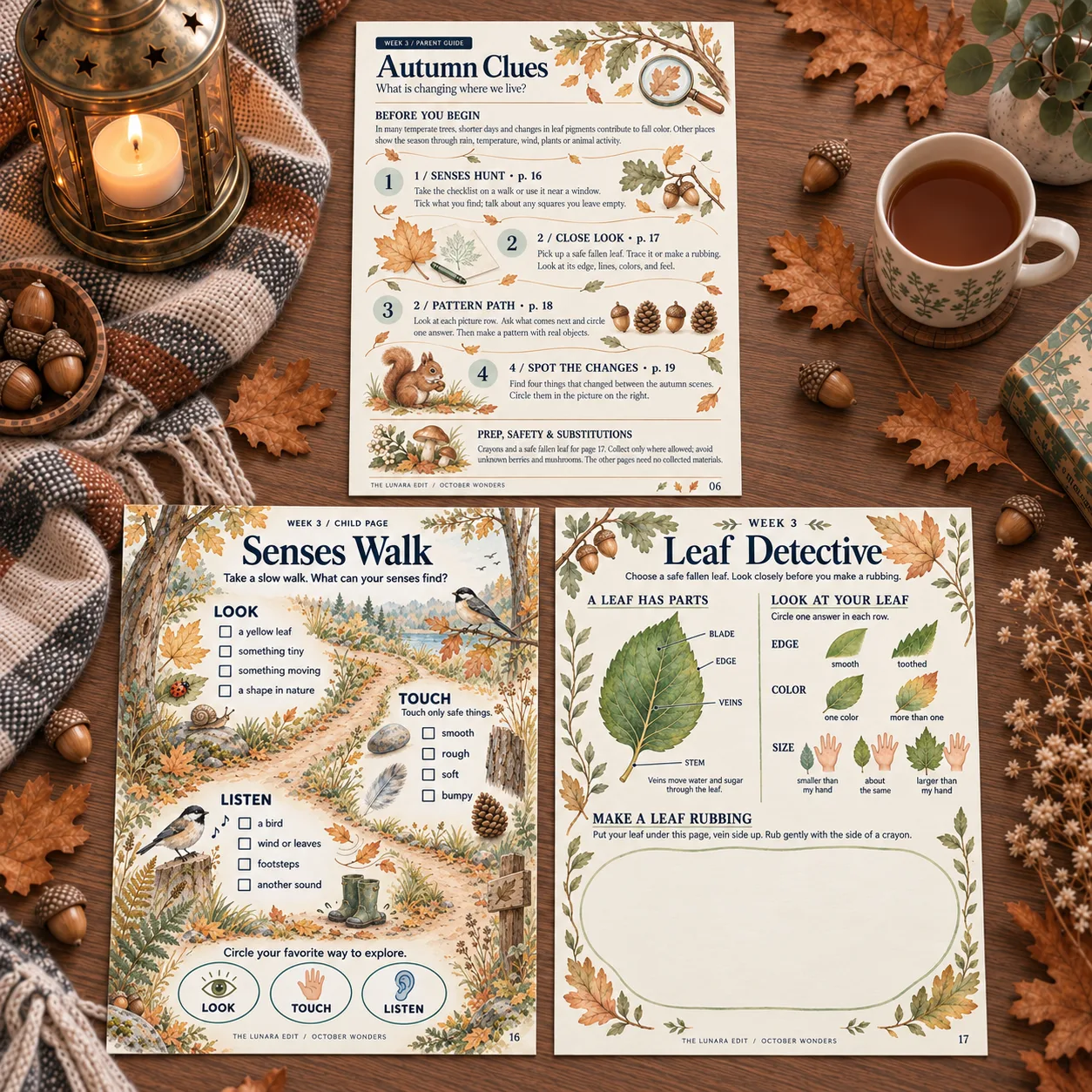
October has a way of volunteering itself as curriculum.
There are pumpkins on porches, leaves changing underfoot, earlier sunsets, migrating birds, colder mornings, Halloween questions, seeds tucked inside fruit, and suddenly-visible spiderwebs catching dew. You can turn all of that into worksheets, unit studies, vocabulary lists, crafts, experiments, copywork, and a color-coded plan that requires its own clipboard.
I love making learning resources. I also think it is surprisingly easy to take something a child was already curious about and make it feel like one more thing to complete.
So when I say seasonal learning, I do not mean replacing your regular homeschool with a second curriculum wearing an adorable little acorn hat. I mean using the season as a doorway: notice something, follow it for a while, give the child a way to record or play with what they found, and then let the door close when they are done.
Start with what is already there
Let the season make the first move.
You do not have to invent a theme because October has already supplied one. A pumpkin on the counter can become anatomy, counting, measuring, prediction, cooking, decomposition, seed sorting, or simply a very messy sensory experience. A leaf can become a color study, a rubbing, a shape comparison, a tree-identification question, or something beautiful your child puts in a pocket and forgets about until laundry day.
The trick is not squeezing every possible subject out of the object. It is watching for the question that has some energy behind it. Why are there strings inside the pumpkin? Why did this leaf turn red? Where do bats go in winter?
That question gives you your thread. You can look something up together, draw what you saw, measure it, read a book, try an experiment, or leave it alone after a ten-minute conversation. All of those count.
Follow one thread
You do not need to teach the entire pumpkin.
This is where I have to restrain myself, because one interesting question immediately breeds six more. Once I start researching a topic, I want the anatomy diagram, the history, the folklore, the science experiment, the read-aloud, the field trip, and possibly a small museum exhibit in my dining room.
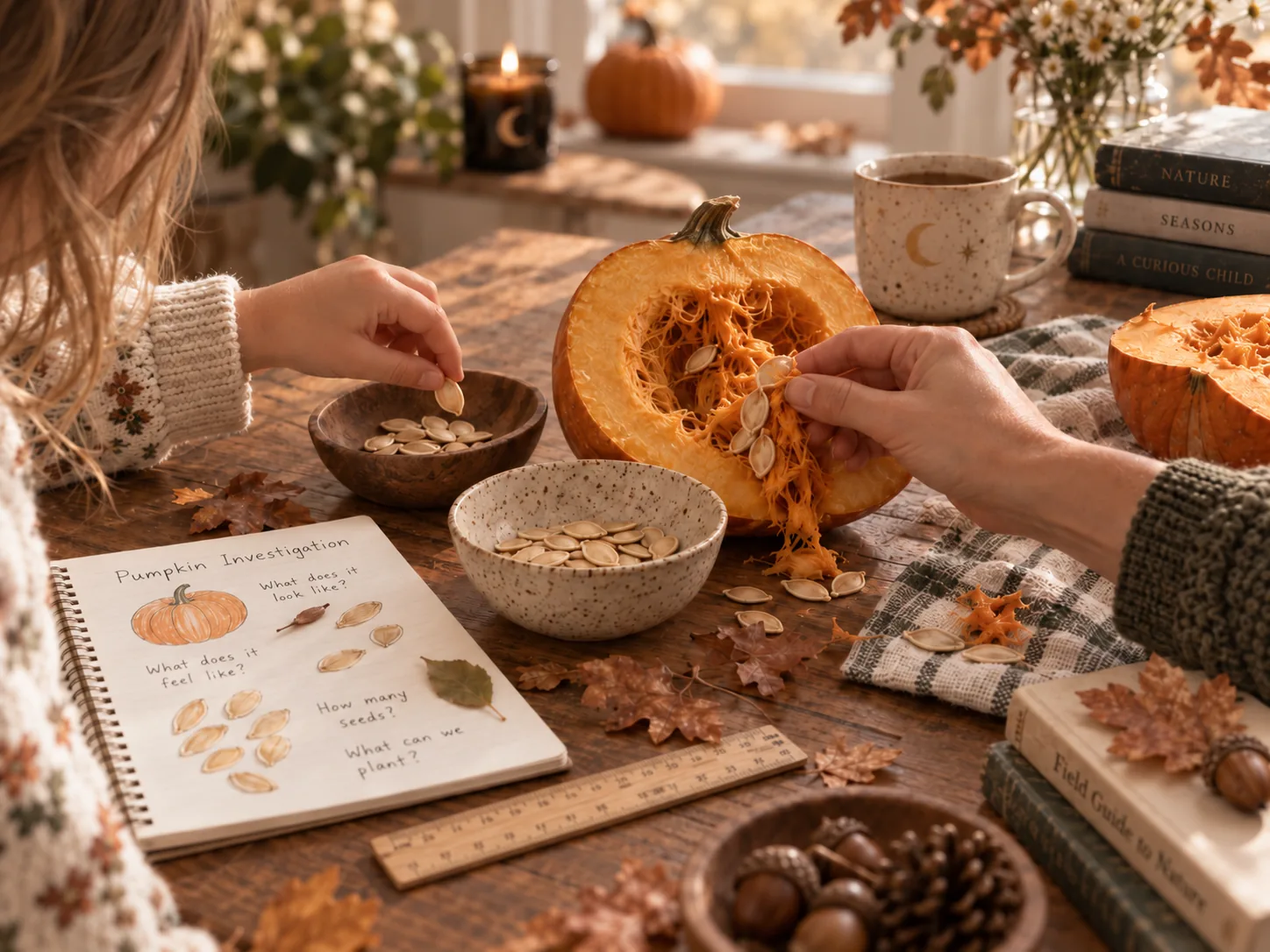
Children do not need all of that every time. Choose one or two ways into the idea and let them be enough. If your child wants to know what is inside a pumpkin, cut one open. Name the parts you can see. Count or sort some seeds. If another question appears naturally, follow it. If the child wanders off to build something with cardboard, the lesson is allowed to be over.
A seasonal study can be five minutes or an afternoon. The length is not what makes it meaningful.
Notice before explaining
Give observation a turn before the answer arrives.
When we already know something, it is tempting to begin by explaining it. I try to hold the answer back for a minute and ask what the child notices first.
What do you see? What feels different from last week? Which leaf is driest? What do you think is making that sound? Which part of the pumpkin do you think protects the seeds? What makes you think that?
They may be wrong. That is useful too. A prediction gives them something to compare with what they discover next. We can correct the science without making the first observation feel like a test they failed.
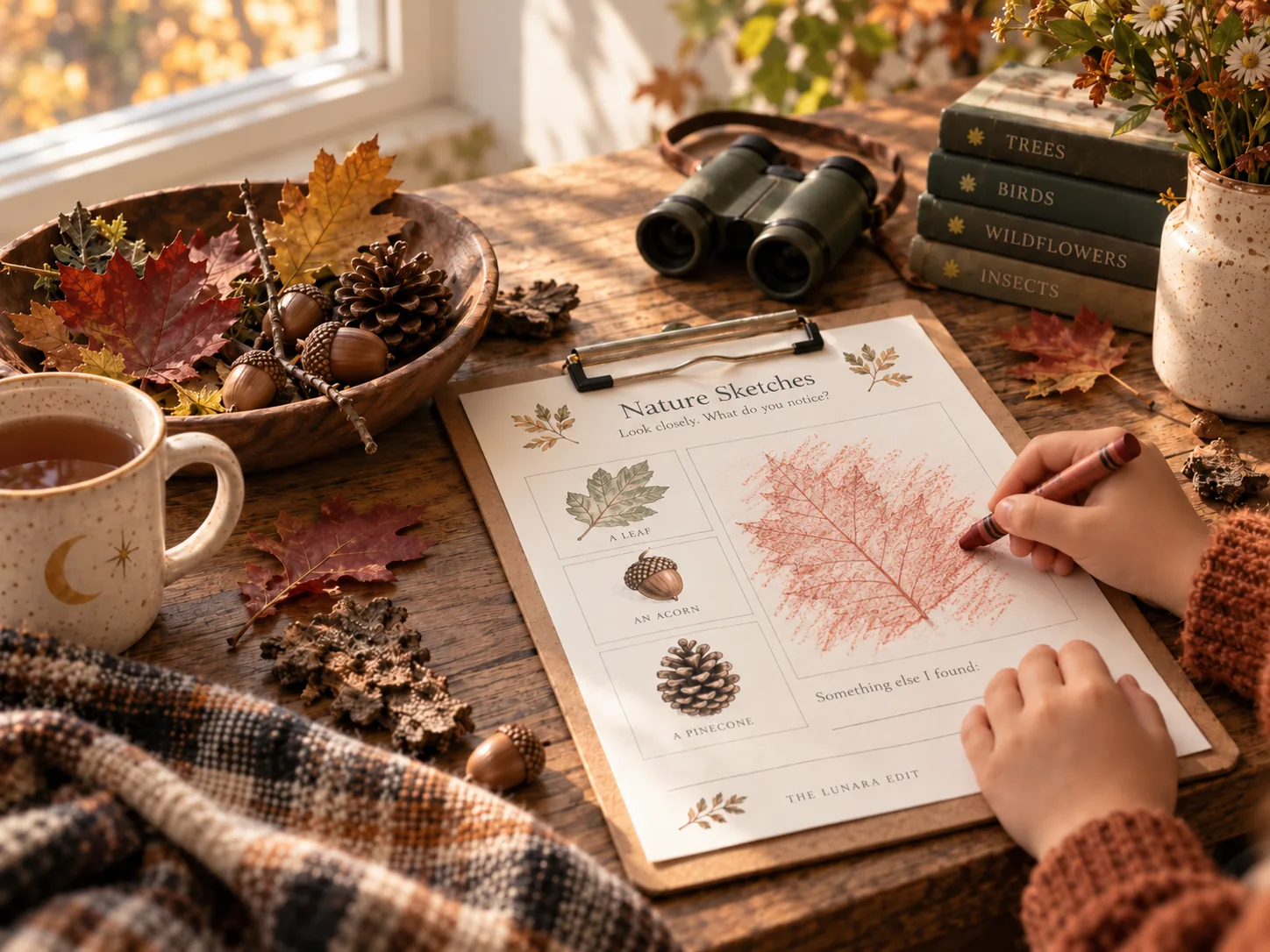
This is one reason I like field-guide-style activities more than pages built entirely around right answers. The page can hold a sketch, a guess, a measurement, a rubbing, or a few words about what happened. It becomes a record of looking closely.
Use paper as a container
The worksheet should hold the wondering, not replace it.
There is nothing inherently wrong with a worksheet. I make a ridiculous number of them. The problem is when the paper becomes the experience instead of helping the child notice, remember, compare, or create something from the experience.
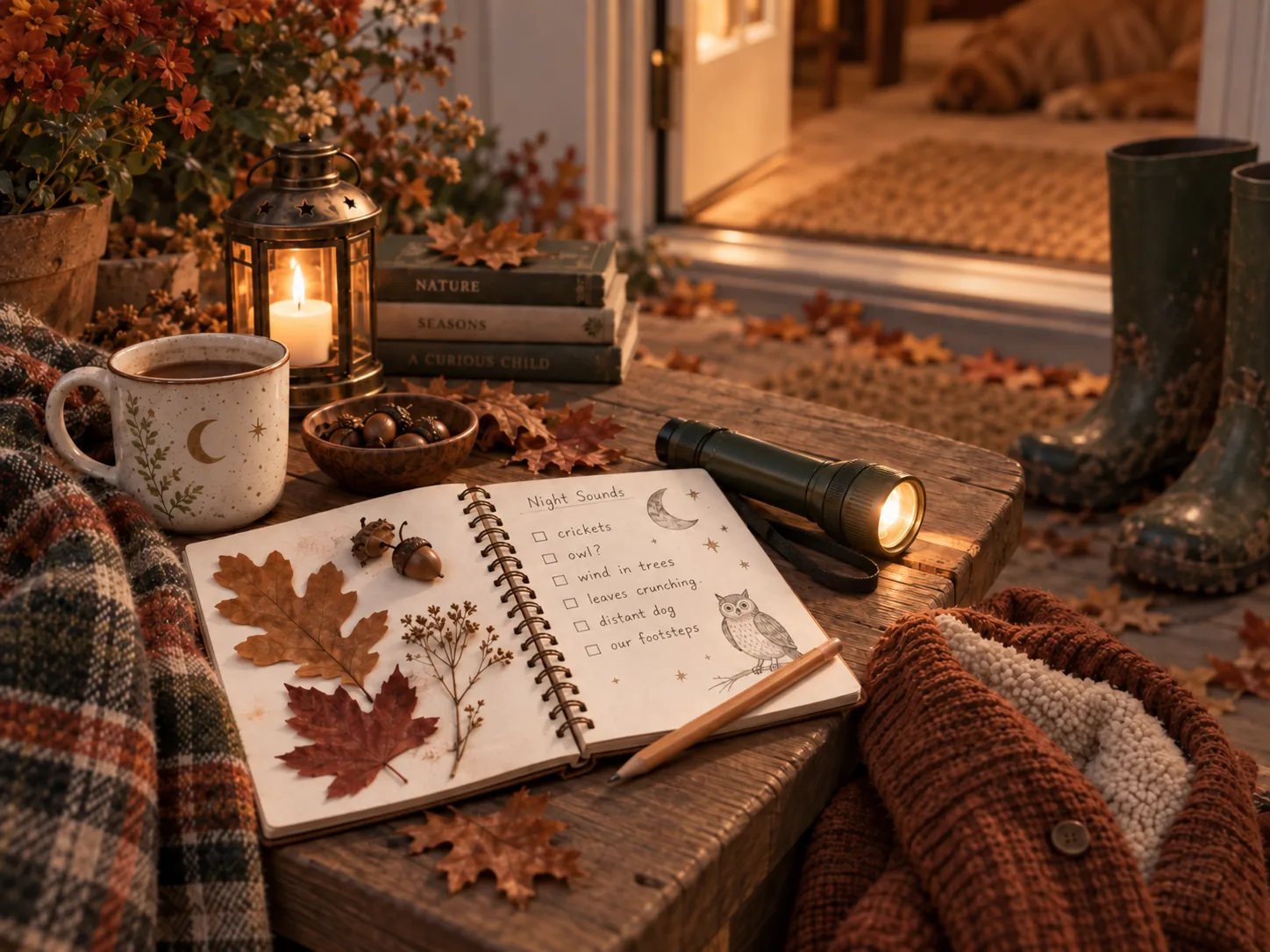
If the activity says to go outside and use your senses, go outside first. If it asks the child to draw a leaf, let them choose an actual leaf. If you are learning about night animals, step onto the porch after dark and listen before opening the page.
Sometimes the child will want to fill out every box. Sometimes they will dictate while you write. Sometimes you will do the activity and never touch the printable at all. The paper is a tool. It does not get to become the boss of the afternoon.
Know when to stop
Curiosity can survive an unfinished page.
A seasonal activity has done its job when the child has looked a little closer, asked something, tried something, made a connection, or simply enjoyed being part of the season.
You do not have to extract evidence of learning from every moment. If the child has had enough, stopping protects the part we actually wanted in the first place: the feeling that the world is interesting and worth paying attention to.
That is also why I like seasonal resources as supplements rather than schedules. We can pull out the pumpkin pages when we happen to bring home pumpkins. We can save the night-animal activity for an evening when someone hears an owl. We can take the leaf page to the park after the trees finally start changing.
If you want a little structure ready to go
This is the idea behind October Wonders.
I made October Wonders for ages 4–7 around this exact rhythm: four loose weekly themes, short activities, parent notes, and plenty of reasons to leave the table.
There are pumpkin investigations, night animals, autumn clues, stories, patterns, counting, measuring, observation, and little creative prompts—but you are not meant to march through all 24 pages because the calendar says so.
Pick the page that matches what your child is already noticing. Take it outside. Skip whatever does not fit. Come back to another piece later. The workbook is there to make seasonal learning easier to begin, not harder to complete.
Explore October Wonders →The part worth keeping
Seasonal learning can be small.
You do not need a themed shelf, seven coordinating picture books, or an October binder thick enough to injure someone. You need a world that keeps changing and enough space in the day to notice.
Cut open the pumpkin. Stand outside after dark. Bring home the strange leaf. Wonder why the mornings suddenly smell different.
Then stop while everyone still wants to know what happens next.