Open the book and the scent arrives before the first sentence: warm paper, old shelves, and something faintly sweet.
Books release volatile compounds from paper, ink, adhesives, bindings, and substances absorbed during their lives. As those materials age, the changing mixture can become noticeable in the air. Conservators study the same emissions that readers casually describe as “old-book smell.”
What reaches your nose
Volatile organic compounds leave the book and enter the air.

Volatile organic compounds, usually shortened to VOCs, are carbon-containing chemicals that can evaporate under ordinary conditions. Books and the rooms that hold them contain many possible sources: paper fibers, sizing, inks, glues, leather, wood, storage materials, cleaning products, and human activity.
A pleasant old-book scent has no single recipe. University of Colorado Boulder Libraries notes that people use words such as chocolate, coffee, smoke, wood, and vanilla to describe it. Those are sensory comparisons, not a chemical inventory. Different materials and different rates of degradation produce different mixtures.
A scent with information
Conservators can study emissions for clues about paper condition.
As paper and other book materials change, the types and amounts of VOCs they release can also change. Preservation scientists use instruments such as gas chromatography and mass spectrometry to separate and identify compounds in air samples.
The Library of Congress studies VOCs both as products of collections and as possible causes of further damage. Its preservation program specifically notes acetic acid and aldehydes, including formaldehyde, among compounds that can harm paper. A smell may therefore be enjoyable to a visitor while the chemistry also matters to the object’s future.
Chemistry meets interpretation
Researchers also ask whether a library’s smell belongs to its history.
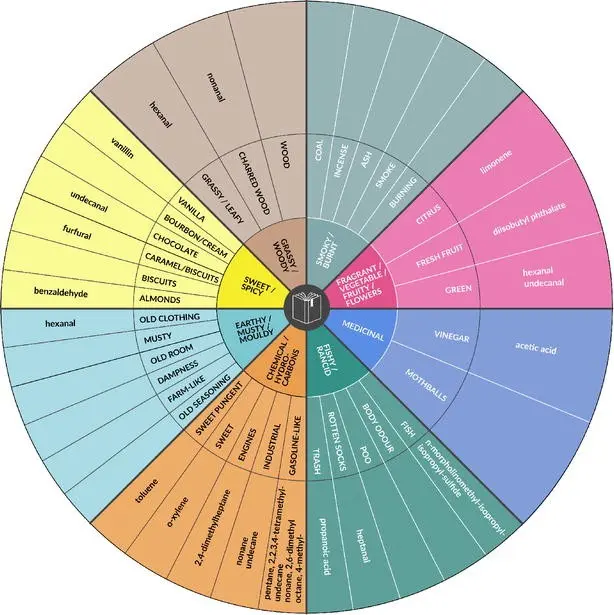
Cecilia Bembibre’s UCL doctoral research examined old books and historic libraries as one of four case studies in heritage smell. The project combined chemical analysis, sensory evaluation, and tools such as odor wheels. It treated human descriptions as evidence alongside instrument readings. The wheel shown here places broad scent families around the outside, then connects more specific words with compounds found in the samples.
The research found that context changes how people characterize historic smells. Knowing that a room is old, seeing shelves of books, and bringing personal memories can shape the experience. The molecules matter, and so do the associations a visitor carries into the room.
Make a tiny scent record
Describe two sound, dry books before checking their ages.
Choose two clean books without visible dampness or mold. With the books resting at an ordinary reading distance, write down two or three scent words for each. Then check the publication dates and compare the paper, binding, and storage history you know.
Age alone may not explain the difference. A newer paperback, an older clothbound book, and a volume stored near a kitchen can all carry different materials and absorbed odors. Record what you can observe and leave the rest as an open question.
SHARE THIS WITH THE KIDS
A few things to talk about together.
- Books can release mixtures of volatile organic compounds from their materials and chemical changes.
- Preservation scientists analyze VOCs for information about paper and storage conditions.
- People describe old-book smell with words such as vanilla, wood, coffee, smoke, and chocolate.
A FEW OF THE SOURCES BEHIND THIS PIECE
Read a little deeper
- University of Colorado Boulder Libraries: The Science Behind the Smell of Books (opens in a new tab)
- Library of Congress Preservation Science: Volatile Organic Compound Testing (opens in a new tab)
- UCL Discovery: Smell of Heritage doctoral research (opens in a new tab)
- Assessment of volatile emissions by aging books (opens in a new tab)
- Bembibre and Strlič (2017): Smell of heritage and the historic book odour wheel (opens in a new tab)
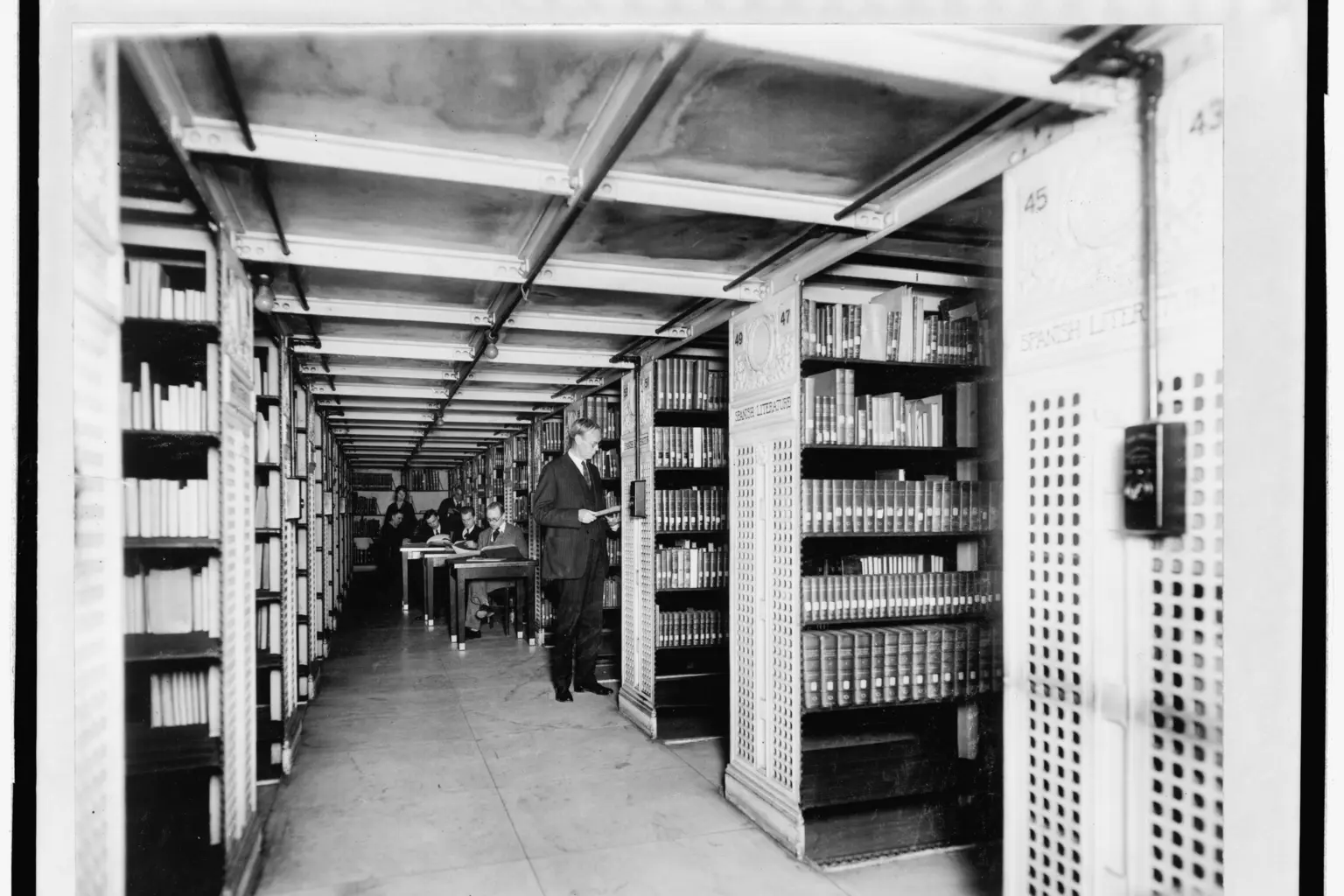
- Library of Congress: Interior book stack, 1920 (opens in a new tab)