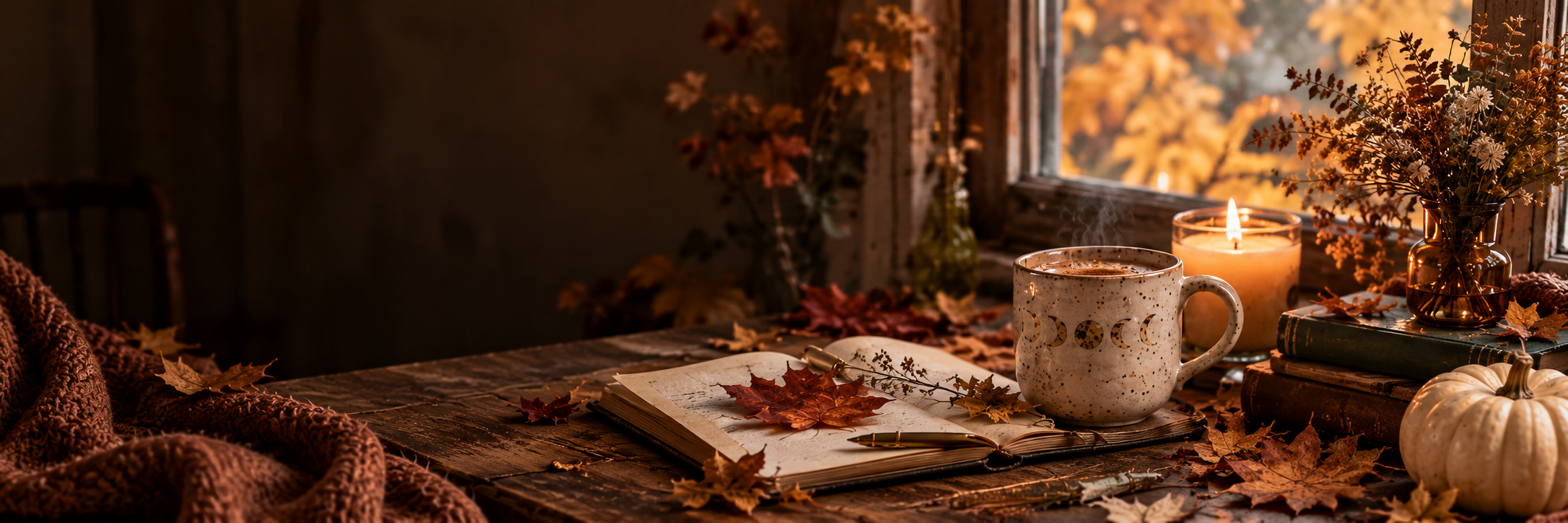
There is a peculiar moment at the beginning of fall when the air changes and suddenly you are not only standing in this year. You are ten years old on the way to school. You are twenty-two in a first apartment. You are walking into a grocery store that no longer exists, smelling cinnamon brooms and wet pavement.
Nothing mystical has to happen for this to feel almost magical. Memory is cue-dependent: pieces of the present can help retrieve experiences that were encoded alongside similar sights, smells, sounds, temperatures, and routines. Autumn simply gives the brain an unusually dense bundle of those cues all at once.
A season full of retrieval cues
Fall changes several things at once.
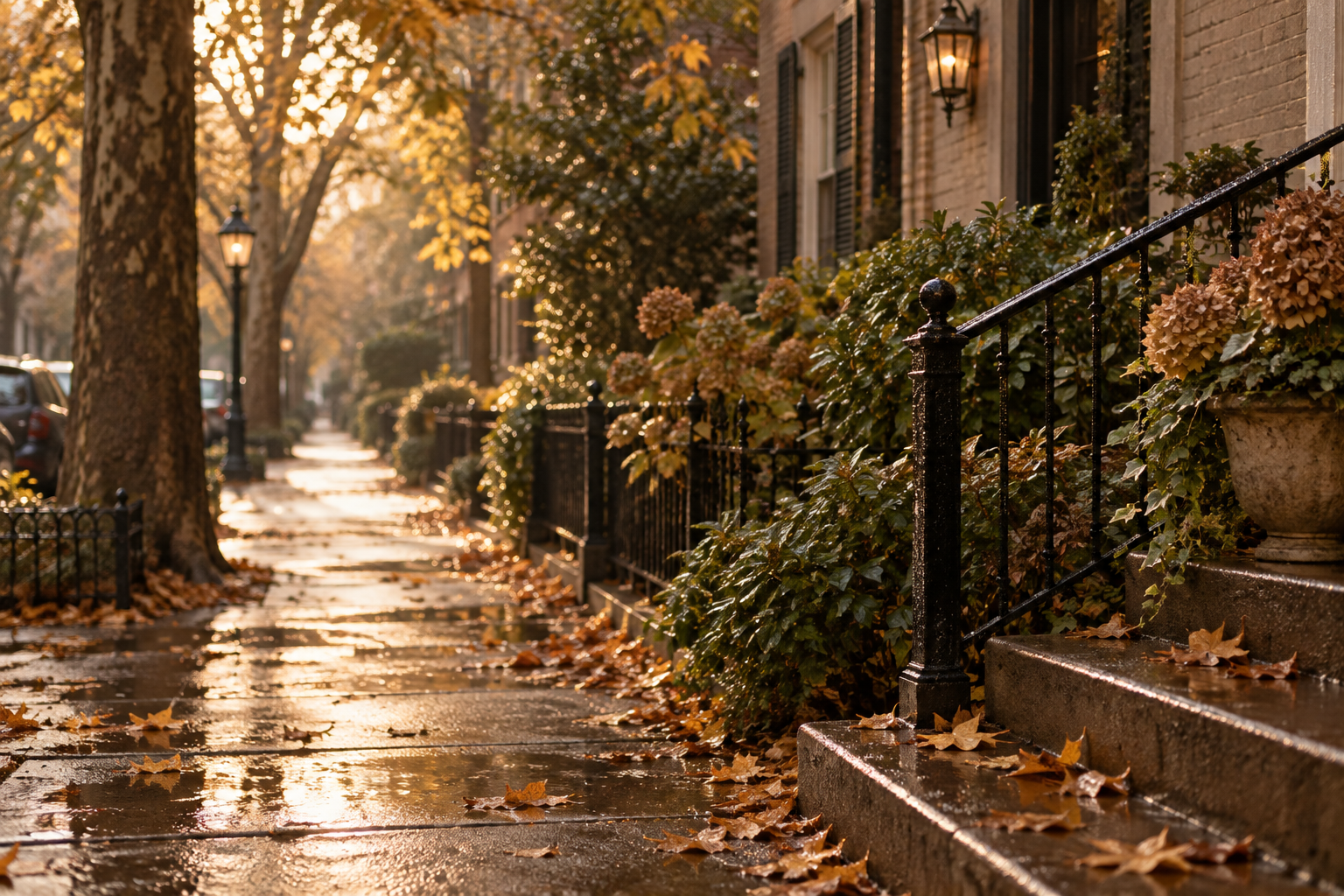
Think about how many signals arrive together. The light becomes lower and warmer. The air gets colder. Leaves change color and texture. You wear different clothes. Certain foods and spices return. School-year rhythms restart. Holidays begin appearing on the horizon. Even ordinary errands start looking and smelling different.
Each one can become associated with earlier autumns. Repeated across years, the season starts behaving like a layered memory prompt. A cue does not need to contain the memory itself; it only needs to resemble something that was present when the memory was formed.
That helps explain why nostalgia can arrive before a specific story does. Sometimes the feeling appears first — a little ache, warmth, or sense of return — and only afterward does your mind locate the scene it belongs to.
Smell gets there quickly
Some autumn memories arrive through the nose.

Smell has a famous relationship with autobiographical memory for good reason. In several studies, odor-cued memories have been reported as especially emotional, vivid, or capable of producing a strong sense of being transported back in time. Some work has also found that odor-cued memories reach farther into childhood than memories prompted by words or pictures.
That does not mean smell is always the strongest memory system — findings vary depending on how researchers test it — but it does make autumn's scent vocabulary interesting. Wood smoke. Damp leaves. Cinnamon and clove. Cold air through an open window. A particular soap pulled out with the winter blankets.
We often think we are nostalgic for the smell itself. More precisely, the smell may be opening a door to the people, places, routines, and versions of ourselves that once surrounded it.
Even the temperature may matter
Cold can nudge the mind toward warm memories.
One series of experiments found that people reported more nostalgia on colder days and in a cold room than in neutral or warm conditions. Nostalgic reflection, in turn, was associated with feeling physically warmer. Another study found that unpleasant weather could evoke nostalgia and that the nostalgic response was linked with psychological comfort.
That is a wonderfully literal possibility hiding inside the phrase warm memories: when the environment becomes less comfortable, remembering emotionally warm experiences may be one of the mind's ways of restoring a little equilibrium.
The calendar repeats, even when we do not
Fall is full of old rituals wearing new dates.

Seasonal traditions are powerful because they recur. The first jacket. School supplies. Apple orchards. Halloween decorations. A particular soup. Football on television. Samhain. Thanksgiving. The first night it gets dark before dinner.
The ritual returns, but you are slightly different each time. That contrast creates a natural comparison between past and present. Psychologists studying nostalgia often describe it as more than simple remembering: nostalgic memories tend to be personally meaningful and frequently social, involving close relationships, important moments, and a sense of who we have been.
Research has linked nostalgic reflection with greater feelings of social connectedness, continuity between past and present selves, and meaning in life. That may be part of fall's emotional texture. The season does not only remind us of what happened. It can remind us that all those earlier selves still belong to the same story.
Why it can hurt a little
Nostalgia is not the same thing as happiness.
Nostalgia is usually described as bittersweet. The remembered moment can be lovely precisely because it is gone. A childhood October may carry the people who were there then, the home you lived in, the age your children used to be, or a version of yourself you can visit but cannot become again.
And yet nostalgia is not simply grief in prettier lighting. Experimental research has found that nostalgic reflection can increase positive affect, social connection, self-continuity, and meaning compared with several other kinds of thinking about the past.
Perhaps that is why the feeling can be sad and comforting at once. It acknowledges distance while also proving connection:that happened, it mattered, and some part of it is still here because I can feel it.
Try noticing the cue
The next time fall suddenly feels like something, ask what arrived first.
Was it the angle of the light? The smell outside? A song you only seem to play this time of year? The first cold hands of the season? The aisle of miniature pumpkins at the grocery store?
You may discover that what feels like a vague love of autumn is actually a small archive of sensory clues — each one pointing toward a different year.
SHARE THIS WITH THE KIDS
The version you can actually repeat.
- Your brain uses clues to find old memories. A smell, song, place, or kind of weather can help a memory pop back up.
- Smells can bring back especially vivid personal memories, including memories from childhood.
- In experiments, people reported more nostalgia when they were cold — and nostalgic memories were linked with feeling warmer.
- Nostalgia is often bittersweet: it can feel happy and a little sad at the same time, especially when it reminds us of people or times that mattered.
A FEW OF THE SOURCES BEHIND THIS PIECE