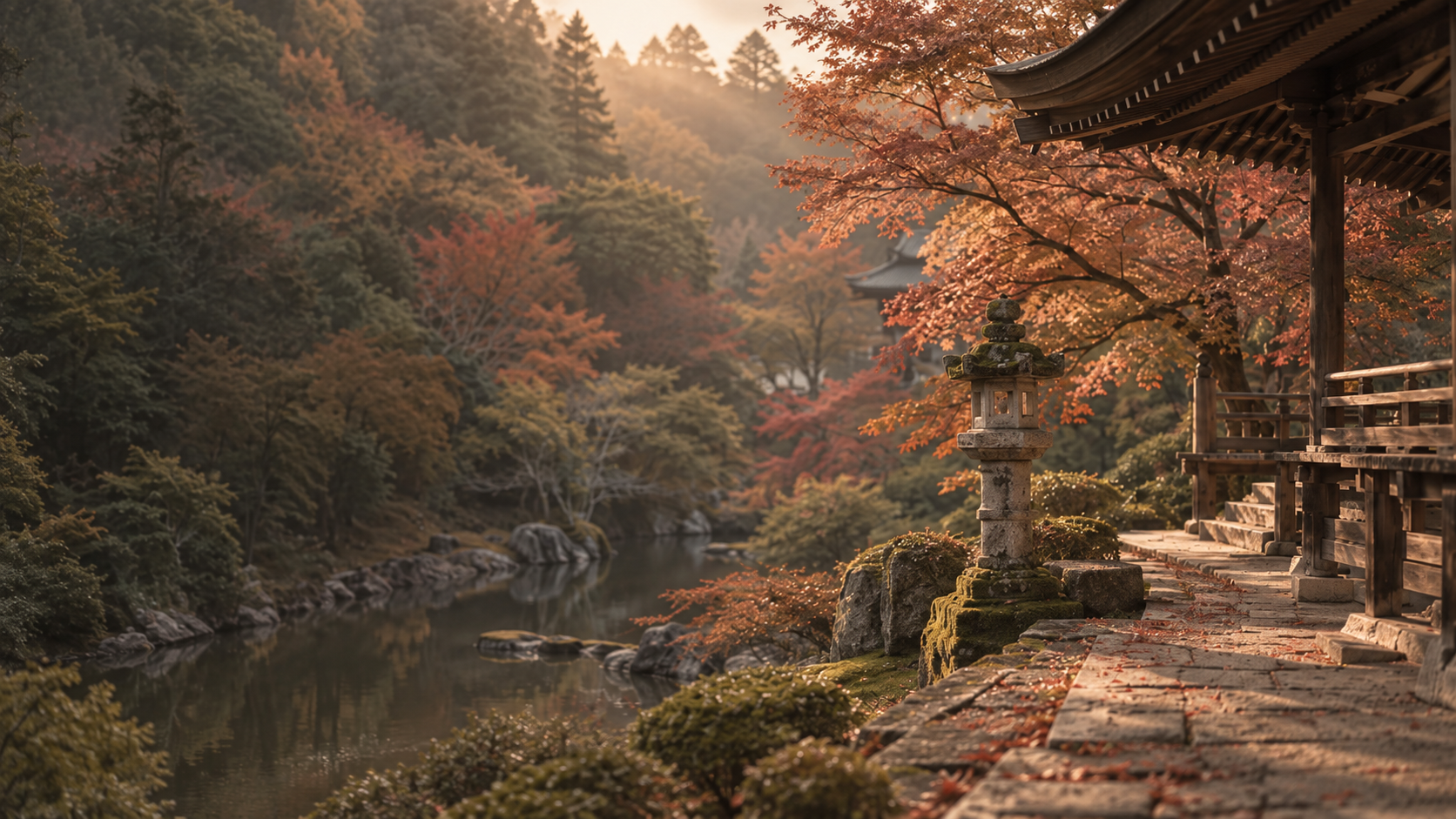
Imagine checking a forecast, choosing a mountain or temple garden, and taking a day trip because the leaves are expected to be especially beautiful there this week.
That is not an invented “cozy fall” ritual. It is a well-established part of autumn in Japan. People travel to forests, gardens, temples, gorges, and hot-spring towns to catch the changing colors at their peak. The practice has a wonderfully dramatic name for something so gentle: momijigari, or leaf hunting.
First, the words
You are “hunting” for a view.
The Japanese word kōyō refers broadly to autumn foliage and the seasonal changing of leaves. Momiji often refers to red autumn leaves or Japanese maples; intriguingly, the two words can be written with the same characters: 紅葉.
Add -gari, meaning “hunting,” and you get momijigari (紅葉狩り). But nobody is expected to stalk a maple through the woods. In this older usage, “hunting” could mean going out into nature to seek and enjoy something seasonal — flowers, fruit, or, in this case, leaves.
So the point is not collecting. It is noticing: choosing a place because the season is happening there beautifully right now.
A very old autumn outing
The habit began long before tourism boards and weather apps.
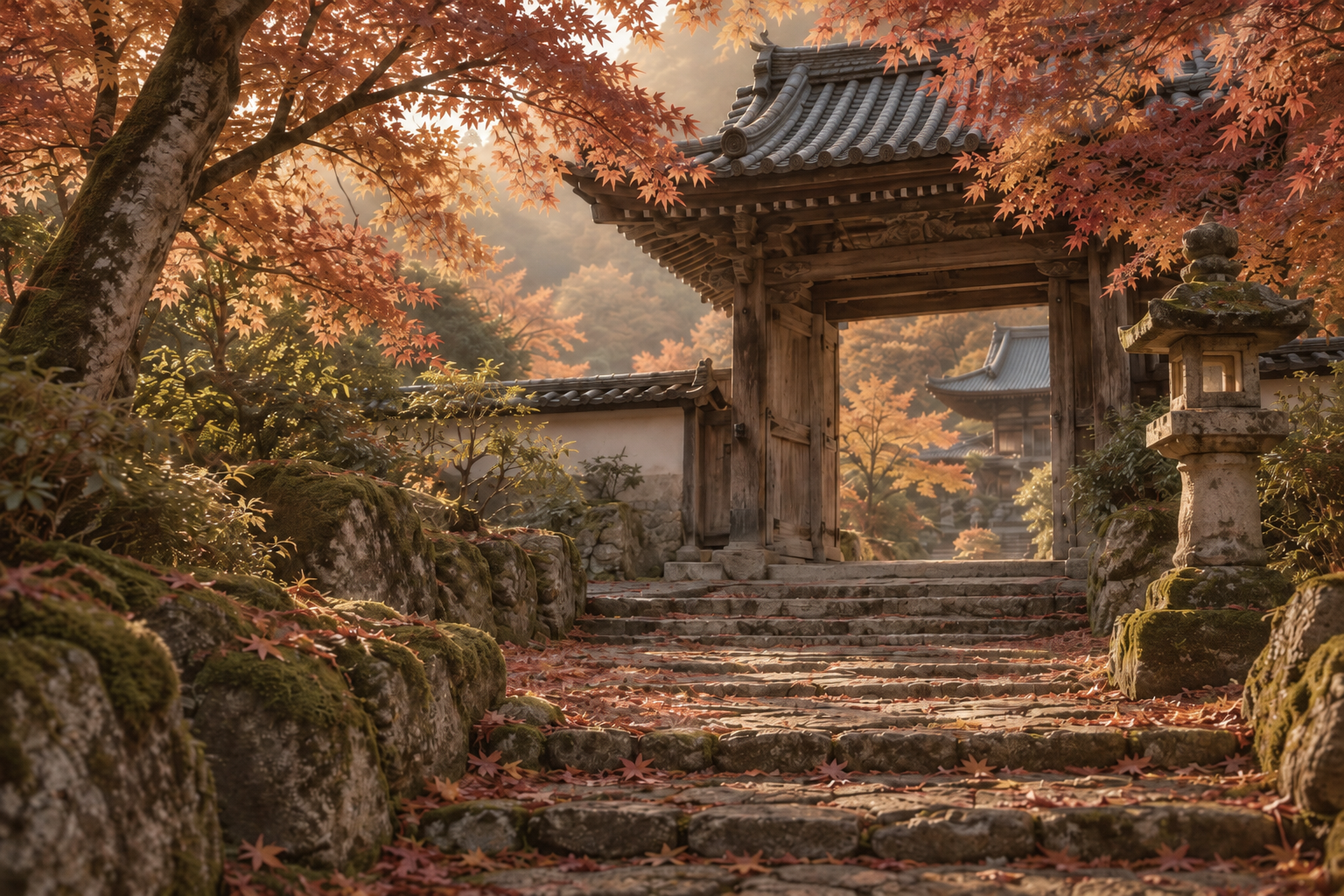
Autumn-leaf viewing is usually traced back to the Heian period (794–1185), when court aristocrats in and around Kyoto made excursions to admire autumn color. Seasonal scenery became a setting for poetry, music, and social gatherings.
References to autumn foliage appear in classical literature including the Kokin Wakashū poetry anthology and The Tale of Genji. One chapter of Genji is literally called Momijiga — “Beneath the Autumn Leaves” or “The Autumn Excursion,” depending on the translation.
The Metropolitan Museum of Art has an eighteenth-century writing box decorated with maple leaves and a court-dance hat specifically meant to evoke that Genji episode. The leaves were not just scenery. By then they were already carrying centuries of literary association.
From court pastime to popular custom
Eventually, leaf hunting stopped belonging only to elites.
Japan’s National Tourism Organization notes that momijigari spread beyond the aristocracy and was widely popular among commoners by the middle of the eighteenth century, during the Edo period.
That shift matters. A courtly appreciation of seasonal beauty became something more like a public seasonal habit: travel to a famous viewing place, walk through the color, eat something seasonal, and make an outing of the fact that the landscape will not look this way for long.
It is easy to compare this with cherry-blossom viewing in spring, and the comparison is fair. Both customs make a temporary natural event into a reason to pay attention on purpose.
Leaves became a cultural shorthand
Once a season is watched closely enough, it starts appearing everywhere.
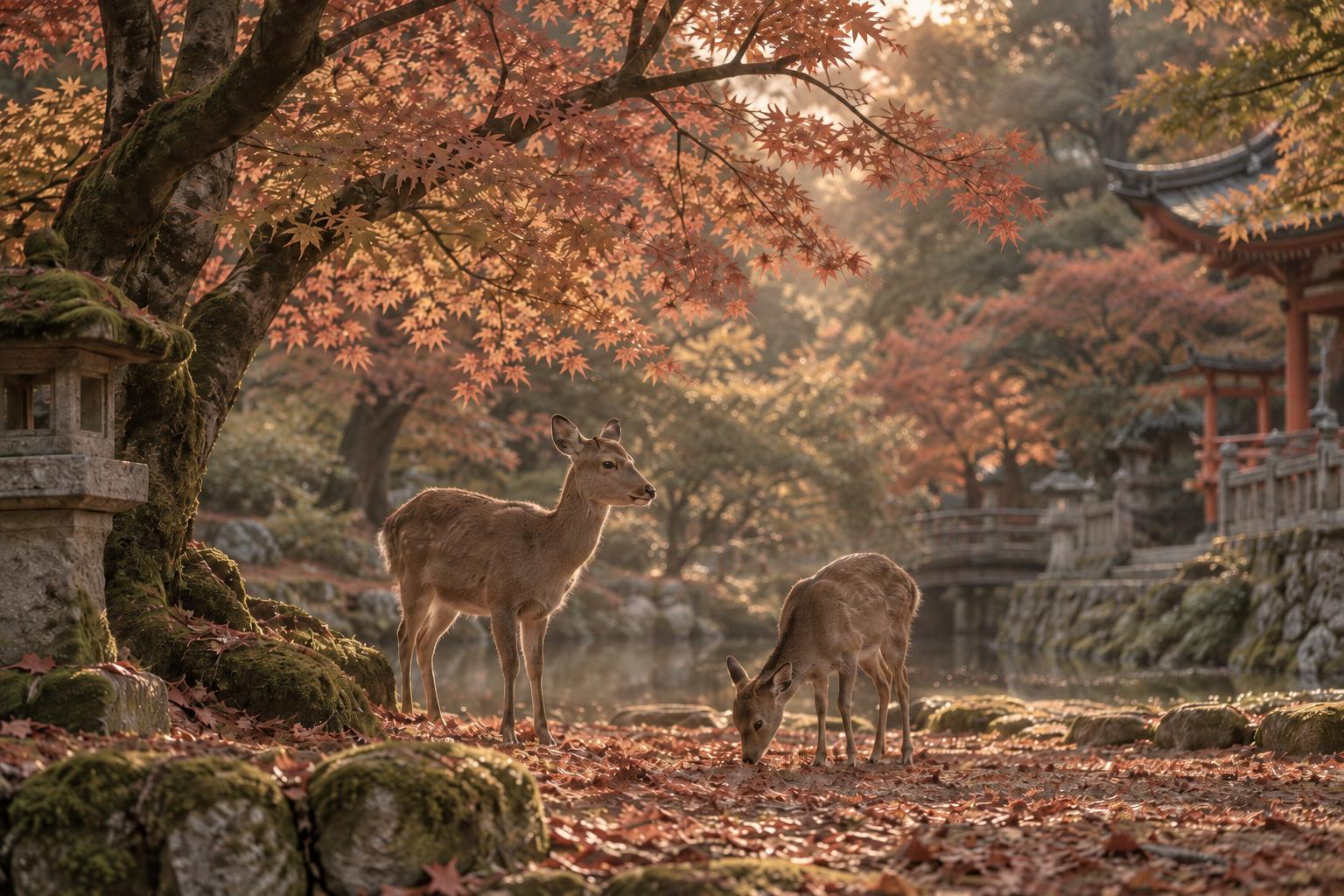
Maple leaves show up across Japanese painting, lacquerware, textiles, fans, and decorative arts. They also developed familiar companions. Deer, for example, are strongly associated with autumn in classical Japanese poetry, so deer beneath maple trees became a recognizable pairing in art.
An eighteenth-century painting by Maruyama Ōkyo in the Met shows two deer beneath changing maples. The museum notes that deer were already linked to autumn in Japanese poetry. Another work in the collection carries a much older poem about hearing a deer call while moving through fallen maple leaves.
This is the part I find most interesting: a leaf can become more than a leaf when generations of people keep writing about it, painting it, traveling to see it, and using it to mark the same point in the year.
And yes, there really is a forecast
Modern momijigari comes with data.
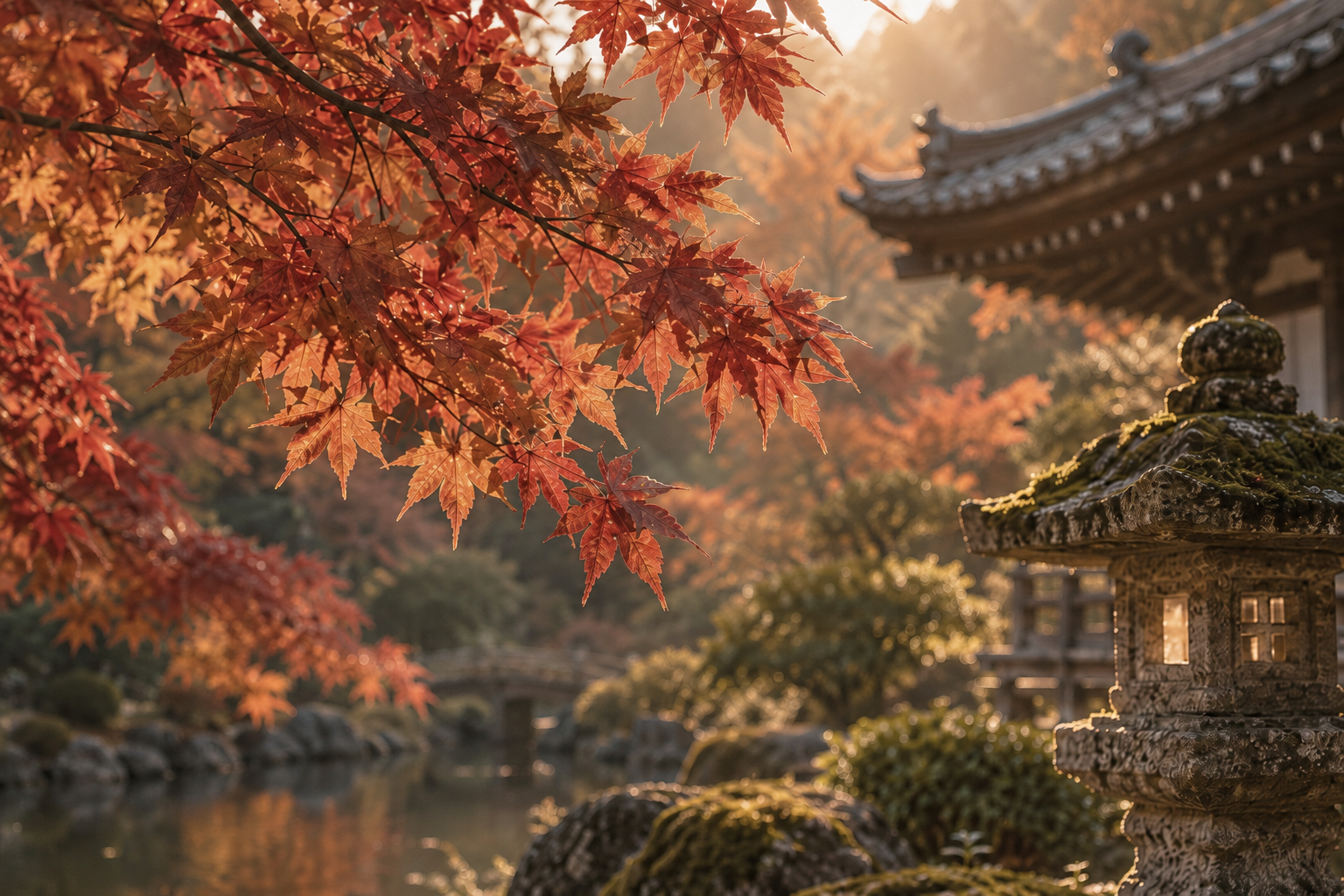
Today, autumn color is tracked with a seriousness that will feel familiar to anyone who has watched Japan’s cherry-blossom forecasts. The Japan Weather Association publishes autumn-foliage forecasts during the season and tracks viewing information for hundreds of locations.
The color front generally begins in colder northern areas and high elevations, then moves southward and downhill as the season advances. Temperature matters: cooler autumn weather tends to speed up coloration, while warmer weather delays it.
Which means a centuries-old aesthetic ritual now has weather models behind it. You can check when the maples are expected to peak, choose a destination, and arrive at precisely the moment an eleventh-century court poet would have appreciated.
The part worth stealing
You do not need to live in Japan to practice the idea.
The most charming thing about momijigari is not that Japan has prettier leaves than everyone else. It is that there is a name for making an occasion out of noticing them.
We are very good at seeing seasonal change accidentally: through a car window, while carrying groceries, on the way to somewhere else.
Momijigari asks a slightly different question: what if the changing thing was where you were going?
SHARE THIS WITH THE KIDS
The version you can actually repeat.
- Momijigari means “autumn-leaf hunting,” but people are hunting for a beautiful view — not gathering leaves.
- The tradition goes back roughly a thousand years, when aristocrats around Kyoto took autumn outings and wrote poetry about the changing colors.
- Maple leaves became such a familiar autumn symbol that they appear throughout Japanese stories, paintings, clothing, and decorative art.
- Japan even has autumn-leaf forecasts that help people figure out when different places are likely to reach peak color.
A FEW OF THE SOURCES BEHIND THIS PIECE
Read a little deeper
- Japan National Tourism Organization — History & Culture of Koyo
- Japan National Tourism Organization — Autumn Leaves (Koyo) of Japan
- Japan Guide — Japanese maples and the words kōyō / momiji
- Japan Weather Association — Autumn Foliage Forecast
- The Metropolitan Museum of Art — Maple Leaves and the Tale of Genji
- The Metropolitan Museum of Art — Two Deer beneath Maple Trees
- JITCO — Japanese Seasonal Words: Momijigari