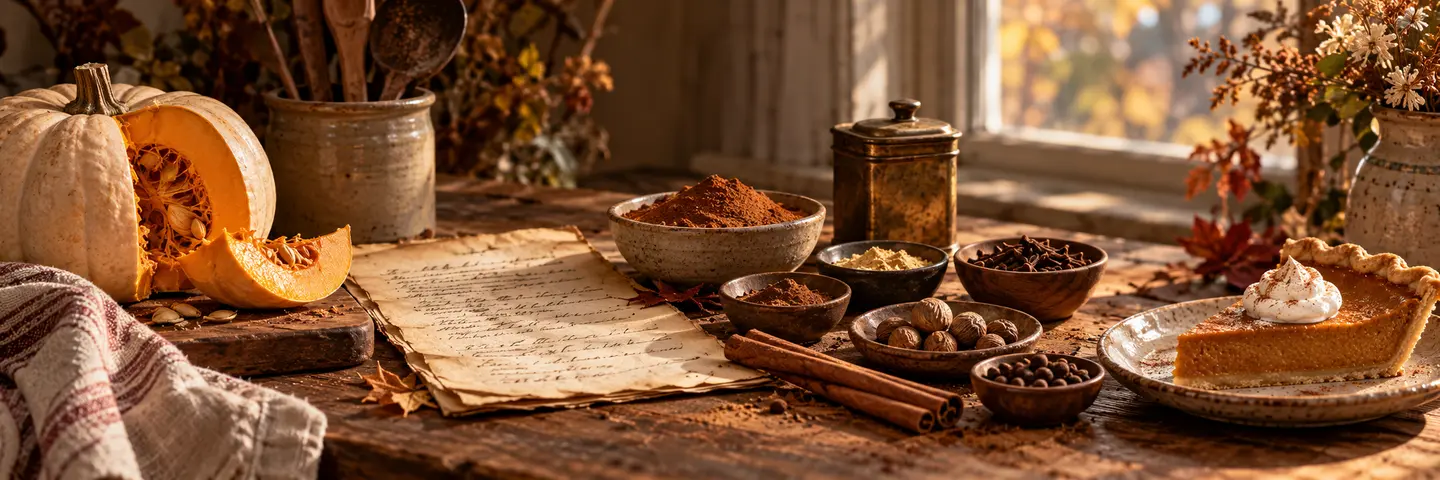
Pumpkin spice is not pumpkin. It is the company pumpkin keeps: usually cinnamon, ginger, nutmeg, allspice, cloves, or some arrangement of those warm spices.
That sounds obvious until you look at the modern shelf, where pumpkin spice can describe coffee, cereal, candles, dog treats, and objects no sensible person has tried to bake in a crust. The blend became a shorthand for autumn because it spent a very long time attached to a particular American dessert.

Before the little jar
Cooks built the flavor one spice at a time.
Amelia Simmons’s American Cookery, published in 1796 and often described as the first cookbook written by an American and published in the United States, included two recipes for “pompkin” pudding in pastry. One used mace, nutmeg, and ginger. The other used allspice and ginger.
Neither recipe called the combination “pumpkin spice.” The cook was expected to reach for separate ingredients and season to the recipe. The exact group varied, as household blends still do. What remained familiar was the pairing of rich pumpkin custard with spices that were already used across cakes, puddings, gingerbread, and holiday baking.
A twentieth-century shortcut
The recipe became a product.
By the early twentieth century, spice companies were selling pre-mixed blends for pumpkin pie. A 1930 newspaper advertisement preserved by the Library of Congress promoted mixed pumpkin pie spice, while McCormick dates its own blend to 1934. The familiar jar solved a plain kitchen problem: instead of buying and measuring several spices, a cook could shake in one mixture.
The blend was never completely fixed. McCormick’s current version lists cinnamon, ginger, nutmeg, and allspice. Other blends add cloves or mace, change the proportions, or leave one spice out. “Pumpkin spice” is better understood as a family resemblance than a protected formula.
From pie to season
A pantry label learned to mean autumn.
Pumpkin pie already belonged to fall harvest tables and Thanksgiving. A premixed jar strengthened the association by putting the name on a label. Food companies could then borrow the blend for cakes, cookies, drinks, and packaged goods without having to bring the pie along.
The ingredients helped. Cinnamon, ginger, and cloves are fragrant, noticeable, and strongly connected to baked food. They also arrive when stores and kitchens are shifting toward colder-weather routines. With enough repetition, the smell becomes a calendar cue: here comes the part of the year with sweaters, shorter light, and a suspicious number of decorative gourds.
Then came the cup
The pumpkin-spice latte made the shorthand enormous.
Starbucks developed its Pumpkin Spice Latte in 2003, tested it in about one hundred stores, and rolled it out more widely the following year. The company describes the development process as tasting pumpkin pie with espresso to identify which flavors carried across. The finished drink used a spice profile built around cinnamon, clove, and nutmeg.
The latte did not invent pumpkin spice, and pumpkin-spice products did not begin in 2003. What the drink did was make an old pie association portable, branded, and annual. Its return could be announced like a seasonal event. The phrase became large enough to signal autumn even on products that had wandered very far from the kitchen.
Try the history in a bowl
Smell the spices separately before mixing them.
Put a little cinnamon, ginger, nutmeg, allspice, and clove in separate dishes. Notice which one smells most like the idea of “pumpkin spice” to you. Then combine a small pinch of each. The blend will probably smell more familiar than any one ingredient.
That is the trick at the center of its history: no single spice owns the season. The recognizable thing is the pattern, repeated across recipes, shelves, cafés, and years.
SHARE THIS WITH THE KIDS
A few things to talk about together.
- Pumpkin spice is a blend of warm spices used with pumpkin; the name does not necessarily mean a product contains pumpkin.
- An American pumpkin-pie recipe from 1796 used combinations including mace, nutmeg, ginger, and allspice.
- Commercial mixed pumpkin-pie spices were on the market by the early 1930s.
- The Pumpkin Spice Latte arrived in 2003, long after the spice blend and its autumn association.
A FEW OF THE SOURCES BEHIND THIS PIECE
Read a little deeper
- Library of Congress, a brief history of pumpkin pie in America (opens in a new tab)
- American Cookery (1796), transcribed by Project Gutenberg (opens in a new tab)
- McCormick, pumpkin pie spice history and ingredients (opens in a new tab)
- Starbucks, history of the Pumpkin Spice Latte (opens in a new tab)