why do kids get all the good worksheets?
Sometimes a blank journal is simply too blank.
I spend an unreasonable amount of time making thoughtful little pages for children: circles to check, things to notice, questions that make a big idea feel small enough to hold. Then I realized that adults are apparently expected to choose between a blank notebook, a spreadsheet, and a ninety-day productivity system with seventeen habits to track.
There should be some middle ground.
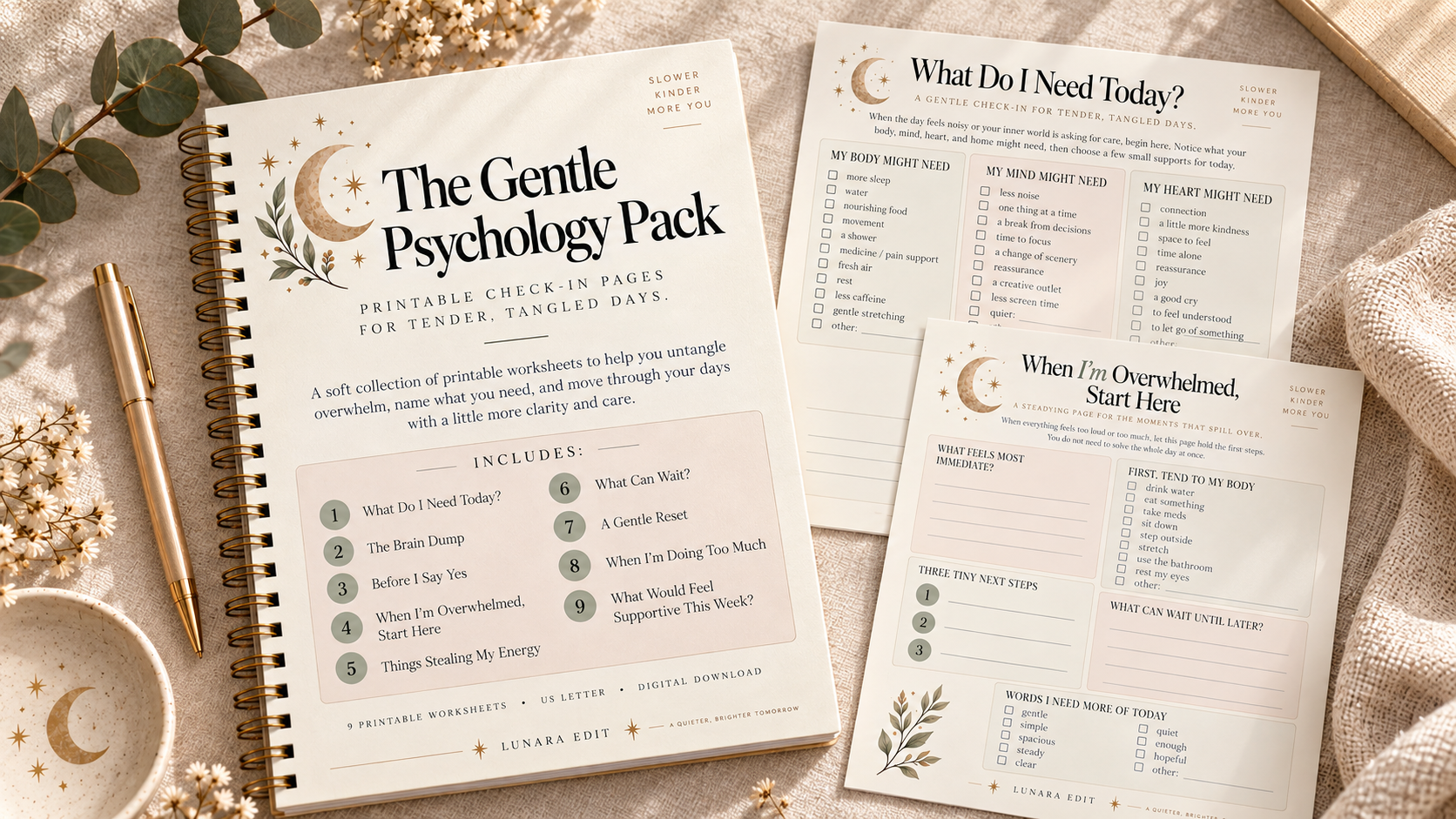
The Gentle Psychology Pack started there. These are not pages for becoming a shinier, more optimized person. They are small pieces of structure for the days when your mind is crowded, your capacity is unclear, or everything feels important at exactly the same time.
THE IDEA UNDERNEATH THE PRETTY PAPER
Notice it. Sort it. Then choose one thing.
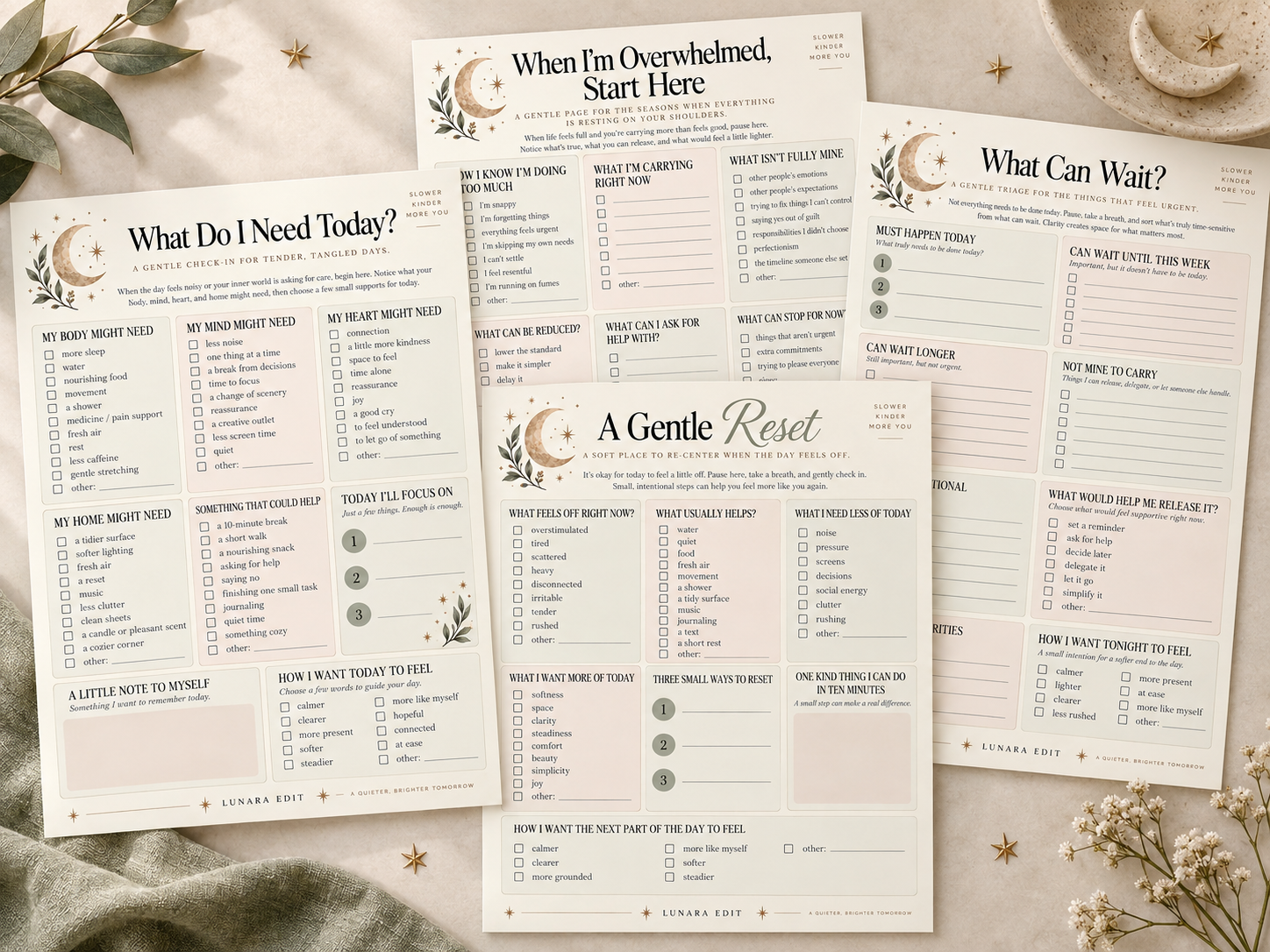
Most of the pages follow the same loose rhythm. First, notice what is actually happening. Then separate the pieces that have become tangled together. Finally, choose one next step that fits the amount of energy you genuinely have.
Notice
Name the feeling, need, drain, pressure, or bit of sensory chaos before trying to fix it.
Sort
What is urgent? What can wait? What is yours? What can be shared? What is optional after all?
Choose
Pick a smaller response than your brain was demanding five minutes ago.
It is deliberately modest. There are no streaks to protect and no promise that filling in a page will transform your life before breakfast. Sometimes the useful thing is simply seeing the problem in ink instead of carrying it around as one enormous unnamed feeling.
a little less work to begin
That is why so many of the prompts are checkboxes.
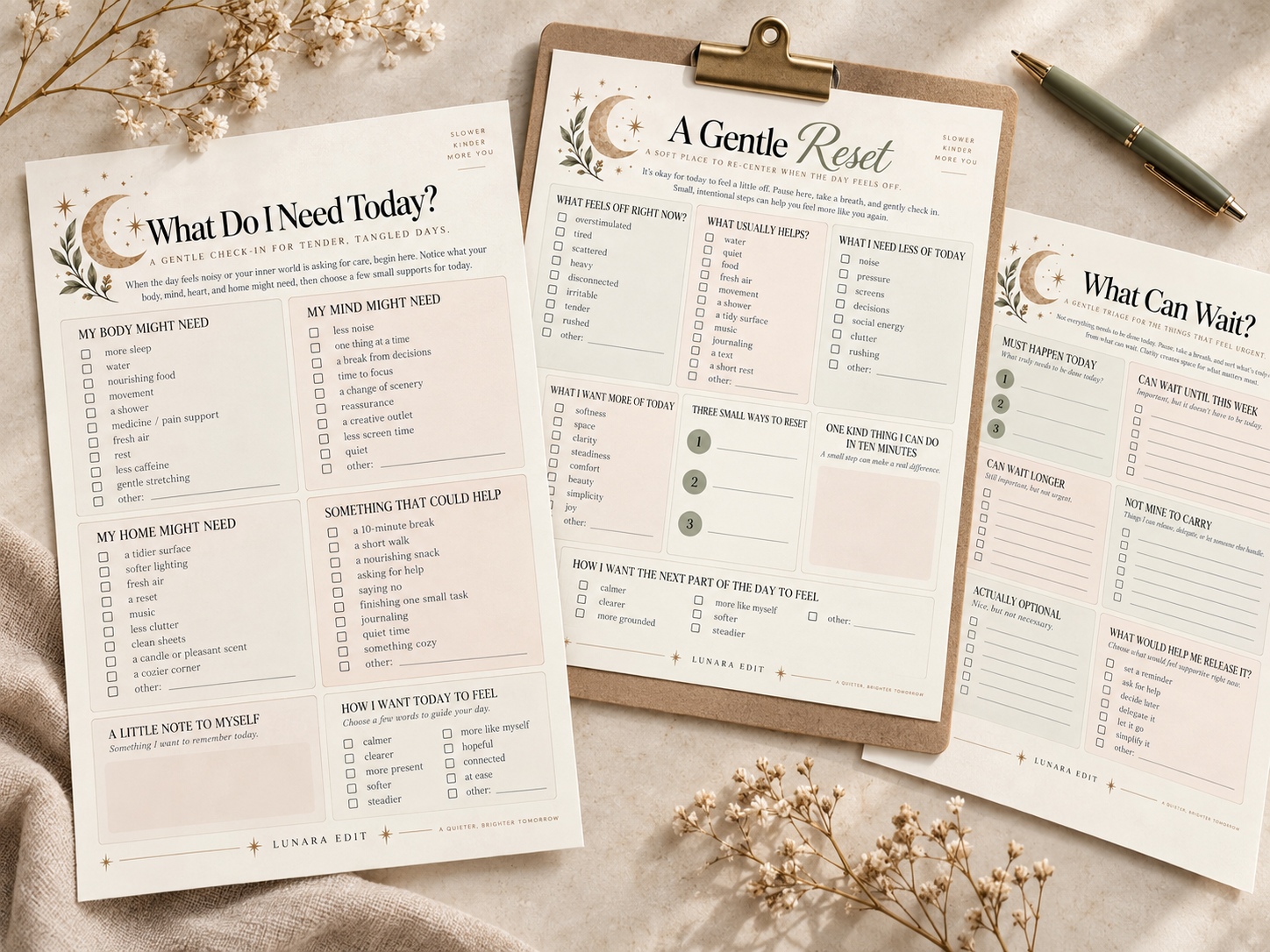
When you already feel overloaded, “write freely about what you need” can be a surprisingly large assignment. A list of possibilities gives you somewhere to start. You can scan, recognize something, check it, and move on.
Every section that can reasonably use choices does, and the pages keep an other line nearby because human beings remain inconveniently resistant to fitting inside tidy categories.
The open writing spaces are saved for the places where your own words actually matter: what is on your mind, what you are carrying, what boundary you want to set, and what the next kinder version of the day might look like.
NINE PAGES · USE THE ONE THAT FITS THE DAY
What’s inside the pack.
You do not need to work through these in order. There is no gold star for completing all nine. Print the one that answers the question your brain is asking today.
What Do I Need Today?
A daily check-in for body, mind, heart, home, and the small supports that might make the day easier to move through.
The Brain Dump
A place to get everything out of your head, then sort what needs care now, what can wait, what can be shared, and what can simply go.
Before I Say Yes
A boundary check for invitations, asks, obligations, and the moments when guilt answers a little faster than you do.
When I’m Overwhelmed, Start Here
A steadier first step when everything feels equally loud: name the kind of overwhelm, tend to your body, quiet what you can, and choose three tiny next moves.
Things Stealing My Energy
A way to make the little drains visible, separate what you can influence from what you cannot carry alone, and notice what gives something back.
What Can Wait?
Gentle triage for the days when every task has somehow put on a tiny emergency hat.
A Gentle Reset
A small re-centering page for noticing what feels off, what usually helps, what you need less of, and what could make the next ten minutes kinder.
When I’m Doing Too Much
A check for overload, invisible responsibilities, things that can be reduced, and the help you are allowed to ask for.
What Would Feel Supportive This Week?
A weekly check-in for what you need more of, what you need less of, what deserves protecting, and a few anchors to come back to.
keep them however you’ll use them
Loose pages are lovely. A little book is lovely too.
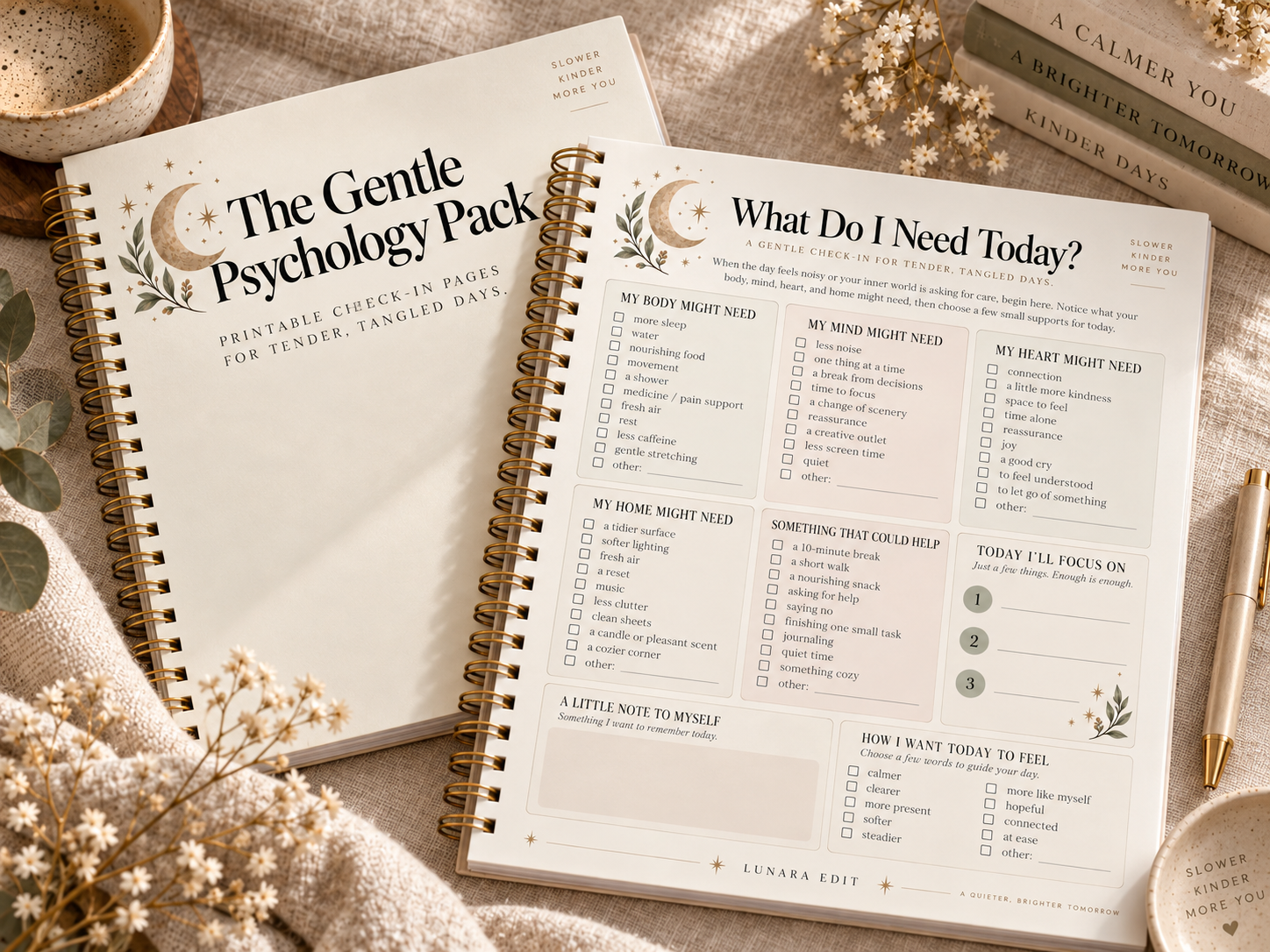
Print one sheet when you need it and let it live on a clipboard. Keep a few copies in a home command center. Slide favorites into page protectors and use a dry-erase marker. Punch them for a binder. Or print a small stack and have a local shop spiral-bind them into your own check-in journal.
I especially like the last option because it turns a handful of practical worksheets into something you can leave on a nightstand or desk and actually reach for again.
- Print at 100% / Actual Size on US Letter paper.
- Regular printer paper works; a slightly heavier matte paper feels particularly nice.
- Reprint the pages you use often instead of treating the PDF like a one-time workbook.
a softer place to begin
You do not have to untangle the entire day at once.
Pick the page that matches the knot in front of you. Check a few boxes. Write down the thing that keeps circling. Decide what can wait. Then let the paper hold the rest for a little while.
Visit The Lunara Edit on Etsy