OLDER KIDS · SHARED ROOMS · PERSONAL STYLE
A homeschool space that feels like your older kid.
Give their bands, artwork, books, and wonderfully specific interests a place in the room where they learn.
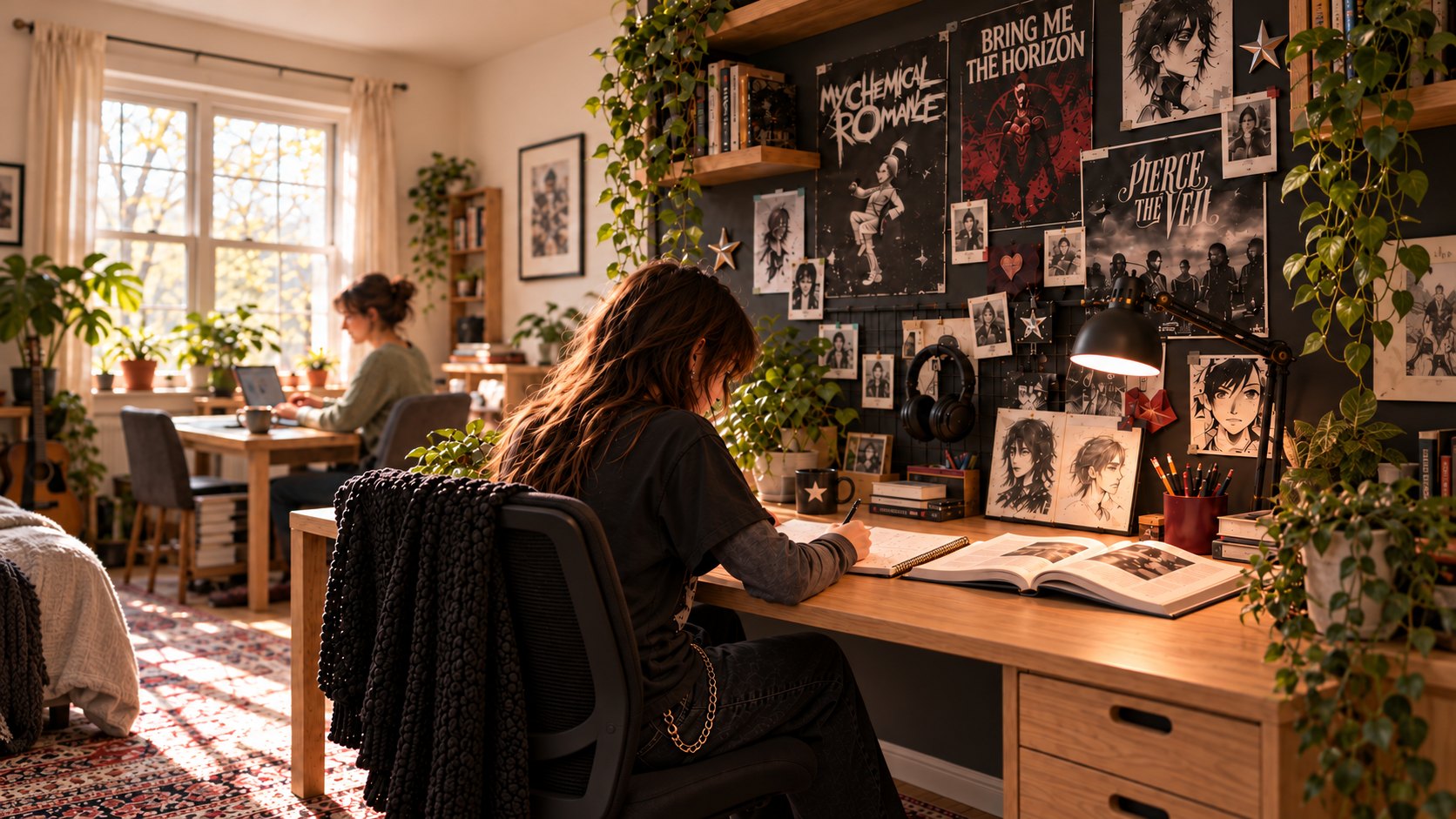
My oldest homeschooler is an emo kid, and her taste is very different from mine. Band posters, dark colors, and musician portraits make a different moodboard from the softer colors I tend to choose. Bringing some of her interests into this room concept was fun, and it raised a question worth asking before decorating a homeschool space: what would your kid put on that wall?
An older learner might choose anime prints, a favorite team, their own drawings, a shelf of models, or a very particular shade of purple. A shared room has several people to accommodate, especially when a parent works there too. Giving one part of it to the child’s choices can be a manageable place to begin.
Start with one part they can choose.
Choose the boundary together: a pinboard above their desk, one shelf, a section of wall, or the front of their own supply box. Ask, “What would you like to put here?” Let them gather a few pictures or objects before deciding what to buy.
They might already have drawings, postcards, a small collection, or an album image they would like to display. Lay the choices out on the table first. If the room is shared, decide which section belongs to each person so that one learner’s project does not take over a sibling’s spot.
Make the choices real, with a few clear limits.
Explain what you need to protect: the budget, rental walls, a clear walkway, access to an outlet, or enough light to read. Then offer choices inside those limits. For example: “We can use this board and the supplies we have. What would you like to arrange on it?” If new items are an option, agree on the spending amount before browsing.
This fits a wider idea in education research. Supporting autonomy means taking a learner’s perspective seriously and offering meaningful choices. A 2025 meta-analysis of 94 studies found that autonomy support and clear structure were both associated with motivation and engagement. Most studies were in secondary schools; they examined teaching approaches, rather than whether decorating a desk improves learning.
The practical suggestion here is to involve the child in a decision you can actually let them make. If you are comfortable with several arrangements, let their preference settle which one you try.
Keep the surface useful for the work they do.
Sit down with the books, notebook, or laptop used during an ordinary lesson. Open them. See where the elbows land and whether there is somewhere comfortable for the feet. A display can live above the work while the surface stays available for reading and writing.
Ask what they like to see while working. One learner may enjoy looking up at a busy collection of favorite art; another may prefer to put it on a side wall. Their answer, along with what you notice during actual work, can guide a change. The family’s preferred colors alone will not tell you which arrangement feels comfortable to that child.
Leave somewhere for an interest to continue.
A portrait sketch may need another afternoon. A model might need to stay assembled. Choose somewhere that work can wait: a shallow tray, a shelf, or one project box with the next few supplies kept together.
If everything has to clear for dinner, talk about which things can move together. A child who wants their drawing left alone may be quite happy to carry the whole tray to a shelf. Ask before rearranging a collection they have spent time arranging.
Try the arrangement during an ordinary week.
Start with what you have. Check whether the chair pulls out, whether supplies are easy to reach, and what happens when someone needs quiet while another person talks or works. A quieter time or a second place to read may be useful alongside the decorated desk.
Later, ask, “What would you keep, and what would you change?” They may want one picture moved, a different pencil cup, or more room for an open book. Make the next change around that specific request.
Ask what they want to display, what they need within reach, and which unfinished work they would like to keep ready. Choose one arrangement to try with the things already at home.
Research and further reading
The room ideas above are practical suggestions, informed by research about adolescent choice and support. They are not a tested room-design program.
- Autonomy support and structure in the classroom: 2025 systematic review and meta-analysis (opens in a new tab)
- The Promise of Adolescence: education brief on self-direction, interests, and responsive support (opens in a new tab)
- Cornell University guidance on children and computer workstations (opens in a new tab)