What I’m learning about curriculum
The Little Words I Keep Putting Back
What revising curriculum is teaching me about words like because, then, and after—and the steps a reader needs to see.
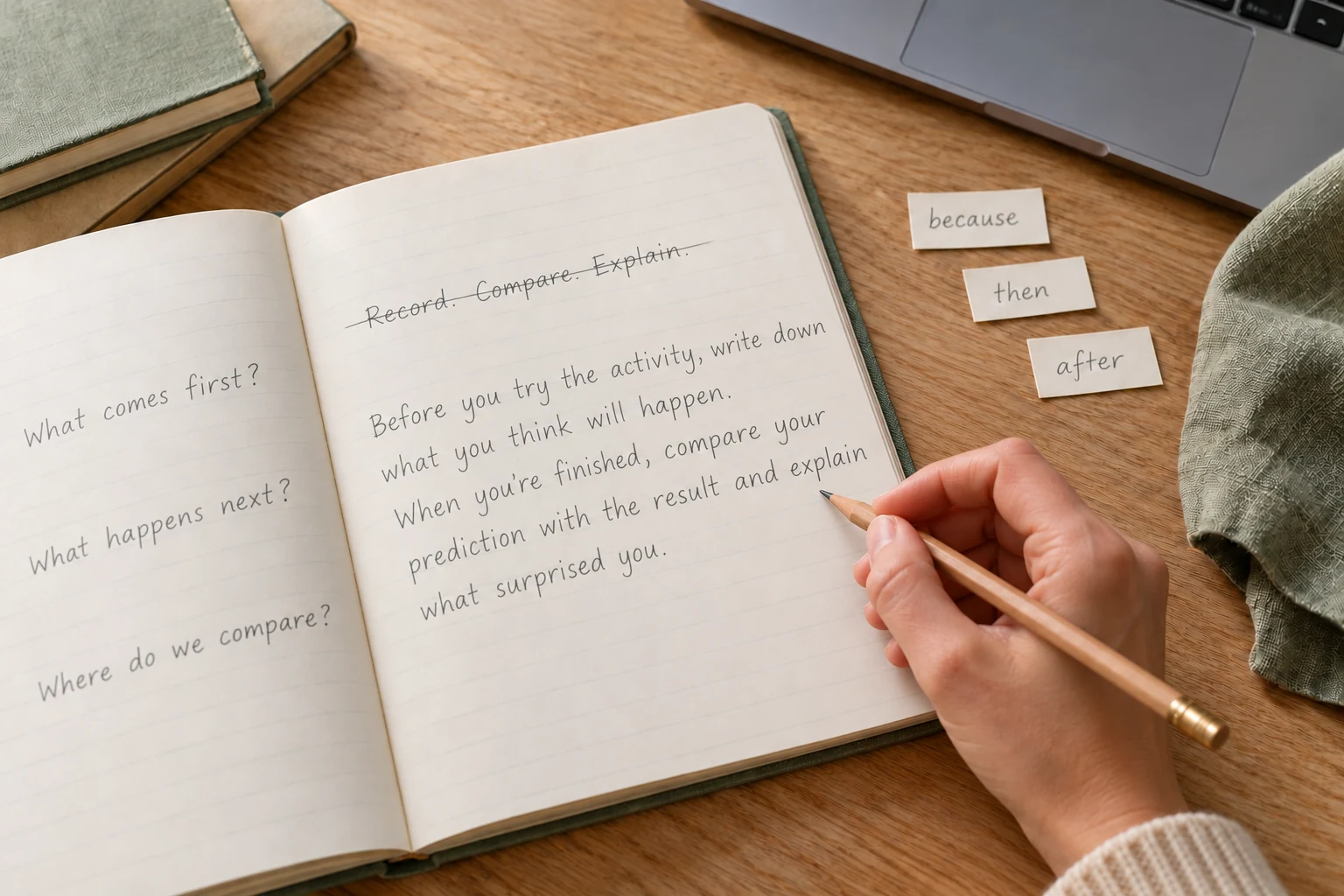
I keep asking for little words to be put back into the curriculum I’m making. Because. Then. After you’ve tried it. They’re easy to trim when a page is getting crowded, but I want the reader to be able to follow how one thought leads to the next.
“Record. Compare. Explain.” is short. It also leaves quite a bit for the person holding the page to work out. What am I recording? Where does it go? What am I comparing it with? I know the activity because I’ve been helping build it, so those missing pieces can be harder for me to notice.
For example, I could write: “Before you try the activity, write what you think will happen in the first box. When you’re finished, come back to your prediction. What happened the way you expected, and what surprised you?” That gives the reader an order to follow and something specific to look for.
I’m also paying more attention to the words I assume a learner knows. Sometimes a term is useful enough to teach: introduce it, explain it, and give an example. Other times an ordinary word would do the job perfectly well, and I can stop making the sentence work so hard.
The same question comes up when I look at the space left for an answer. If I’m asking someone to draw a diagram or explain their thinking, I want the page to give them enough room to do that. Cutting the explanation and shrinking the writing area would make the file shorter, but it would also change what I’m asking the learner to manage.
This is one of the things I’m learning as I revise Lunara’s resources: I need to read the directions as if I’ve just arrived. I’m looking for the next action, the reason it follows, and the information someone needs before they can begin. Sometimes the edit that helps most is putting “because” back in.
Related reading: Helping your homeschooler get started.