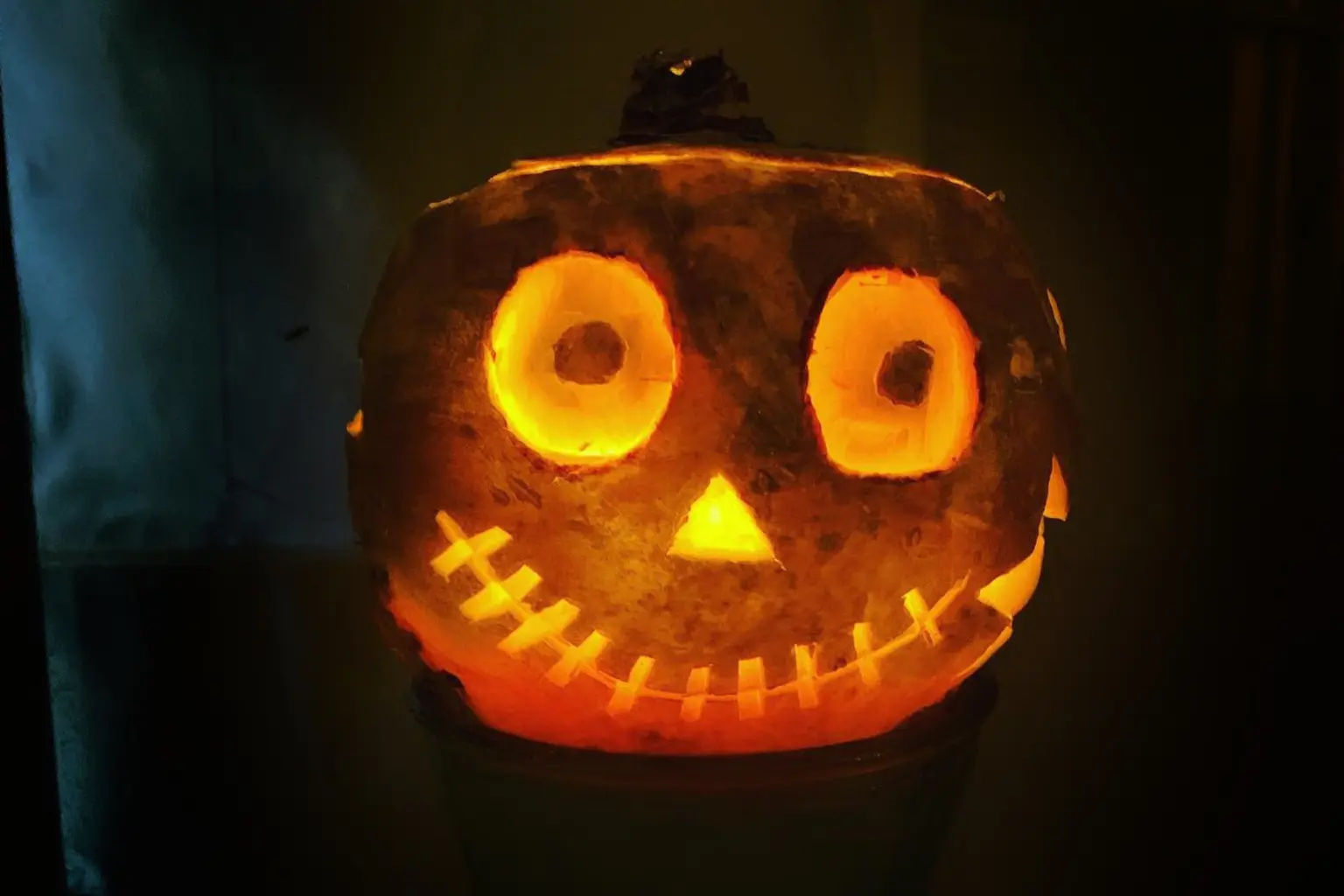
In daylight, the face is lopsided and a little absurd. Put a light behind its teeth, and the turnip becomes much less friendly.
Irish museum collections preserve accounts of carved turnip lanterns made for Halloween. One especially memorable object is a painted plaster cast based on a lantern donated by a schoolteacher in 1943. Its history gives us an artifact, a local memory, and a useful warning against making every jack-o’-lantern story tidier than the evidence allows.
An object with a witness
The National Museum of Ireland’s ghost turnip began with a teacher’s account.
In 1943, schoolteacher Róis Ní Braonáin gave the National Museum of Ireland a turnip lantern while teaching near Fintown in County Donegal. She said it was the kind always made in that locality around 1900. Museum artist Eileen Barnes then created and painted the plaster-cast model now displayed by the museum.
That distinction is worth keeping: the surviving display object is a model made from the donated example, while the account connects the form to a particular place and remembered practice. A vegetable would not survive a century on a museum shelf, so the cast preserves its shape and face.
A face made to startle
Turnip lanterns were carried, displayed, and used for mischief.

Galway City Museum describes lanterns placed on walls, fences, and gates, hung from trees, or left glowing in graveyards to startle people after dark. The hard root produced a small lantern with thin, irregular walls and an expression that could change dramatically once lit.
The modern lantern shown here was made for Hop-tu-Naa on the Isle of Man. It does not stand in for the Irish museum object, but it makes the stubborn material easier to see: the close face, uneven wall, and light caught inside the root. Museum accounts also connect the name jack-o’-lantern with stories about a wandering Jack, refused entry to both Heaven and Hell and left with a light for the road. Folktales change in retelling, so the story is best treated as one part of the lantern tradition rather than a signed birth certificate for every carved face.
A tradition crosses the Atlantic
In the United States, pumpkins offered much more room to carve.
Irish traditions traveled with emigrants. Government of Ireland and museum accounts describe pumpkins becoming the preferred American material because they were more plentiful and easier to carve. The name remained while the vegetable changed.
That change affected the look of the lantern. A large hollow pumpkin can hold broad eyes, elaborate teeth, and a stable light. A turnip face is tighter and rougher. Comparing them shows how available materials can reshape a tradition without erasing the older object from its history.
Compare two lantern faces
Notice what the material lets the maker do.
Look at the National Museum of Ireland’s ghost turnip beside a modern carved pumpkin. Compare the size of the eyes and mouth, the thickness of the walls, the texture of the skin, and the space available for a light.
Sketch a face designed for each shape. Let the turnip version stay cramped and strange; let the pumpkin use its wide surface. Label which choices came from the material and which came from the mood you wanted to create.
SHARE THIS WITH THE KIDS
A few things to talk about together.
- The National Museum of Ireland’s ghost turnip is a plaster-cast model based on a lantern donated in 1943.
- The donor said that kind of lantern was made near Fintown, County Donegal, around 1900.
- Irish emigrants carried lantern traditions across the Atlantic, where pumpkins became easier carving material.
A FEW OF THE SOURCES BEHIND THIS PIECE
Read a little deeper
- National Museum of Ireland: Ghost turnip collection record (opens in a new tab)
- Galway City Museum: Turnip Lantern Tradition (opens in a new tab)
- Ireland.ie: Halloween traditions and museum objects (opens in a new tab)
- National Museum of Ireland: Ghost turnips and other Halloween traditions (opens in a new tab)
- Culture Vannin: Hop-tu-Naa turnip lantern, 2019 (opens in a new tab)