A traveler could carry a portion of soup without carrying a bowl of liquid.
Portable soup was concentrated broth dried into a solid form, ready to dissolve when hot water was available. Surviving recipes describe a product much closer in appearance to dried glue than to the soup waiting in a pot.

History
A recipe meant to travel
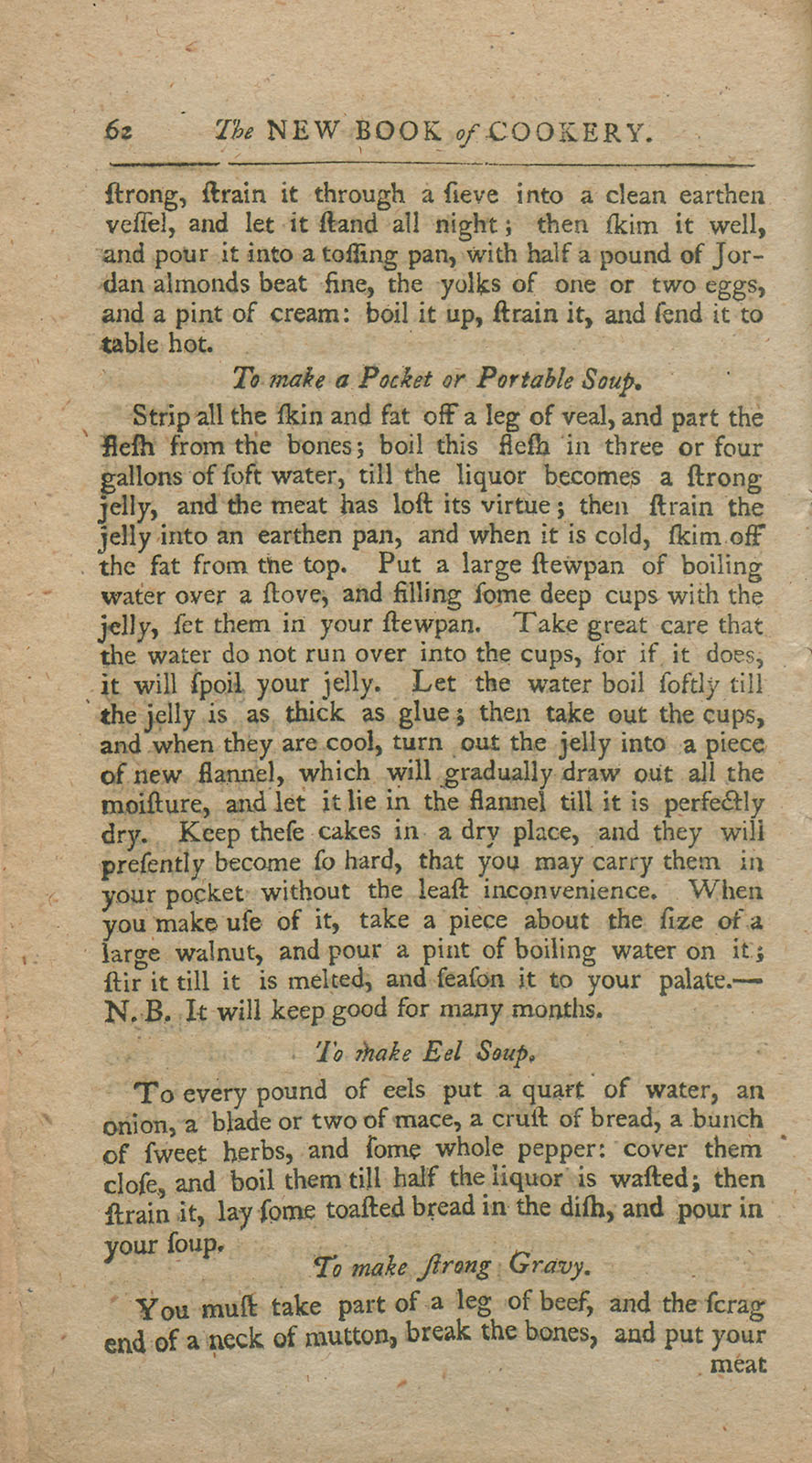
The Folger Shakespeare Library holds several manuscript recipes for portable soup. Its discussion of one recipe, in a miscellany cataloged broadly as circa 1613–1756, describes reducing stock until it becomes thick and glue-like, then drying it into a solid lump. That date range covers the miscellany as a whole; the individual recipe’s date remains uncertain.
The library also identifies a circa-1730 cookery miscellany whose author recommended the preparation for an East India voyage. Drying the broth made it easier to pack for a journey and prepare when hot water was available.
History
Why the broth became glue-like
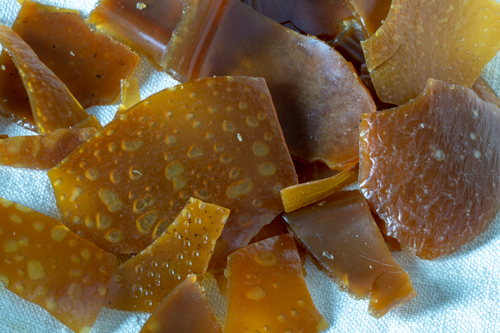
Folger explains the connection through gelatin from collagen-rich animal parts. Anyone who has seen meat stock set when cooled has encountered the intermediate stage. Portable-soup preparation took the reduction and drying much further.
“Glue-like” describes the texture of the concentrated broth, which became firm enough to carry as the “solid soup” named in the recipe.
History
Drying the cakes took attention
Portable soup continued to appear in nineteenth-century cookbooks. In the 1844 third edition of The Lady’s Own Cookery Book, Charlotte Campbell Bury gives a method using veal and beef. The broth is strained, cooled and cleared of fat, then concentrated in cups standing in a hot-water bath.
The cakes are turned onto fresh flannel repeatedly until dry. For travel, the book suggests taking a walnut-sized piece and seasoning it with herbs; meat could be added if available. Much of the work happened before departure, when the cook strained, concentrated and dried the broth for the journey.
History
Convenience at home, too
William Kitchiner’s 1821 The Art of Invigorating and Prolonging Life includes portable soup as an economical household ingredient. He recommends dissolving only the amount wanted and describes uses in broth, sauces and gravies, alongside its value for travelers and the army and navy.
The concentrated base could be kept comparatively plain, with flavorings added when it was used. That separated the labor of preparing a stock from the later decision about what to make with it.
Preparing ahead
Stock ready for the next meal.
For the cooks preparing these cakes, the work of making and drying a batch could supply several later meals, at home or on a journey.
SHARE THIS WITH THE KIDS
A few things to talk about together.
- Portable soup was concentrated broth dried into cakes.
- Surviving recipes describe dissolving a small piece when hot water was available.
A FEW OF THE SOURCES BEHIND THIS PIECE
Read a little deeper
- Folger Shakespeare Library: manuscript recipes for portable soup (opens in a new tab)
- Charlotte Campbell Bury: The Lady’s Own Cookery Book, third edition (1844) (opens in a new tab)
- William Kitchiner: The Art of Invigorating and Prolonging Life (1821) (opens in a new tab)
- National Library of Medicine: Elizabeth Price’s pocket-soup recipe, circa 1780 (opens in a new tab)
- Discover Lewis & Clark: reconstructed portable soup and photograph credit (opens in a new tab)
- Reconstruction photograph license: CC BY-SA 4.0 (opens in a new tab)