A trail of orange petals runs toward a doorway. Someone has made a path for a visitor they still love.
Marigolds are among the most recognizable flowers of Día de Muertos, the Mexican observance often translated as Day of the Dead. Their role reaches beyond a seasonal color scheme. They help express a welcome for deceased loved ones, within traditions that families and communities continue to shape.
A flower with a purpose
Color and scent are part of the welcome.
Mexican government sources describe cempasúchil as a flower native to Mexico, with a long place in ceremonies honoring the dead. The familiar orange and yellow flowers are commonly associated with Tagetes erecta. The name comes from Nahuatl, reflecting an Indigenous history that continues within the modern observance.
The Smithsonian describes marigolds’ bright color and distinctive fragrance as a beacon said to draw ancestors back for the annual reunion. Petals may be laid along a path, while whole flowers surround an ofrenda or decorate a grave. This is a belief expressed through an arrangement people can see, smell, and prepare together.
At the ofrenda
The details belong to particular people.
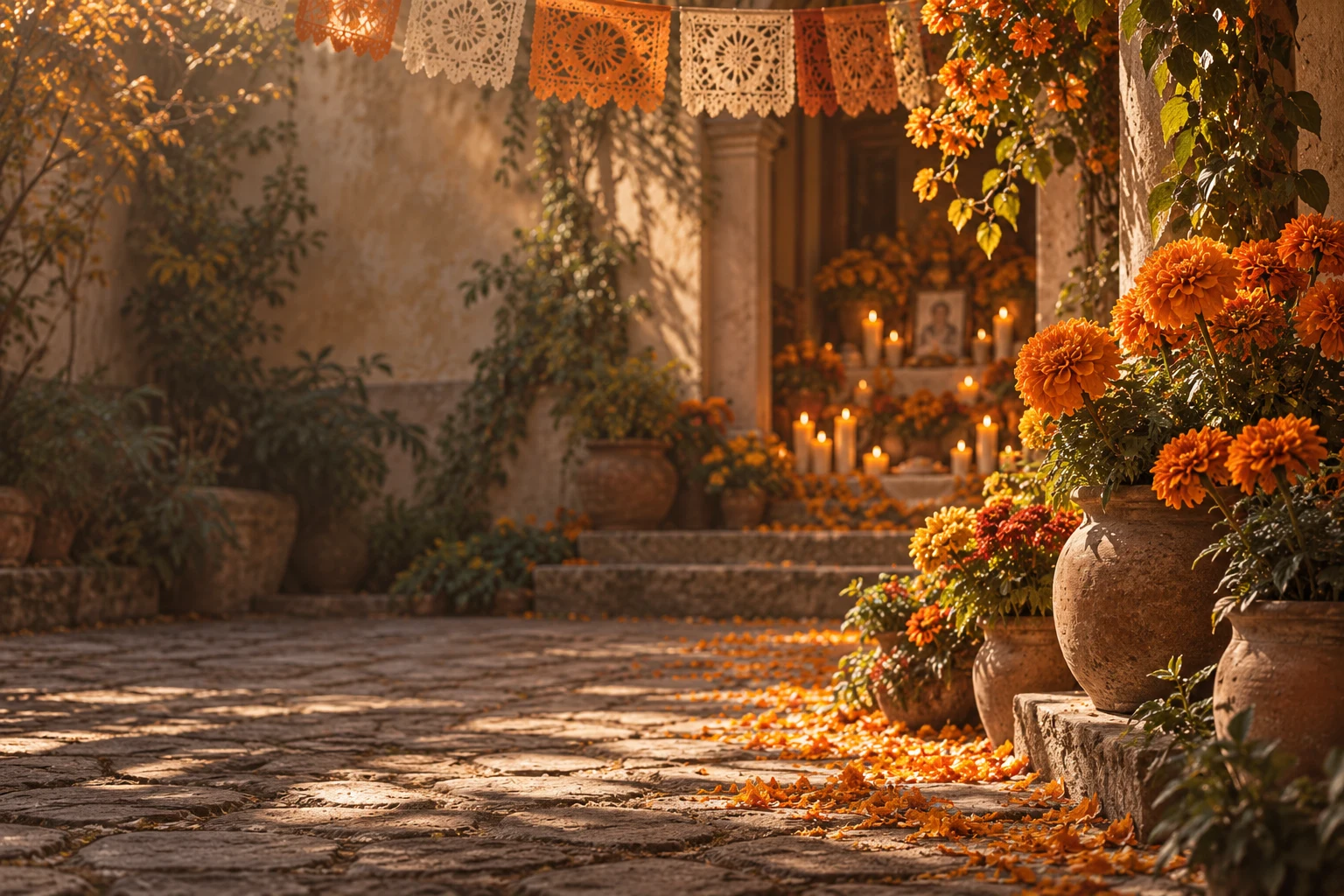
An ofrenda is an offering, and the word also commonly refers to the altar or arrangement where those offerings are placed. Photographs, favorite foods, candles, flowers, and meaningful belongings can connect the display to the person being remembered. Knowing that someone loved a certain dish gives that dish a place in the gathering.
UNESCO’s account of Indigenous festivities dedicated to the dead in Mexico describes flower petals, candles, and offerings along routes between homes and cemeteries. It also notes the preparation of the deceased person’s favorite food. Remembering can take the form of work done with care: cooking, cleaning a grave, placing flowers, and making room for stories.
Across communities
There is no single arrangement that speaks for everyone.
The observance draws on Indigenous traditions and Catholic commemorations, and is especially associated with late October and early November. Practices vary among regions, communities, and households. November 1 and 2 are important dates, but a tidy two-day summary cannot capture every local sequence or meaning.
Writing for the Smithsonian Center for Folklife and Cultural Heritage, Norma Cantú describes changes in altars and commemorations across places and generations. That is a useful way to approach the holiday: listen to the people who practice it, and notice how the objects carry a family’s particular relationships and memories.
Look a little longer
Ask what an object helps someone remember.
Choose one of the museum resources below and look at an ofrenda together. Ask which details tell you something about a particular person. A food, a photograph, or an ordinary belonging might open a conversation that a broad holiday description cannot.
For your own family conversation, name something that reminds you of a loved one: a song they sang, something they made, or a phrase they always used. Keep the connection specific. Remembering is often richest where the details are small enough to belong to one person.
SHARE THIS WITH THE KIDS
A few things to talk about together.
- Cempasúchil marigolds have a long role in Mexican traditions honoring the dead.
- Flower color and scent are believed to help welcome returning loved ones.
- Ofrendas include details connected to the people being remembered, and customs vary.
A FEW OF THE SOURCES BEHIND THIS PIECE
Read a little deeper
- Mexico’s SEMARNAT: Cempasúchil, luz en el camposanto (Spanish) (opens in a new tab)
- National Museum of American History: Día de Muertos and the ofrenda (opens in a new tab)
- UNESCO: Indigenous festivity dedicated to the dead (opens in a new tab)
- Norma Cantú, Smithsonian Folklife: Altered Altars (opens in a new tab)