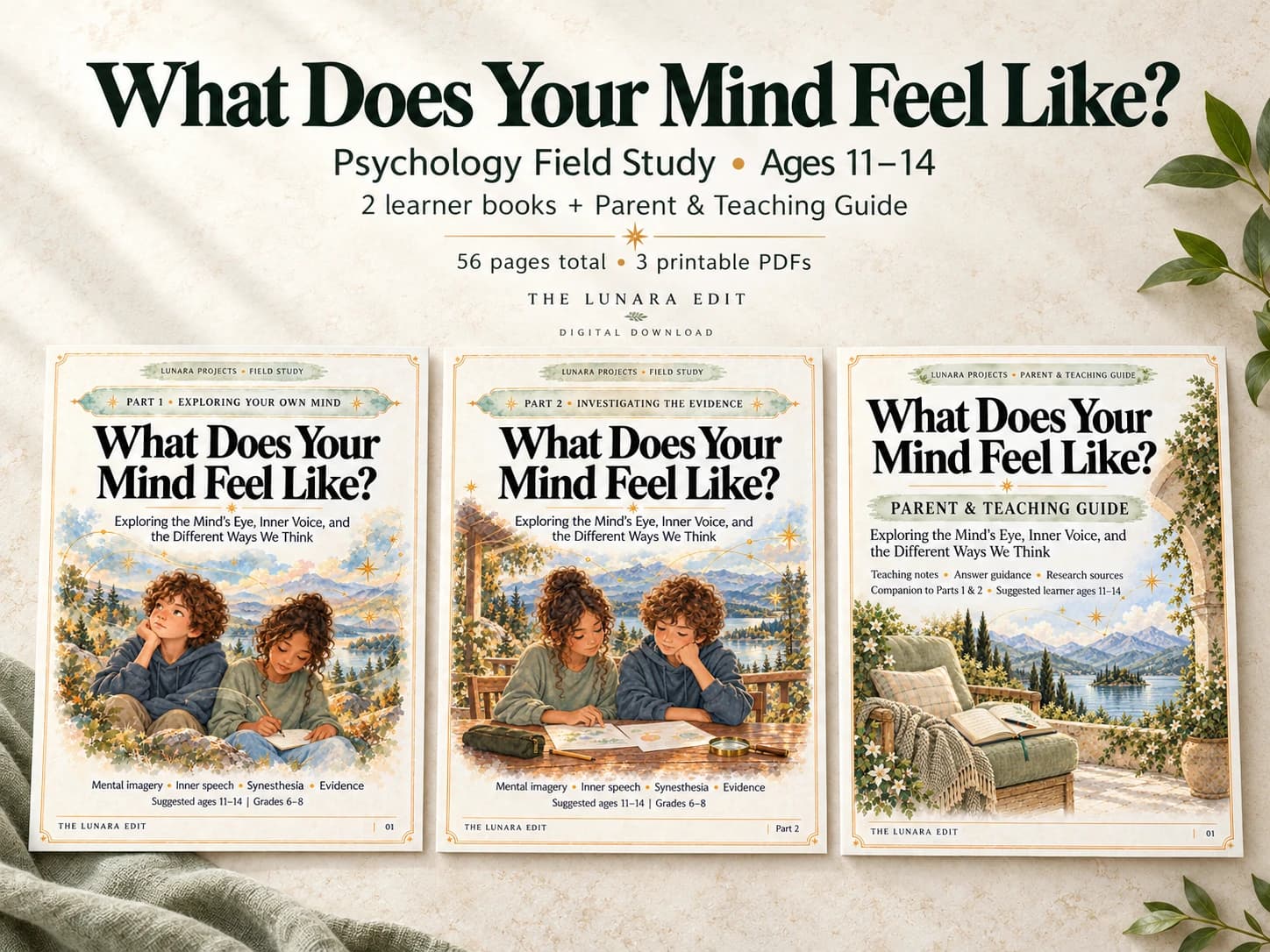
When you imagine an apple, what do you notice? You may describe a picture, words, a sense of knowing or an experience that is difficult to put into words. What Does Your Mind Feel Like? begins with observations like these and gives learners several ways to record them.
The two learner books explore mental imagery, inner speech, dreaming, remembering strategies and color associations. Learners then compare their records with research examples, separate observations from interpretations and explain what a study can support.
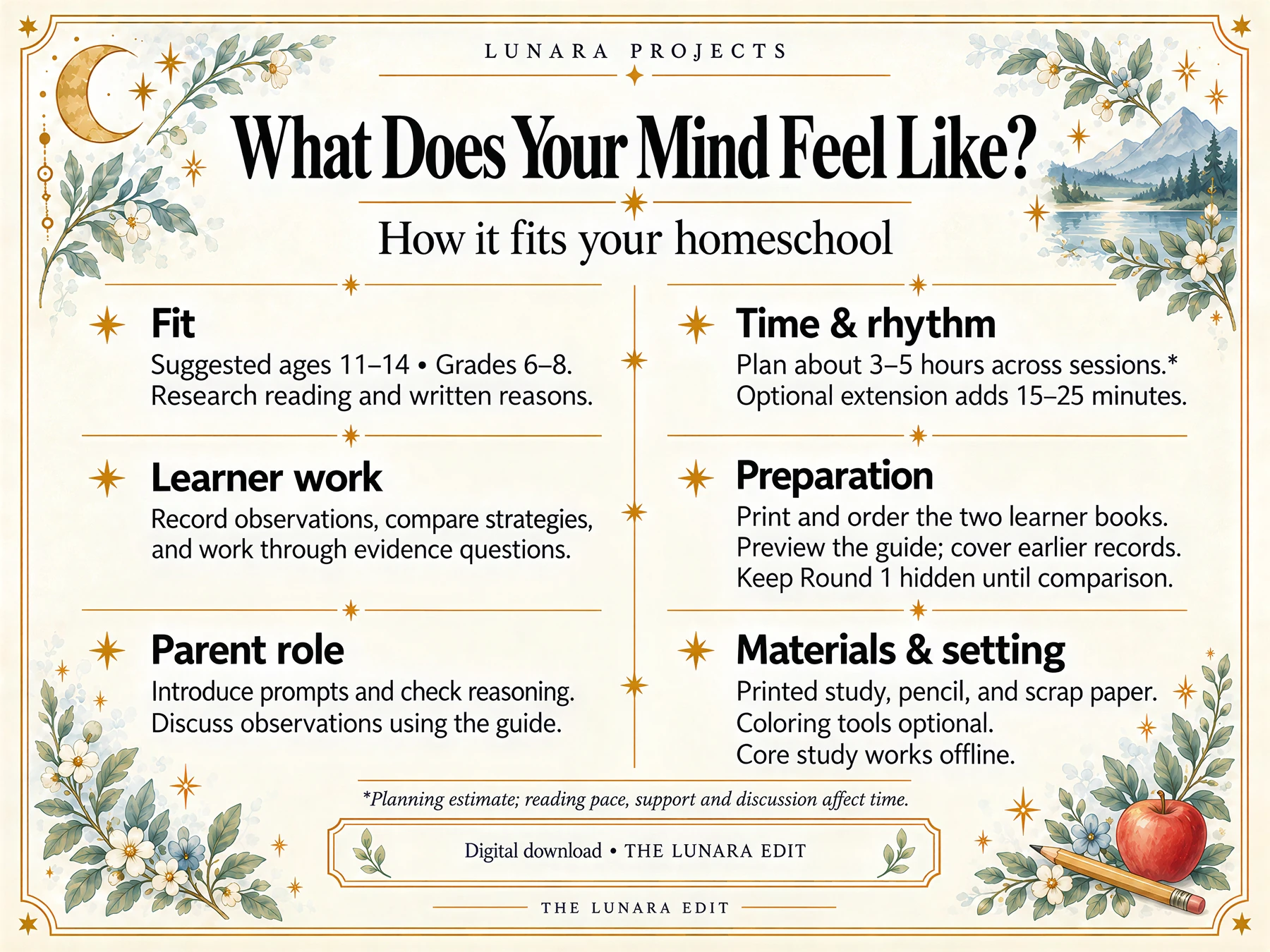
How it fits your homeschool
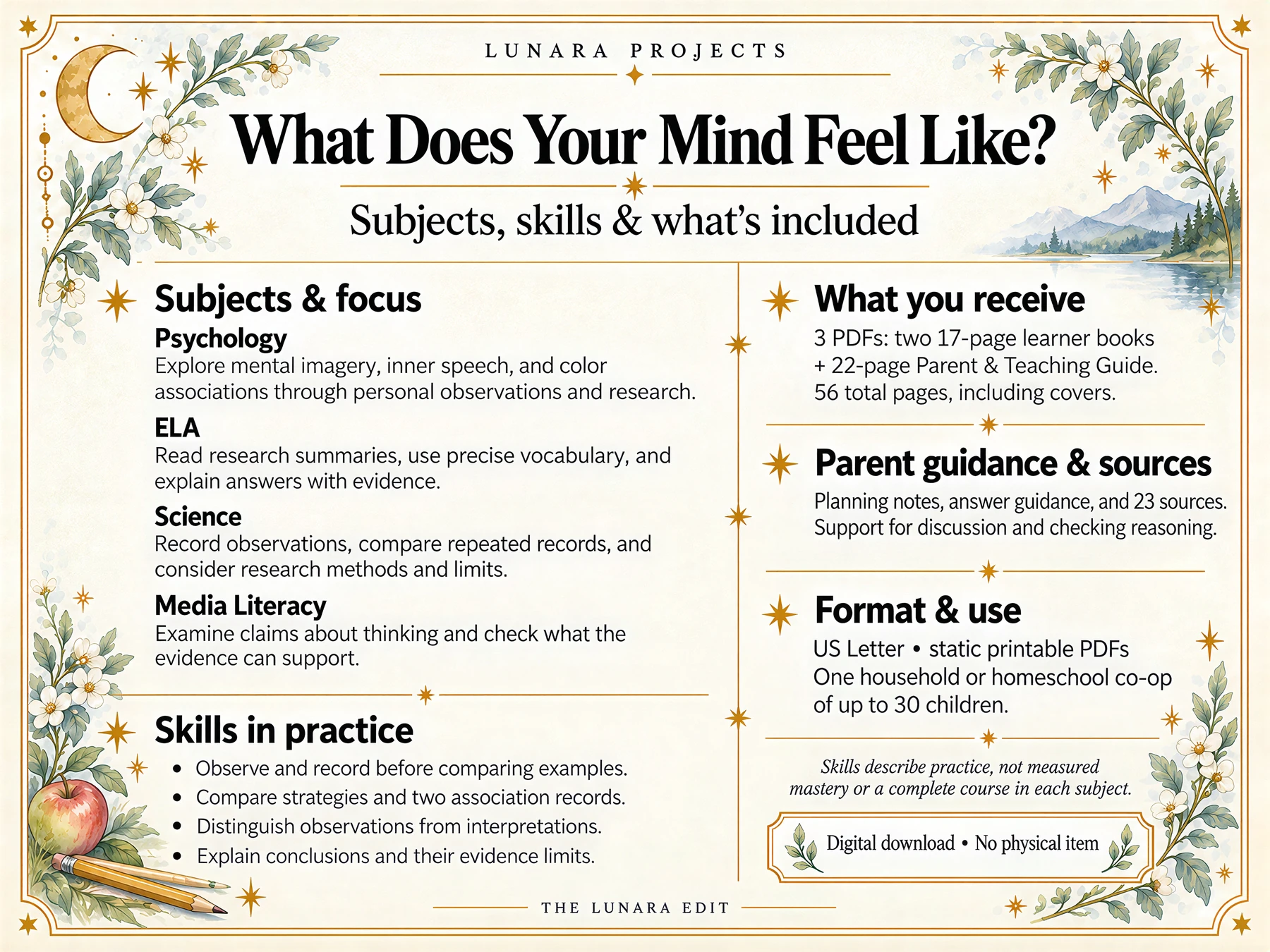
- Fit and readiness
- Suggested ages 11–14 / grades 6–8. Best suited to learners ready for short research readings and explanations of their reasoning. Read aloud, scribe or allow sketches as needed.
- Learner independence
- 4/5 — Mostly independent. Learners record observations, compare strategies and repeated records, interpret evidence, build an Inner Experience Map and answer retrieval questions.
- Parent involvement
- 2/5 — Light involvement. Introduce the study, discuss questions and check reasoning with the guide. Allow about 10–25 minutes for orientation and discussion; extra reading or writing support adds time.
- Time and rhythm
- Plan about 3–5 hours of core learner work across flexible sessions. Optional Go Deeper work adds 15–25 minutes. Leave a gap between the two color-association records and keep Round 1 covered during Round 2. These are planning estimates, not measured completion times.
- Preparation
- 1/5 — Open and go after printing. Allow about five minutes to order pages, skim the guide and gather a pencil or pen and a sheet to cover earlier answers.
- Materials and setting
- Printed pages, pencil or pen and scrap paper. Coloring tools are optional. The core work needs no internet, device after printing, outdoor access or second learner.
Support and preparation ratings are editorial planning guides, rather than learner-tested scores. Reading and response needs determine the help each learner will use.
Subjects, skills & what’s included
- Psychology: Mental imagery, inner speech, spatial knowing, dreaming, color associations and remembering strategies.
- English Language Arts: Research summaries, precise vocabulary and explanations supported by evidence.
- Science: Observation records, repeated comparisons, research methods and evidence limits.
- Media Literacy: Claims about thinking and what their supporting evidence can establish.
What the learner makes
Learners make observation records, compare remembering strategies and two color-association records, explain evidence, build an Inner Experience Map and optionally plan a study.
Inside the download
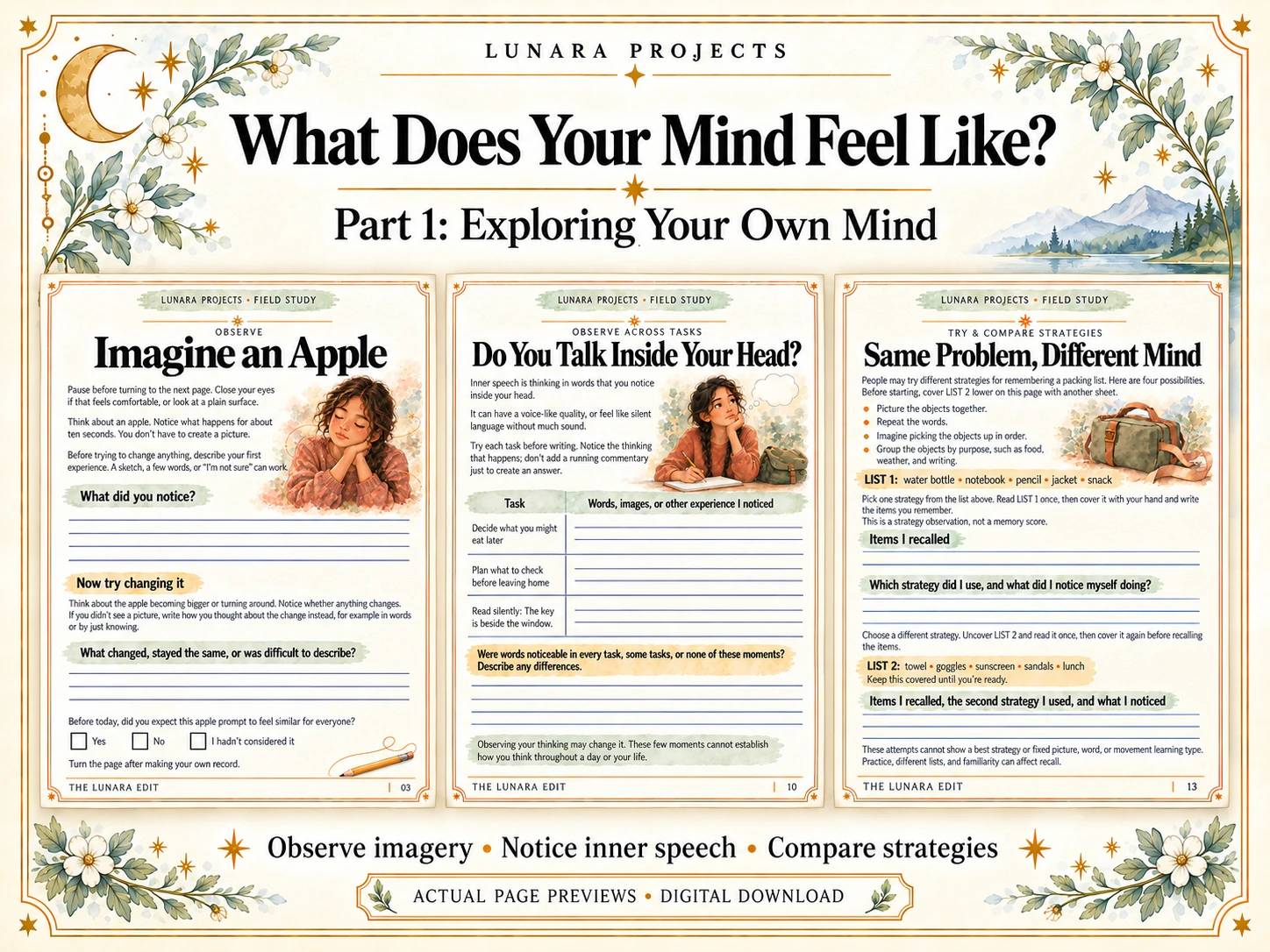
- Part 1: Exploring Your Own Mind — 17 pages
- Apple imagery, imagining and knowing a space, dreaming, inner-speech observations, remembering strategies, color-association records and introductory research readings.
- Part 2: Investigating the Evidence — 17 pages
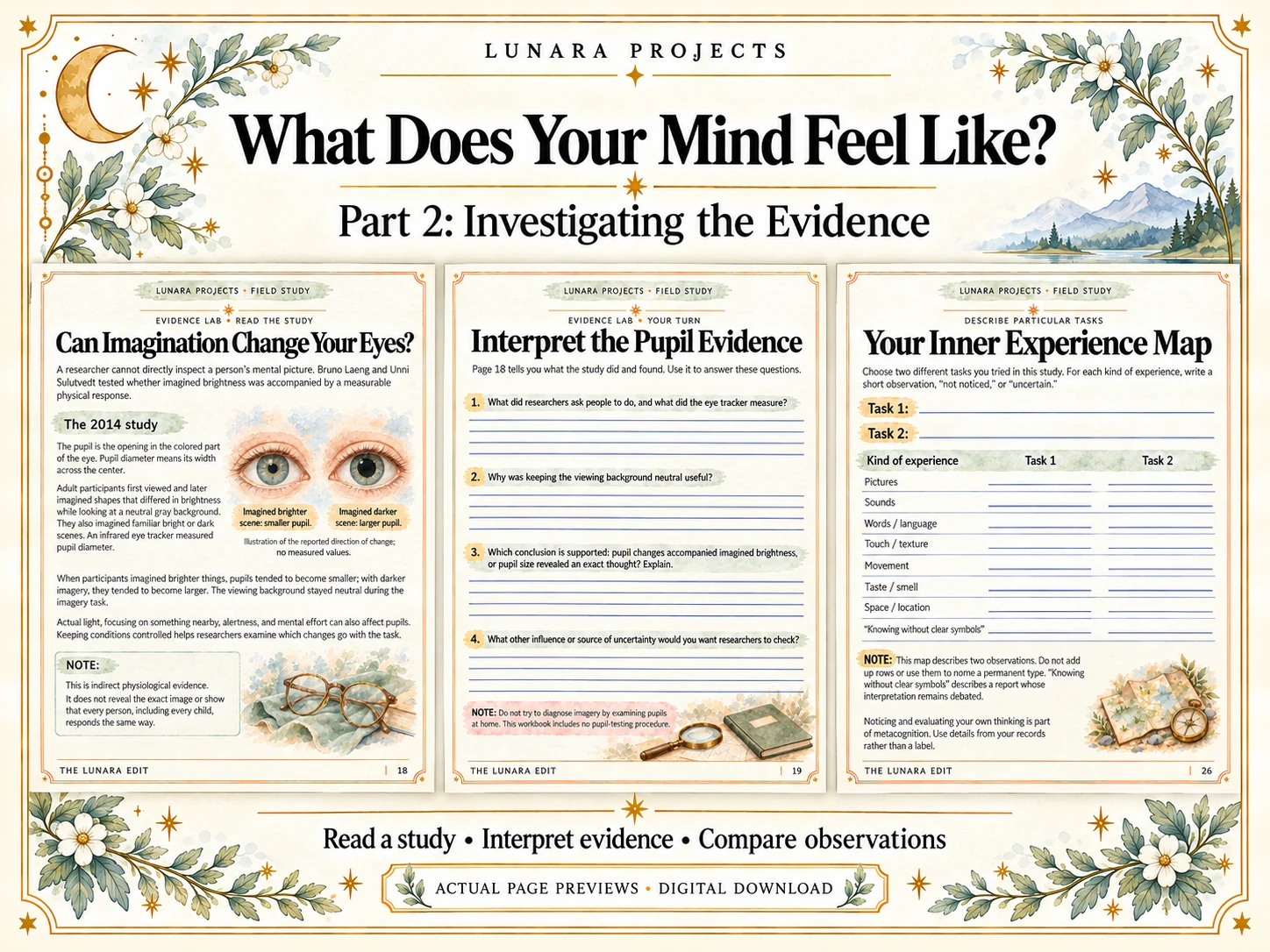
- Pupil-study evidence, research methods, observation and interpretation, the second color record, comparison and claim questions, an Inner Experience Map, retrieval questions, optional study design and printing notes.
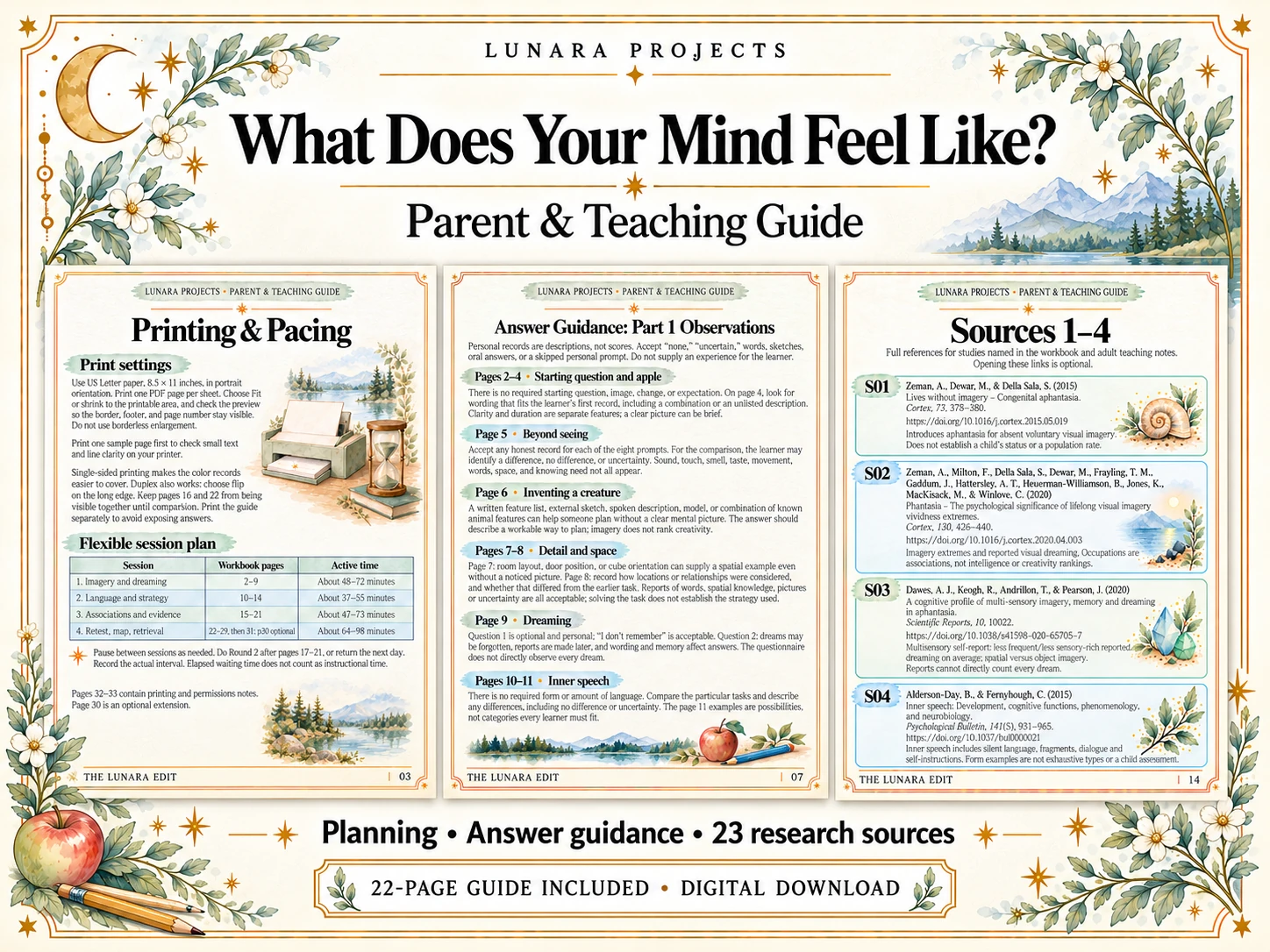
- Parent & Teaching Guide — 22 pages
- Planning and pacing, participation and accessibility notes, research boundaries, answer guidance for both parts, 23 source references and printing permissions.
This is educational exploration of thinking and research. Activities do not diagnose a condition, rank thinkers or assign a fixed learning style. “None,” “uncertain” and “hard to describe” are valid records; learners may skip personal prompts.
Look through the previews
Open a preview at full size to check the reading, activities and response spaces. Listing images illustrate the resource; the purchase delivers the PDF books described above.
Printing, downloads & permissions
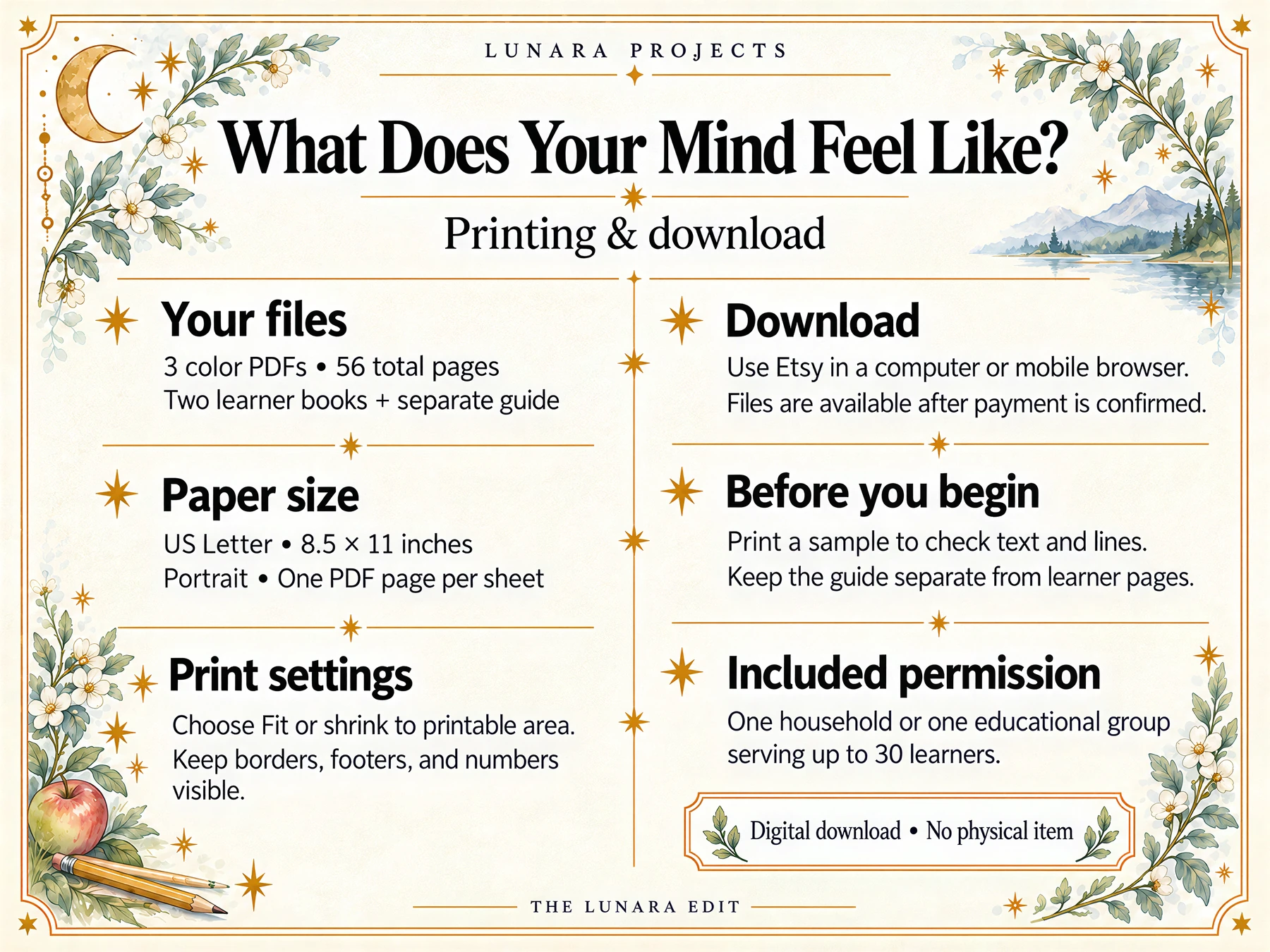
Three static color PDFs, 56 total pages including covers, notes, references and permissions. The learner books contain 34 PDF pages including their covers. US Letter, 8.5 × 11 inches; not editable or fillable. Print one PDF page per sheet with Fit or shrink to the printable area; avoid borderless enlargement. Print a sample page and keep the guide separate for the learner’s first attempt.
This is a digital download; no physical item is shipped. After payment, access the files in Polar’s customer portal using your purchase email address. The illustrated artwork and listing mockups were created with AI assistance.
One purchase covers one household OR one homeschool co-op, learning pod or educational group of up to 30 learners. Print and reprint for those learners and adapt for accessibility. Keep complete files within the licensed household or group staff; do not publicly post, redistribute or resell the packet or its original written lessons. Keep source and copyright notices on copies. The guide includes the full license.
For a larger group or help with a download, email hello@lunaraedit.com. See the purchase and refund information.
USD · tax shown at checkout
Checkout with Polar
Printing permissions
For one household or one co-op, pod, or learning group of up to 30 learners, unless the product’s own terms say otherwise. Reprint for those learners; keep complete digital files within the licensed household or group staff. The copying restrictions concern original human-authored writing and complete packets. We do not claim exclusive copyright over purely AI-generated imagery.
See the product license, safety guidance, and download support. For larger groups or a file problem, contact us.