“Thank you for helping me bake, Nana.” Put those words on the front of a folded card and you have something a child can carry to the table and set by someone’s plate. They might add a drawing of the mixing bowl, or ask you to write what they say while they color the frame. That little card can be the whole activity for the day.
I made Around the Harvest Table for ages 4–8, with short read-alouds and a mix of counting, tracing, puzzles, and paper crafts. Here are three ways to start, including a few things you can try with supplies you already have.
Start with the people who were already here
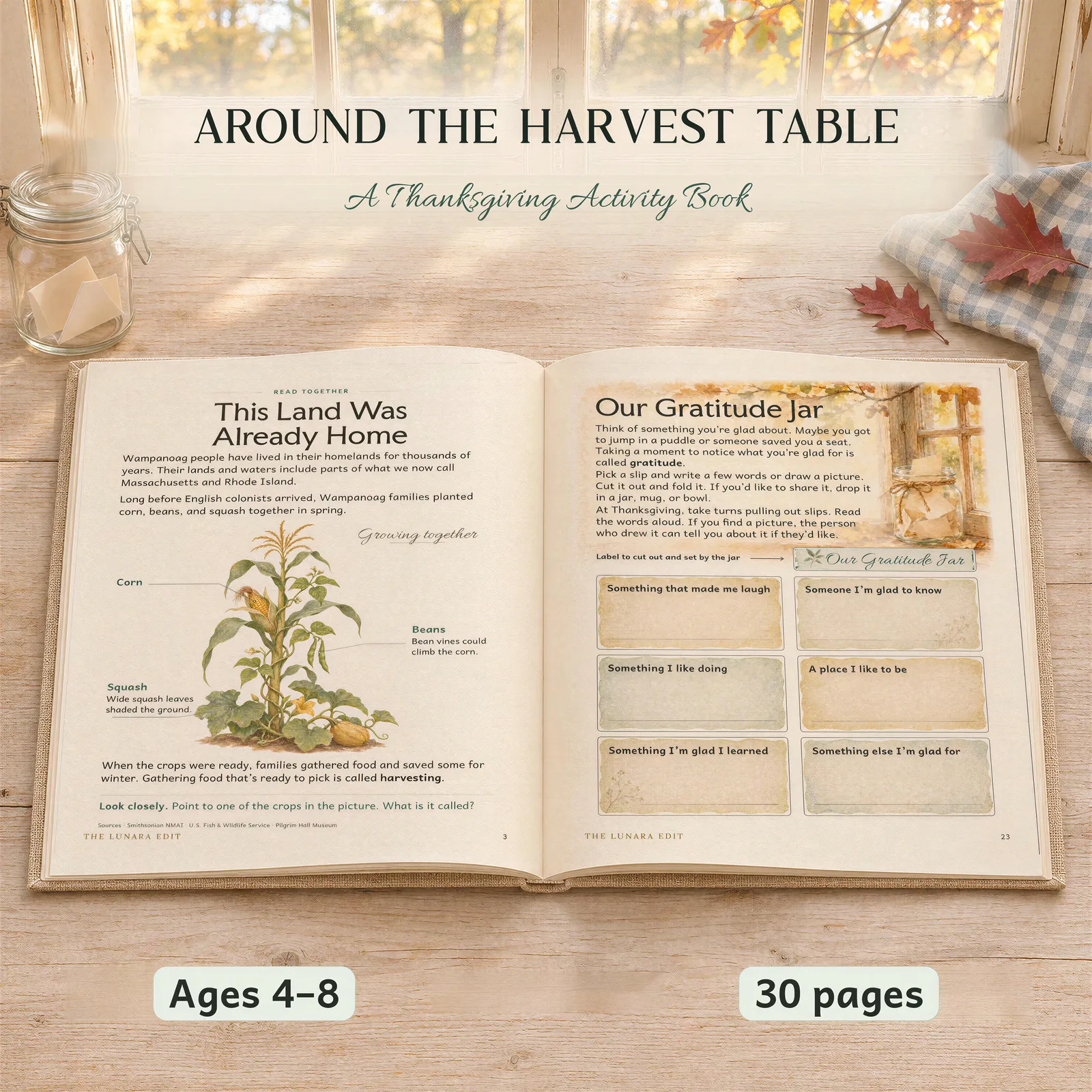
Look at the drawing of corn, beans, and squash and ask your child to find the plant the beans are climbing. The corn gives the vines a place to climb, and the squash leaves shade the ground. It gives you something concrete to talk about as you read about Wampanoag homelands and how people grew and gathered food there.
Smithsonian National Museum of the American Indian (opens in a new tab) · U.S. Fish and Wildlife Service (opens in a new tab)
Then read about the harvest gathering of 1621. One page retells a little of Edward Winslow’s account in everyday language. Ask your child to listen for one food the account actually names. You can also bring the conversation to the present with the Mashpee Wampanoag Tribe’s notice about community garden plots for Tribal members. Ask what your child would plant if they had a small patch of their own.
Winslow’s account via Plimoth Patuxet Museums (opens in a new tab) · Mashpee Wampanoag Tribe garden notice (opens in a new tab)
Give little hands something to count
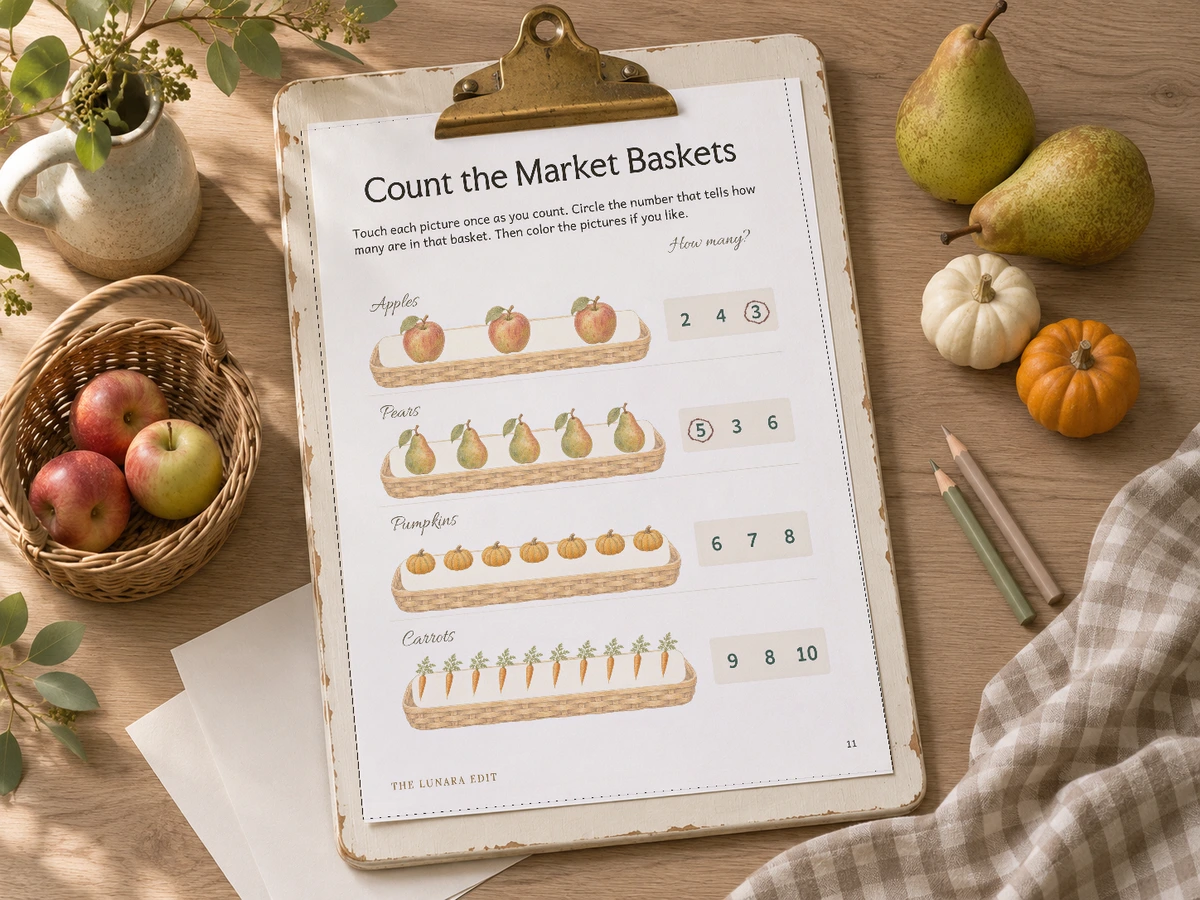
Set out a few apples or pears and let your child touch each one as they count. On the market-basket page, they can do the same thing with the pictures, then circle the matching number. Start with one basket if they’re still learning to count. If they’re ready for more, try matching the pears in two baskets to see how many are left without a partner.
There’s also an apple maze, a harvest word search, and a leaf you can lace with yarn. One page works well when dinner’s almost ready. You can save another for the next day.
Make a thank-you card or a gratitude jar
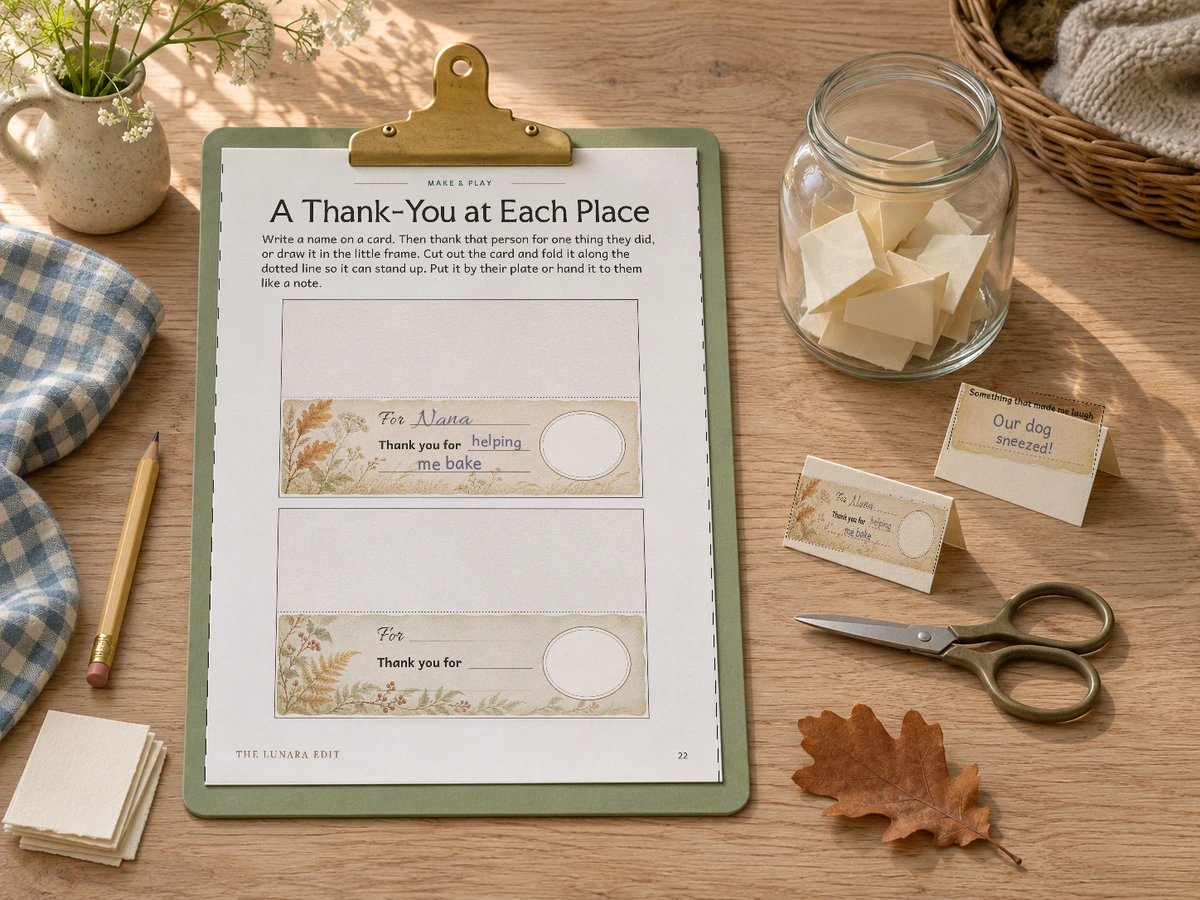
Help your child think of one thing somebody did for them. You might ask who helped find a lost shoe, came to watch their game, or let them lick the spoon. Write the person’s name, add the thank-you or draw it in the small frame, then help cut and fold the card so it can stand by their plate. A folded scrap of cardstock works, too.
If a jar sounds more like your family, set out scraps of paper and invite anyone who wants to join to draw or write one thing they’re glad for. “Something that made me laugh” is a nice place to start. Fold the slips and drop them in a jar, mug, or bowl. At a meal, take turns pulling one out and let each person decide whether to share. The printable has six prompts and a little label you can set beside the jar.
Bring the activity book to your table
The digital download includes a 23-page learner workbook and a 7-page Parent & Teaching Guide, both US Letter. The guide has reading prompts, suggested ways to choose activities, answers, and linked sources. Print just the pages you want. A pencil and crayons cover most of the book, and cardstock helps the place cards stand.
Printing and distribution
For one household or one co-op, pod, or learning group of up to 30 learners, unless the product’s own terms say otherwise. Reprint for those learners; keep complete digital files within the licensed household or group staff. The copying restrictions concern original human-authored writing and complete packets. We do not claim exclusive copyright over purely AI-generated imagery.
See the product license, safety guidance, and download support. For larger groups or a file problem, contact us.
Created by The Lunara Edit using a mix of human and AI techniques. How I create and review these resources.