HOMESCHOOL · SUPPLIES WE USE
The homeschool supplies I use all the time.
My printer, spiral binding machine, laminator, and a few smaller favorites, including the clicky, spinny chairs that come with a warning.
The products recommended here are ones I have personally used. Links marked “paid link” may earn me a commission when you buy, at no extra cost to you. As an Amazon Associate I earn from qualifying purchases.
Some of my most useful homeschool supplies are the machines that help with all the paper: printing it, protecting a page we want to use again, or turning a stack into a spiral book. Then there are the smaller things, like the pencil grips for my kiddo with dysgraphia and a multiplication table with bubbles to press.
These are things I use regularly as a homeschool mom. I wanted to put them together with a few notes about what each one is useful for, including the detail I would want someone to tell me before buying our chairs.
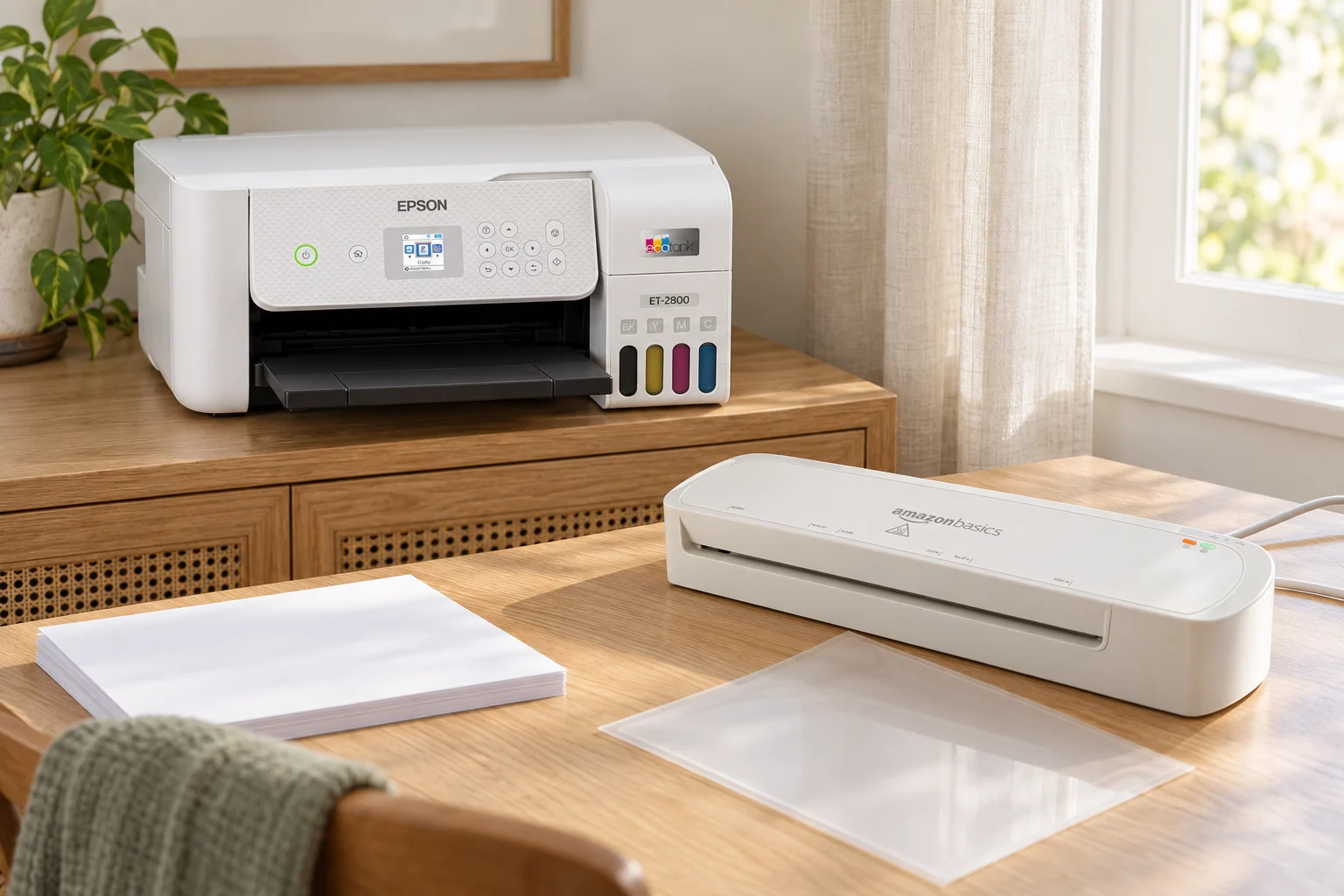
My Epson EcoTank inkjet printer
A printer is one of the tools I use all the time alongside printable homeschool materials. Being able to print at home means you can choose the pages you want for a particular lesson, print a whole study, or make another copy without a trip to have it printed somewhere else.
If you’re comparing printers, look at replacement ink as well as the purchase price. Check the paper sizes you need and how double-sided printing works on the model you’re considering; some printers turn the pages automatically, while others need you to reload them. Those everyday details matter when you’re printing more than the occasional form.
See the Epson EcoTank printer I use on Amazon (paid link) (opens in a new tab)
My spiral binding and punching machine
My binding machine punches the pages and lets me gather them into a spiral book. It’s particularly useful alongside a printer, because you can assemble the pages in the order you want and give the finished stack a cover.
A unit study, a nature journal, or a collection of writing pages can all become their own little book this way. If you already use a lot of printed material, think about which stacks you would actually want bound together. That gives you a better idea of whether a machine like this would get regular use in your home.
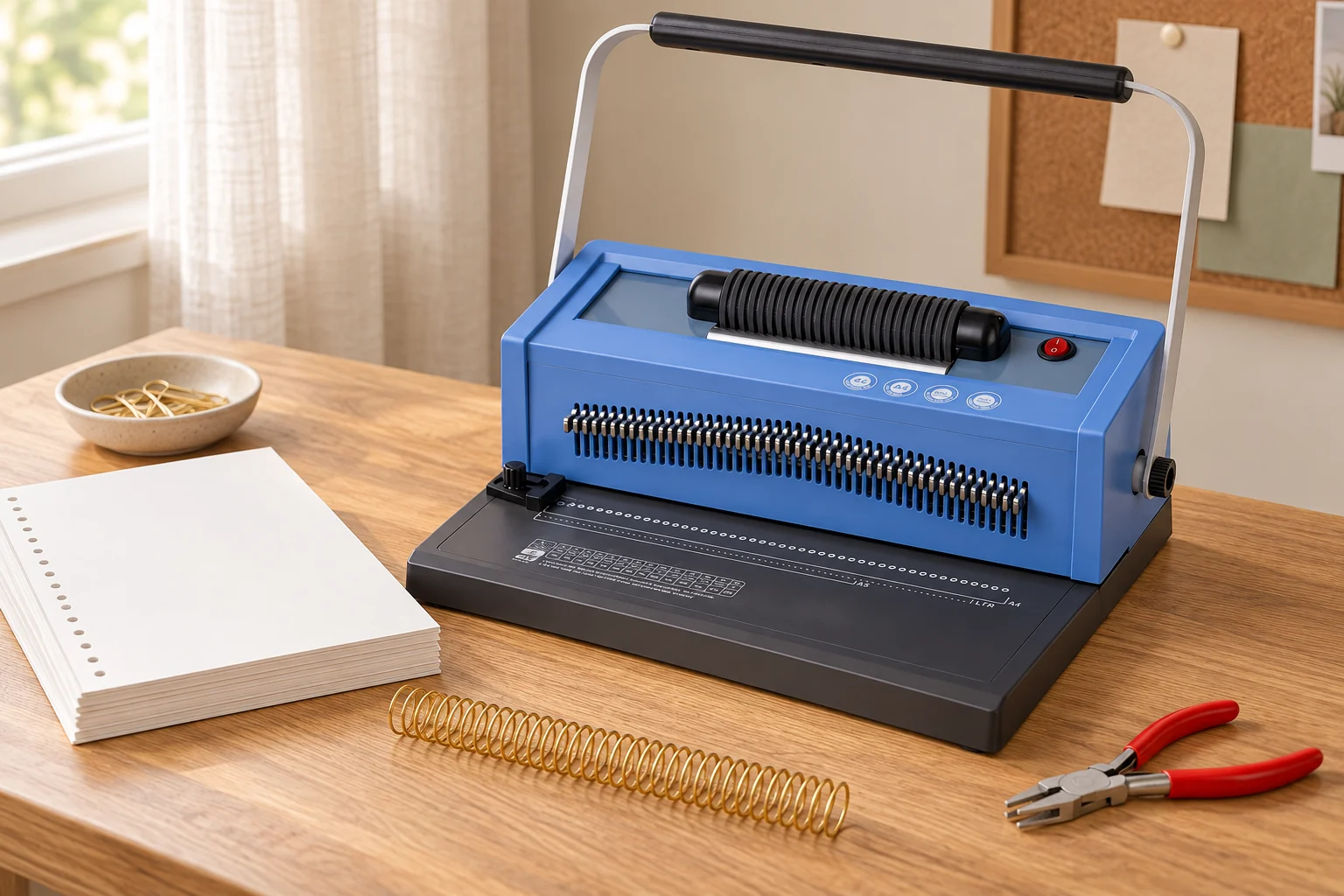
Before ordering binding supplies, check the machine’s binding system and hole spacing, along with the size of coil needed for your page count. Spiral coils, plastic combs, and double-loop wire use different systems; a pretty binding still needs to fit the holes you’ve punched.
See my TIANSE binding machine on Amazon (paid link) (opens in a new tab)
The pretty gold metal coils
I have to include the gold metal spiral coils, too, because I enjoy that little detail on a finished book. If you’re choosing them for your own setup, check the binding type and spacing against your machine before ordering, then choose the diameter for the thickness of your pages.
See the gold metal spiral coils on Amazon (paid link) (opens in a new tab)
My Amazon Basics laminator
The laminator is another supply I reach for regularly. It’s useful for protecting a reference page, making activity cards sturdier, or preparing a practice sheet you want to wipe clean and use again.
A page meant for pencil writing usually needs to stay paper, so I’d choose what to laminate rather than run a whole workbook through. For wipe-clean activities, try your marker on a spare laminated sheet first and check how easily it comes off. Match refill pouches to the sizes and thicknesses your laminator supports, and follow its feeding and cooling instructions.
Our clicky, spinny chairs
Our chairs spin, and the arms fold down to make room for a cat bed or for snuggling up with a pillow and blanket. I like having that extra space when we’re settling in, and these belong on the list partly because we enjoy them.
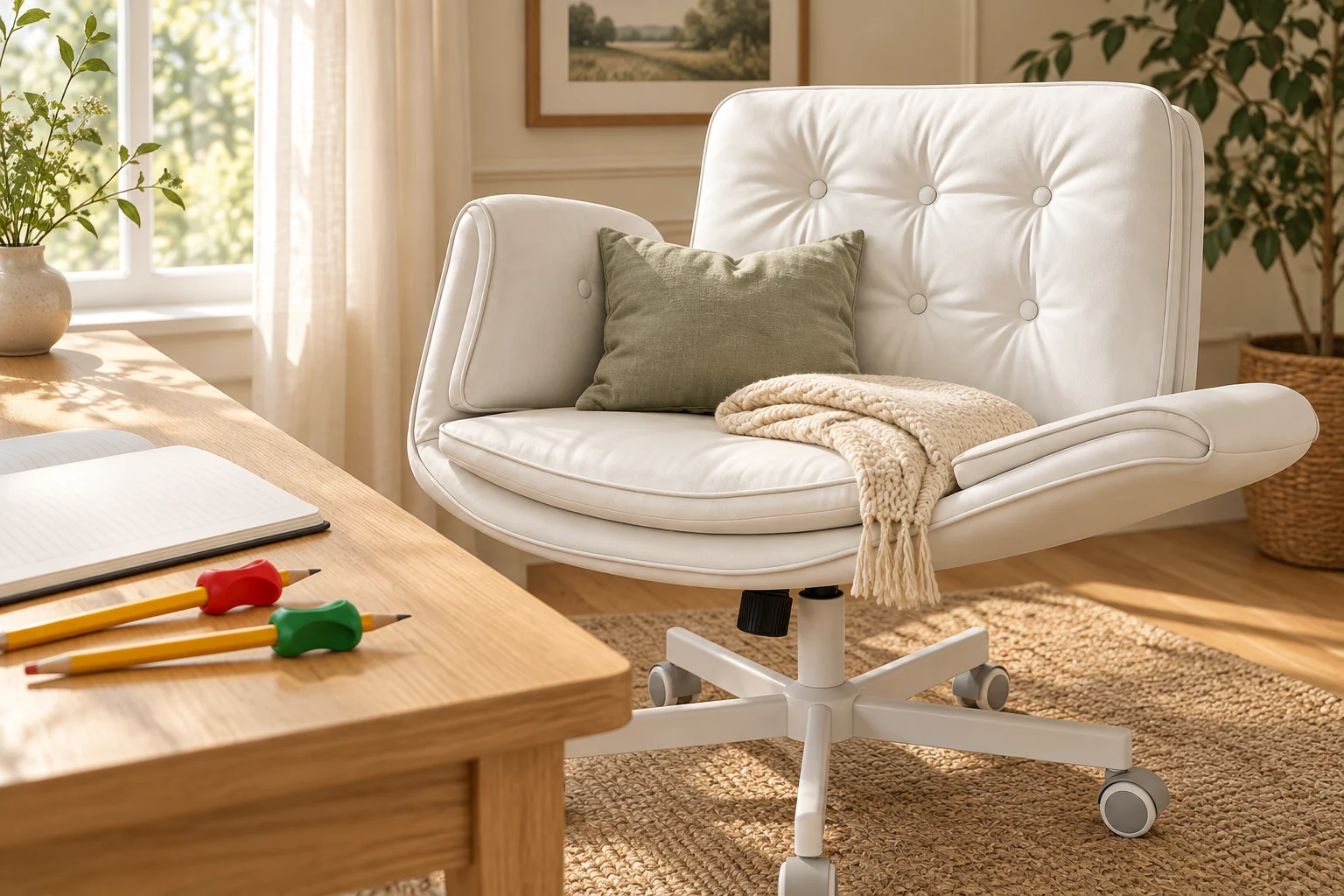
The kids love messing with the adjustable arms. They’re like built-in fidgets, complete with a click that gets very annoying when it happens over and over. If repetitive sounds bother you, consider this your warning before you buy.
Measure the chair against your desk before ordering, including the seat height and the space for the armrests. A wide seat can be lovely for curling up, but the person using it still needs a comfortable way to reach their work.
See our swivel chairs on Amazon (paid link) (opens in a new tab)
Pencil grips for my kiddo with dysgraphia
Pencil grips are one of the smaller things we keep coming back to. I use these with my kiddo who has dysgraphia, so they deserve a place here alongside the bigger equipment.
There are lots of grip shapes, and how a particular one feels matters. Pay attention to the fit and whether your child likes using it; a grip changes the part of the pencil their fingers hold, but it won’t address every reason writing might be difficult. These are the ones we use, rather than a promise that the same shape will suit every child.
See our Crossover pencil grips on Amazon (paid link) (opens in a new tab)
Our multiplication fidget table
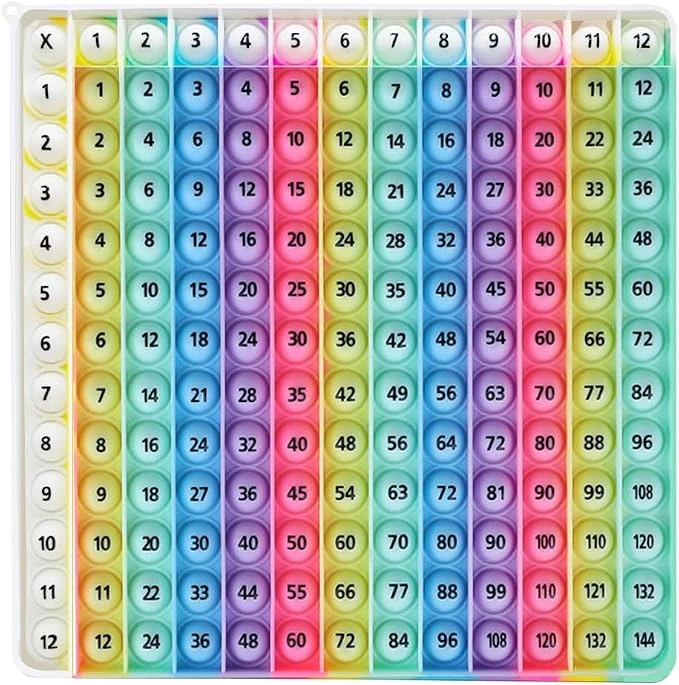
This combines a times-table reference with bubbles to press, which makes it a fun addition to the supplies. You can look up a fact, follow a row, or look for patterns in the answers while using the pop-it surface.
For practice, you could pair a fact with something you can count: three groups of four counters, for example, or three rows of four objects. The table keeps the numbers together while you choose what to explore with them.
See our multiplication fidget table on Amazon (paid link) (opens in a new tab)
Choosing what would be useful at home
If you’re putting together a homeschool setup, start with the job you want a purchase to do. A printer makes sense when you regularly use digital materials; a binding machine becomes more useful when you have printed pages to gather. You can add the things that fit the work you’re already doing, one at a time.
The images are digitally styled scenes based on the products shown, rather than photographs of our room. Check each listing for the exact product and current details.