HOMESCHOOL · RESEARCH AND WRITING
How to Help Your Child Write Their First Research Report
A question from a walk and a couple of scraps of paper are plenty to get started. Come try it with a beaver pond, then use the same steps with something your child wants to know.
Regular price $10.00Sale price $7.50 USD25% off
USD · tax shown at checkout
Checkout with Polar
Plan the lesson
- Who it fits
- Ages 10–14. Try a short reading together and ask your learner to tell you the main idea in their own words.
- What they’ll practice
- Choose a question, take notes from two sources, and use those notes to write a short report with citations.
- Your part
- Read the beaver example and compare notes together. Come back for the draft when your learner has a plan.
- What to gather
- Print the three US Letter PDFs. Set out a pencil, the two readings, and a notebook or device for the finished report.
Say you’re out on a walk and your kid stops to look at a pile of sticks across a creek. The water runs over the stones on one side, and on the other it’s still enough to see the sky in it. “How come the water’s so still over there?” When you get home, write the question down the way they asked it. You’ve got something to look up together.
Start with what they want to know
If your child wants to write about beavers, ask which bit they keep thinking about. If it’s the water, you could write “How does a beaver dam change a stream?” at the top of a page and leave it where you’re reading. When they come across something wonderfully odd about beaver teeth, they can save it for another day and come back to the water.
Once you’ve settled on a question, look together for two short readings that could help answer it. As you open each one, give it a number and jot down who wrote or published it, what it’s called, and where you found it. A link or a page number can save you both a hunt later.
Make a note while it’s fresh
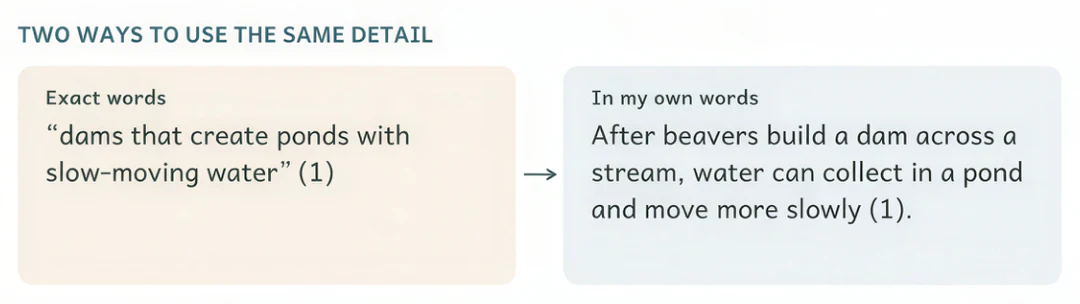
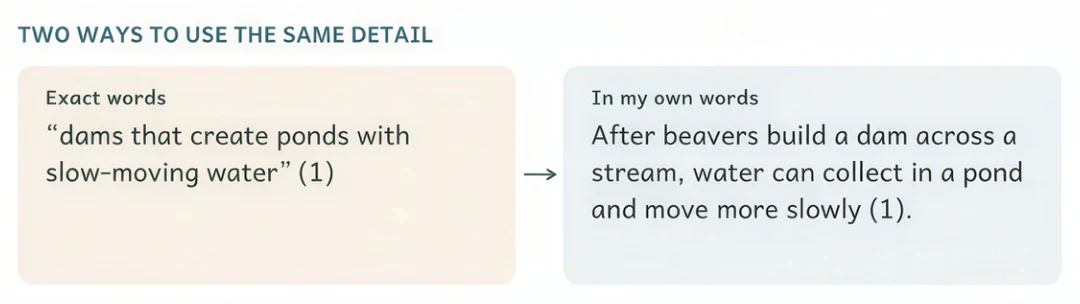
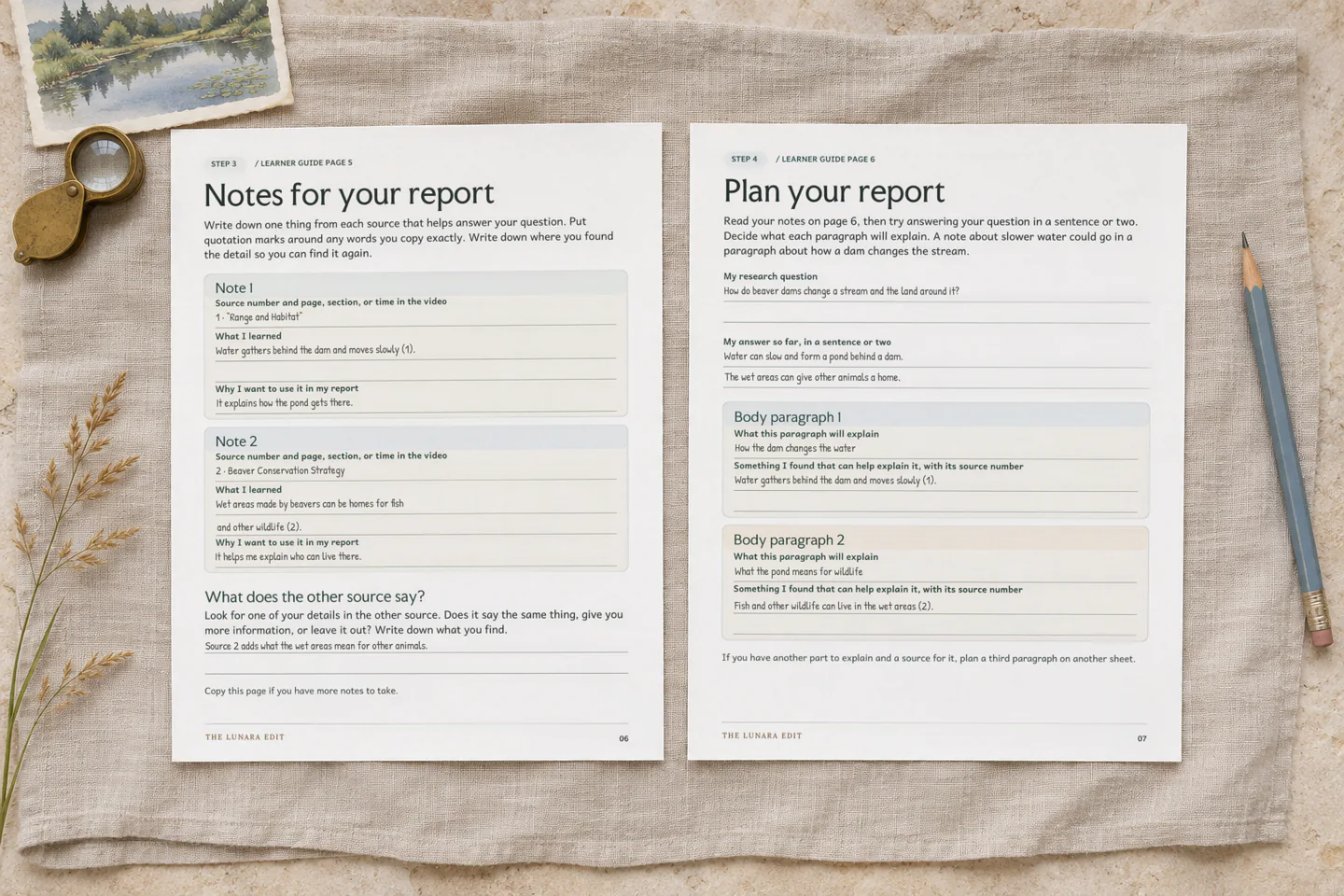
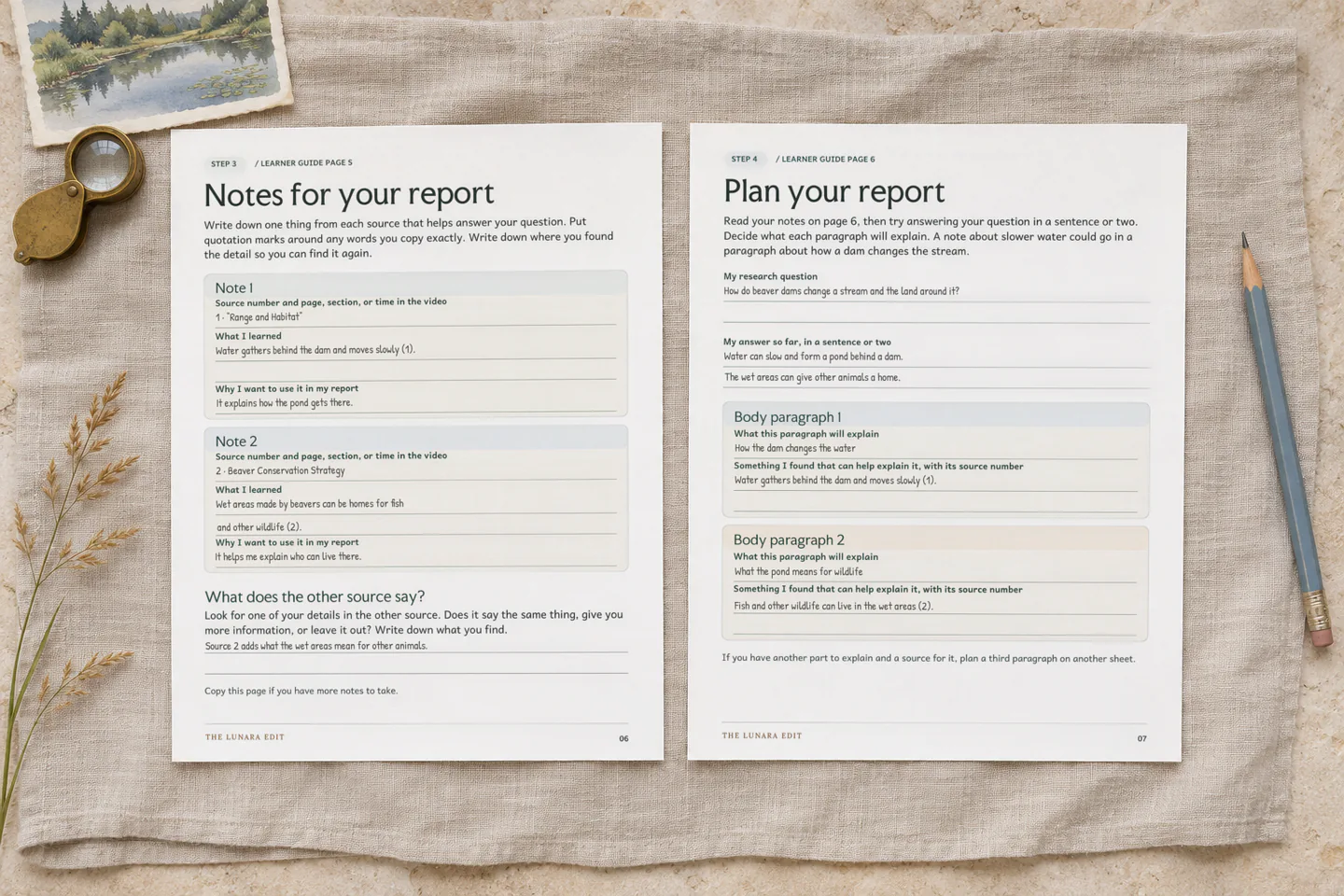
Read a little bit together, then ask, “How would you tell me what you just found out?” The National Park Service describes how a beaver dam can form a slow-moving pond. (1) Your child might write Water gathers behind the dam and moves slowly there (1). Putting it into their own words gives them a chance to work out what they understood. That’s paraphrasing, and a few words on a slip of paper will do for now.
If there’s a line they want to keep word for word, help them copy it carefully and put quotation marks around it. Keep the source number beside either kind of note, so your child can give credit in their report and find the reading again.
Move the notes around on the table
If you’ve got a bit of scrap paper handy, copy the notes below, one to each slip. Slide them around and ask your child which one they’d tell you first if you’d never seen a beaver pond.
The water slows down
Water can gather behind the dam and form a pond where it moves slowly (1).
Who can live there?
The wet areas beavers create can give fish and other wildlife a place to live (2).
Your child might start with the water, because it’s easier to talk about who lives in the pond once you’ve explained where it came from. They can use one slip for each body paragraph. For the first one, ask them to tell you what happened to the water after the dam went in. They can write that down, add the detail from their note with its source number, and explain how the water gathering there made a pond possible.
When the first sentence is hard
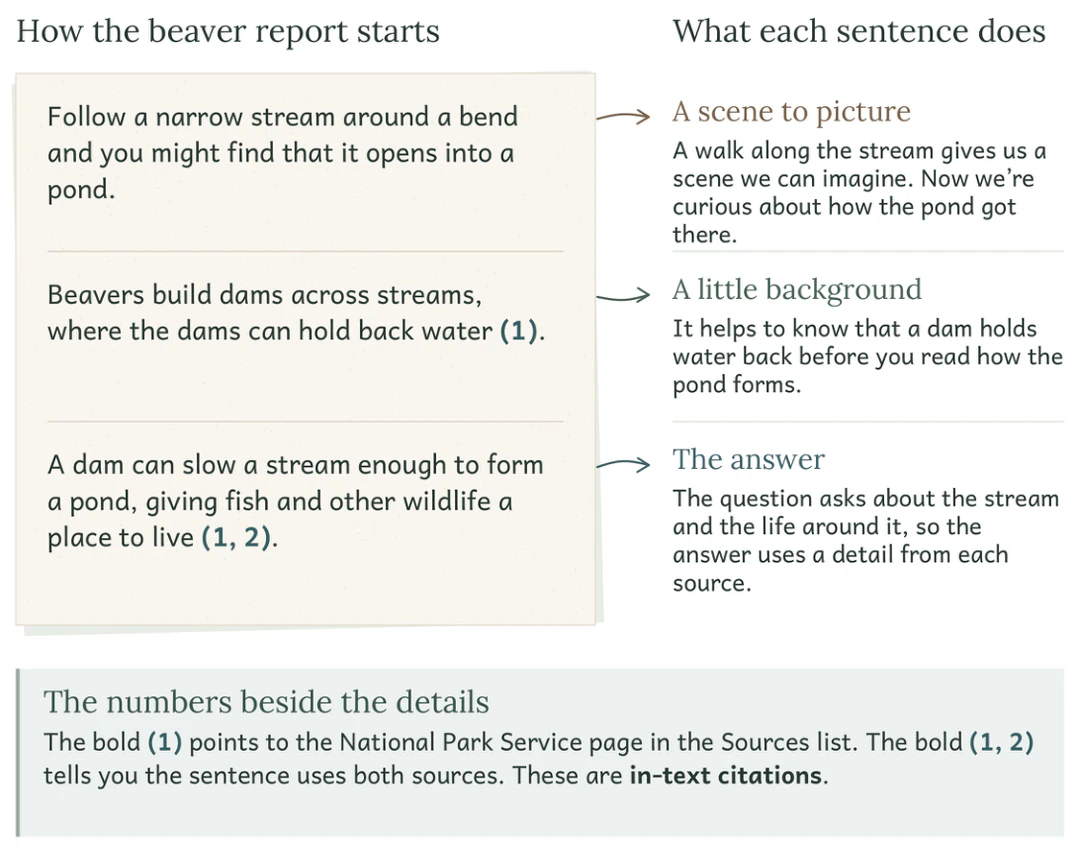
If your child’s been staring at the first line for a while, try asking, “If I asked you how that dam changed the creek, what would you tell me?” Jot down what they say and read it back together. There may be a sentence right there they’d like to use. For the introduction, they can tell their reader what they wanted to find out and give a short version of what they learned.
From the plan to the first two paragraphs
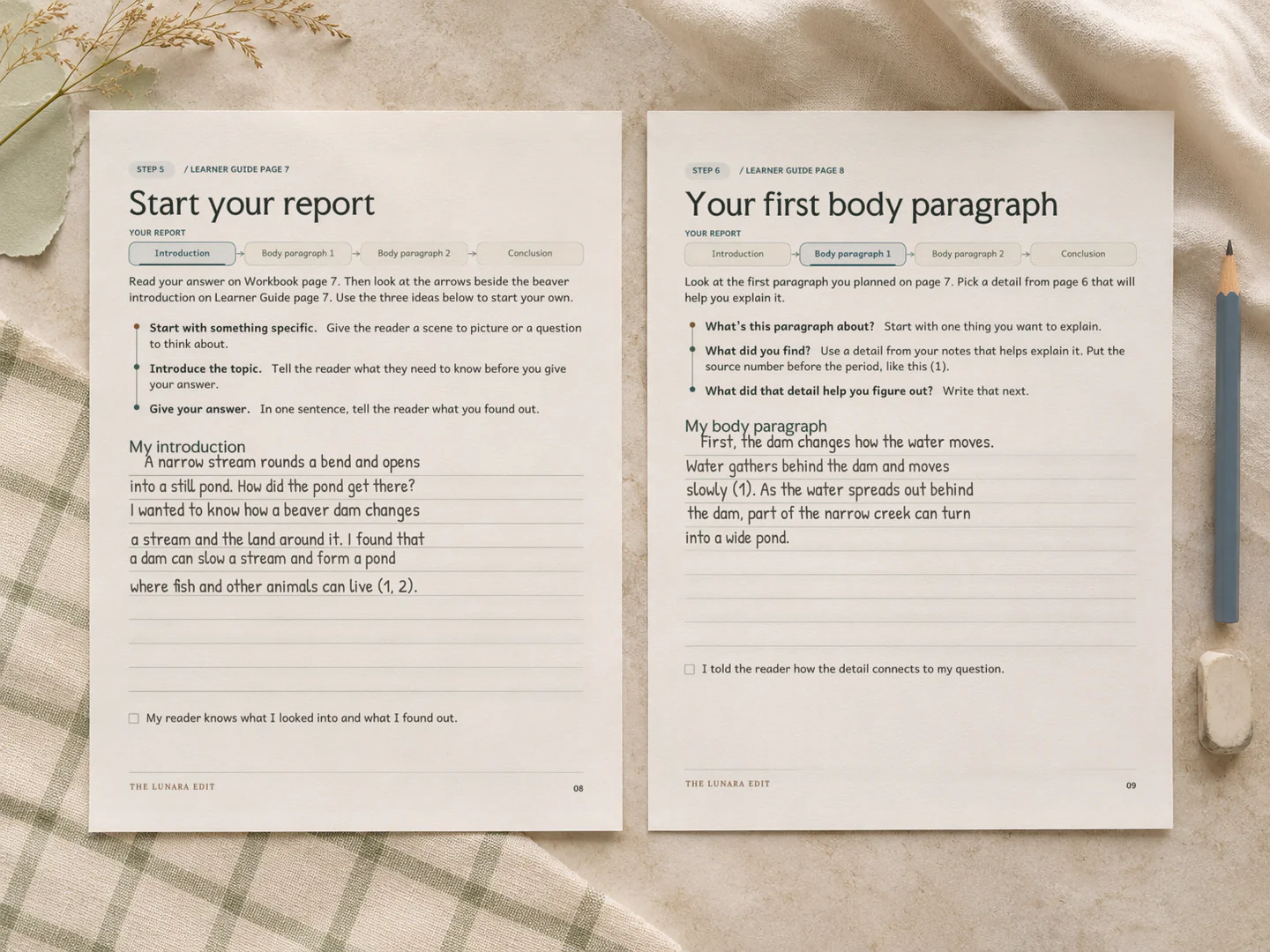
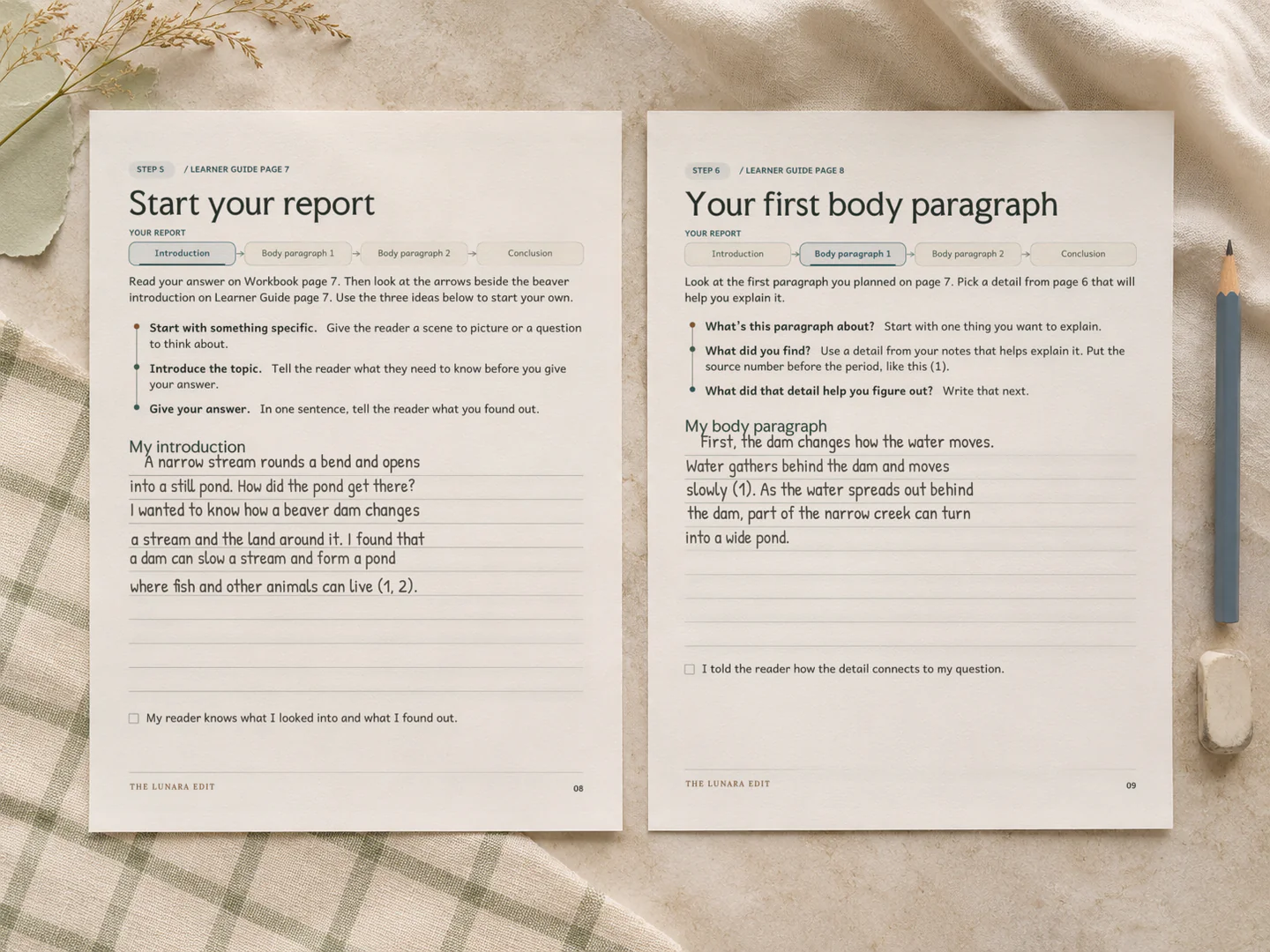
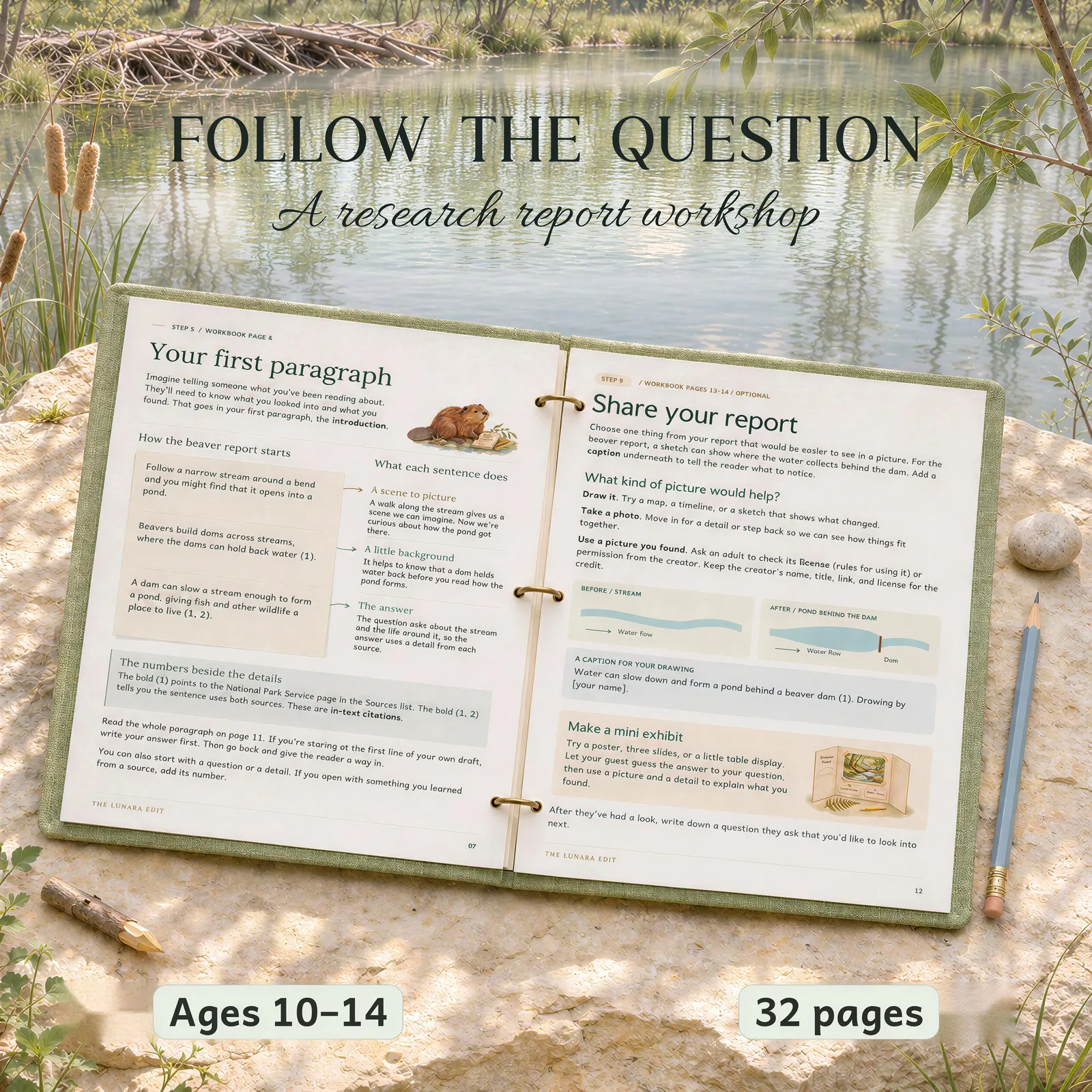
On page 8, the first prompt asks for something the reader can picture, so this draft starts at a bend in the creek. When the writer gets to “Give your answer,” they can go back to the plan on page 7. The pond and the animals that can live there were already in their answer.
On page 9, “What did you find?” gives the writer a spot for the slow-water detail from their notes on page 6, with its little (1) still beside it. The next prompt helps them add a sentence about what they figured out from that detail. As the water spreads out behind the dam, a narrow stretch of creek can become a wide pond.
Read the sample paragraphs
Introduction
A narrow stream rounds a bend and opens into a still pond. How did the pond get there? I wanted to know how a beaver dam changes a stream and the land around it. I found that a dam can slow a stream and form a pond where fish and other animals can live (1, 2).
First body paragraph
First, the dam changes how the water moves. Water gathers behind the dam and moves slowly (1). As the water spreads out behind the dam, part of the narrow creek can turn into a wide pond.
When they get to the last paragraph, read the question they started with and then read their ending aloud. See if the ending helps you understand how a change to the water also changed things for the animals there. Pick a fact from anywhere in the draft and follow its little number to the source list. That’s how a citation helps someone else find what your child read.
Some kids will want you there for the first reading, then disappear with the notebook. If getting the words onto paper is slow going, they can type a paragraph or say it while you write it down. Read it back together so they can hear where they’d like to change something.
A picture to go with the report
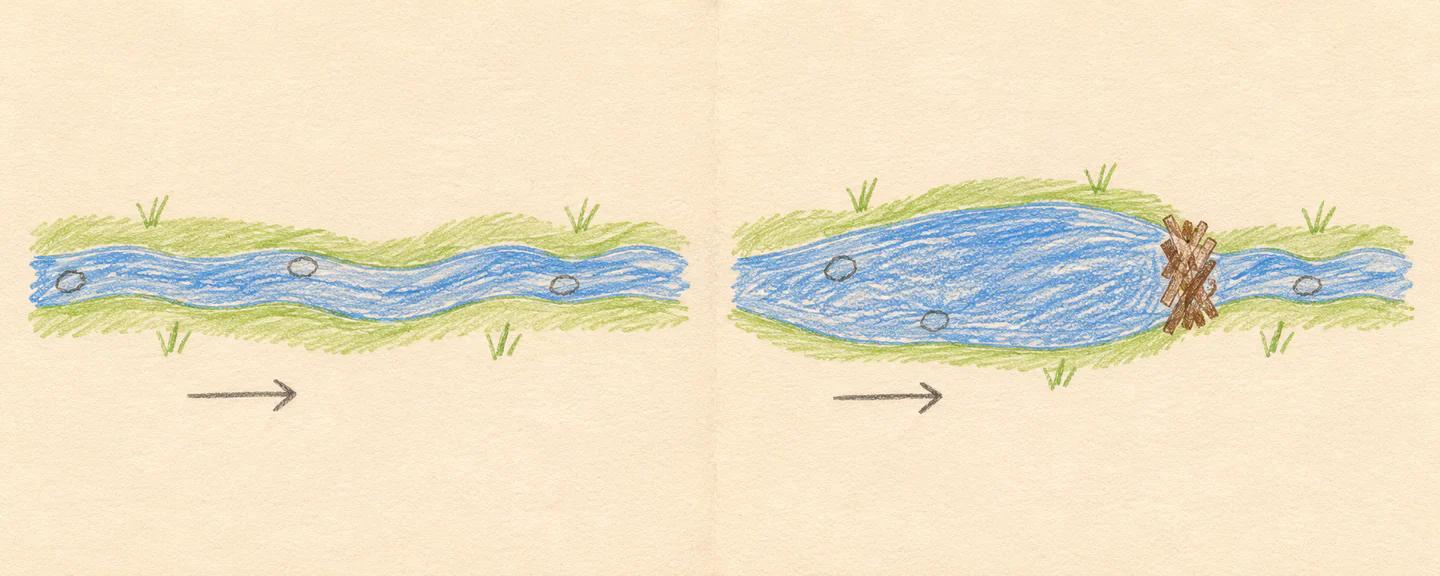
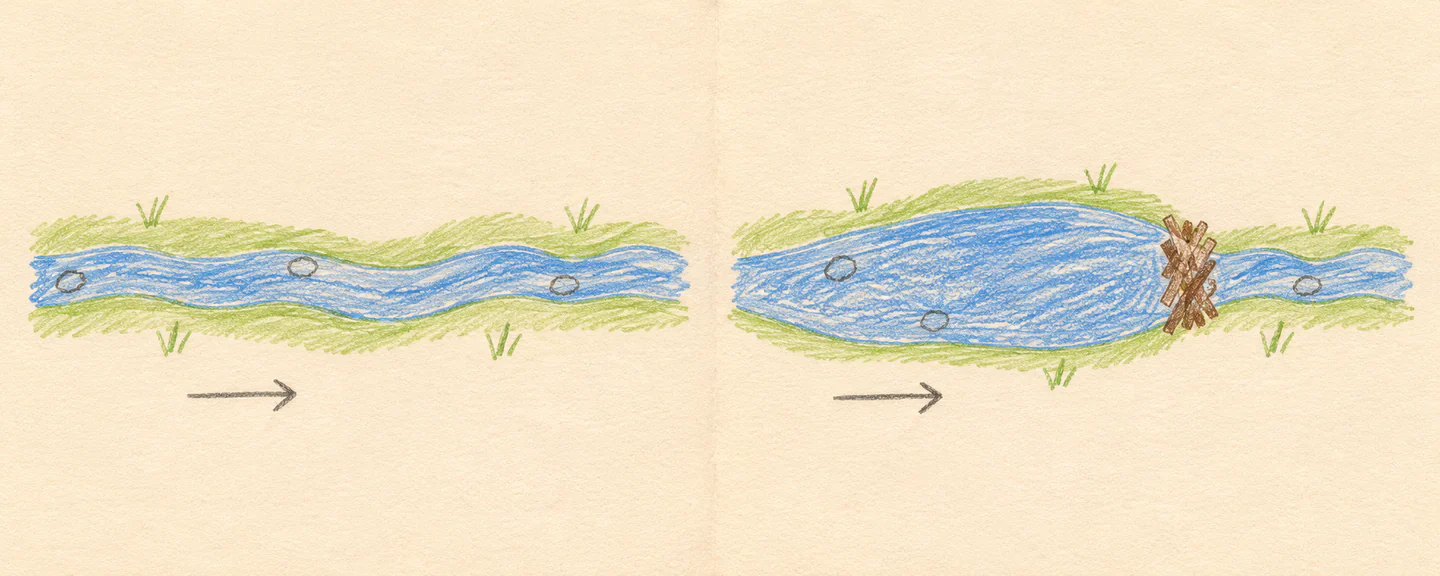
If your child feels like showing someone what they found, try folding a sheet of paper in half and drawing the same bit of stream twice. They can sketch it before the dam on one side and with the pond on the other. A short caption gives them something to point to as they explain where the water changed.
Inside Follow the Question
I made this workshop for ages 10–14 so your child has a beaver report to look at while they figure out a report of their own. You can sit together for the parts where they want company, then let them take the notebook when they’re ready to try a bit on their own.
- Learner Guide · 12 pages. Read the beaver report a paragraph at a time and see where the ideas and citations came from.
- Learner Workbook · 14 pages. There’s room to pick a question, keep track of two sources, take notes, and plan, write, and check the report. There are pages for a picture or presentation if they’d like to share it.
- Parent & Teaching Guide · 6 pages. Keep this one nearby for the plan, questions to ask as you talk through a draft, and two short readings you can practice with together.
The three US Letter PDFs have 32 pages altogether. Set out a pencil, the two readings, and a notebook or device for the finished report. You can spend one sitting on a reading and a couple of notes, then come back to write when you’ve got another bit of time together.
The two beaver readings
Printing and distribution
For one household or one co-op of up to 30 learners, unless the product’s own terms say otherwise. Reprint for those learners; keep complete digital files within the licensed household or group staff. The copying restrictions concern original human-authored writing and complete packets. We do not claim exclusive copyright over purely AI-generated imagery.
See the product license, safety guidance, and download support. For larger groups or a file problem, contact us.
Created by The Lunara Edit using a mix of human and AI techniques. How I create and review these resources.