HOME · SEASONAL IDEAS
The November Edit: Late-Autumn Days, Good Food, and Room at the Table
Things to cook, places to notice, and a few ways to spend time together as the days get shorter.
By the time you’re deciding what to make for dinner, it may already be dark, and someone is asking when the food will be ready while you’re still clearing the breakfast dishes. You might be looking forward to seeing people this month while also wondering how much cooking and planning you want to take on. There are smaller things to look forward to as well: bare branches against the sky, pears baking while you finish dinner, or someone coming over just for dessert.
This month’s edit brings those possibilities together, with things to cook, places to notice, and a few projects you can leave ready for another evening. Have a look through and see what you’d actually enjoy. You can choose a few ideas for the printable list at the end, then come back to the directions when you’re ready to try one.
Let the room change a little with the season
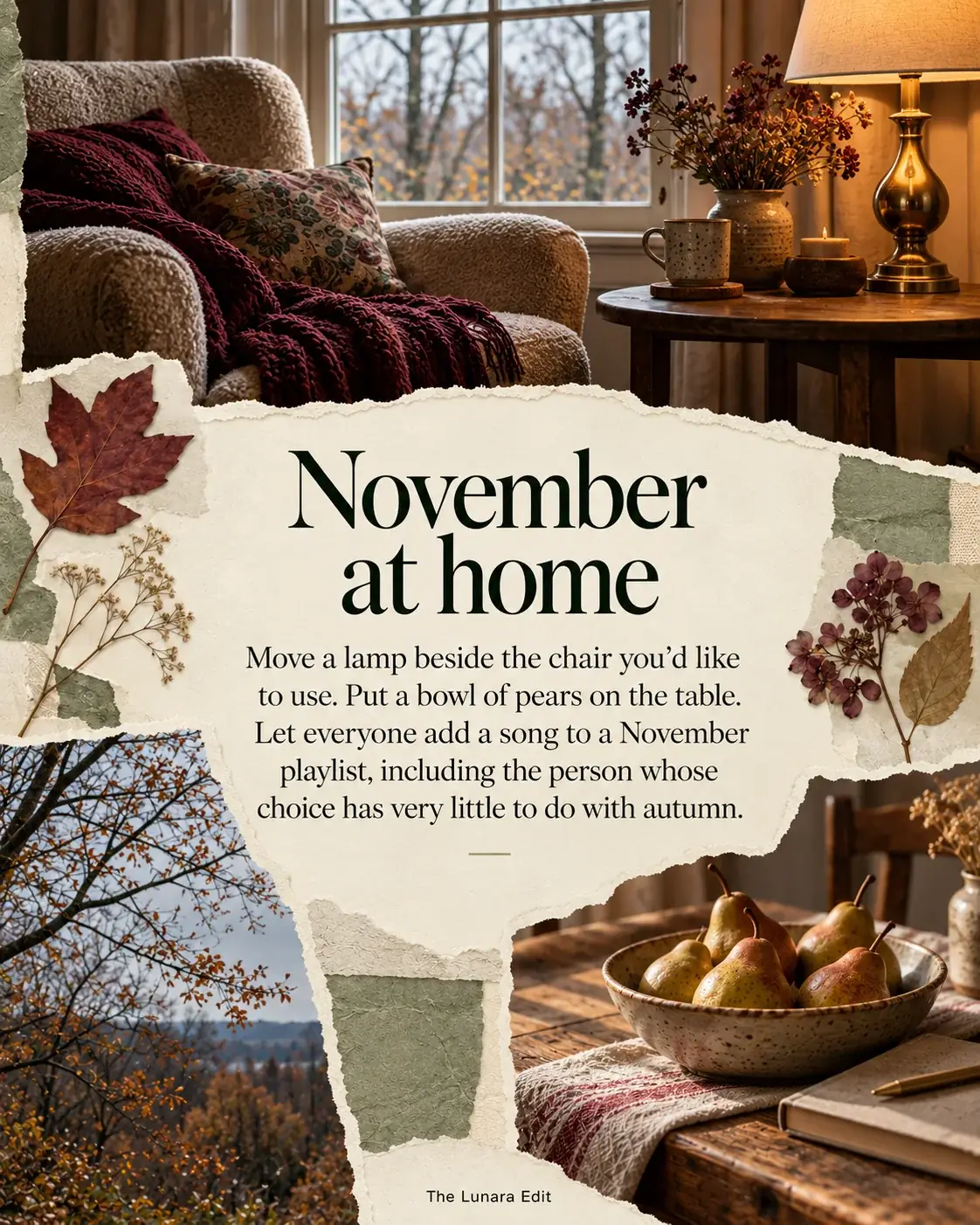
Start with the room where you already spend much of your time, and think about the spot you’d like to use more. Perhaps there’s a chair by the window that would be lovely for reading, but the nearest lamp is on the other side of the room. Move the lamp over, make somewhere to put a mug, and bring the book you’ve been meaning to open within reach. A cushion or a worn quilt can come along too, especially if it makes you more likely to sit down.
If you’d enjoy something seasonal on the table, try a bowl of pears, a branch collected where it’s permitted, or a few paper leaves. Keep the arrangement small enough that it can stay there when the table needs to do its ordinary jobs. Otherwise, you’ll be moving an entire woodland before anyone can put down a dinner plate.
You could also make a playlist for that stretch between finishing work and deciding what to eat. Let everyone add a song so it becomes something you’ve made together, including the person whose choice has very little to do with autumn. That song may turn out to be the one everyone remembers.
Bring a few late-autumn ingredients into the kitchen
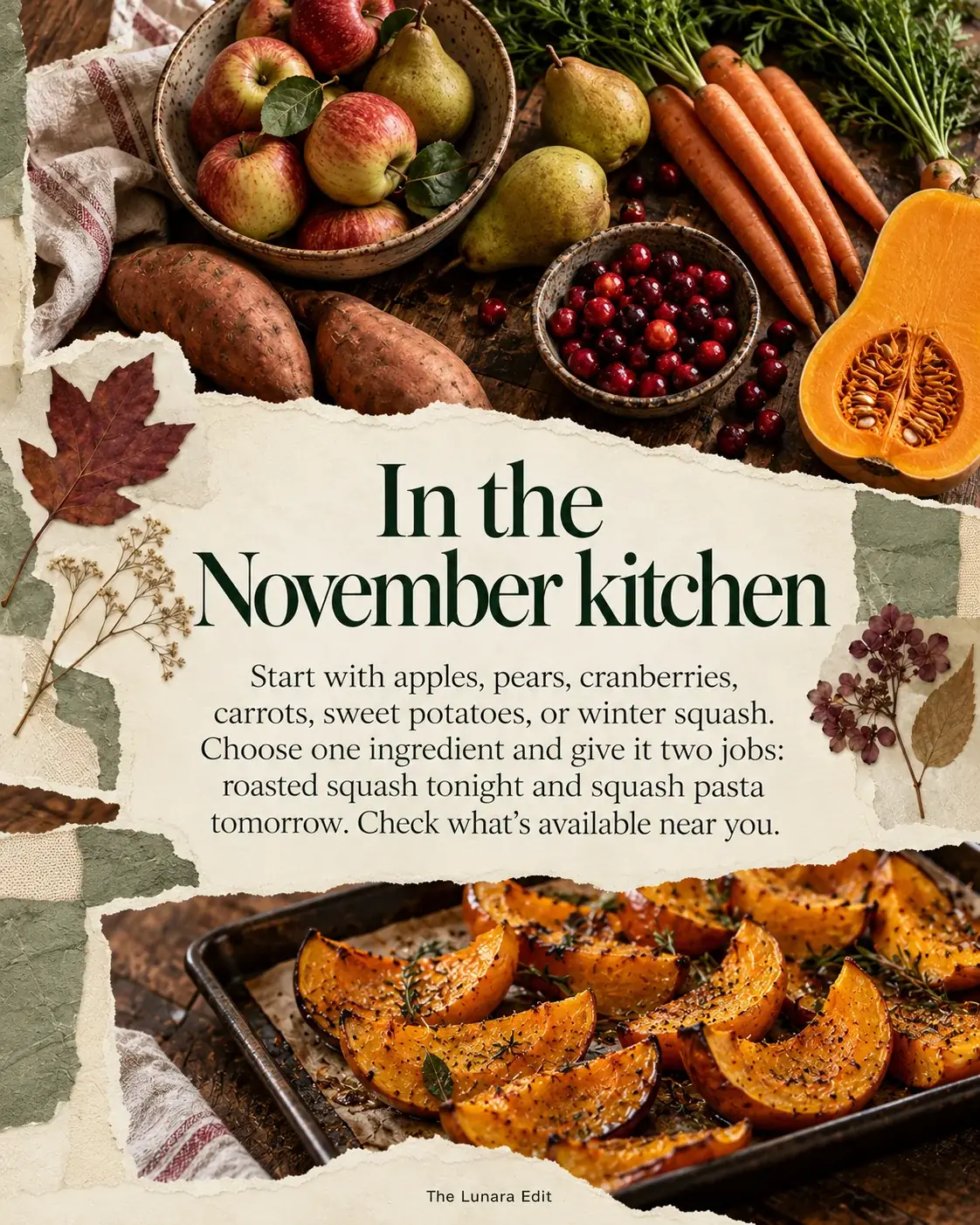
If you’re wondering where to begin with food, apples, pears, cranberries, carrots, sweet potatoes, and winter squash give you plenty to work with. What’s harvested nearby depends on the climate, so have a look at a local market or check the Seasonal Food Guide for your state before planning around a particular ingredient.
Once you’ve chosen something, think about whether you could use it in two meals. You might roast squash for dinner and save some to stir into pasta the next day, or slice pears for toast while keeping a couple to bake later. If you make cranberry sauce, a spoonful can go beside something savory or into plain yogurt.
Have a look at what’s already in the kitchen before adding everything to the shopping list. Frozen vegetables, canned beans, or the apples waiting in the fruit bowl may give you a perfectly good place to start, especially when you’d rather make dinner than go out for another ingredient.
Choose a dinner for the evening you’ll actually have
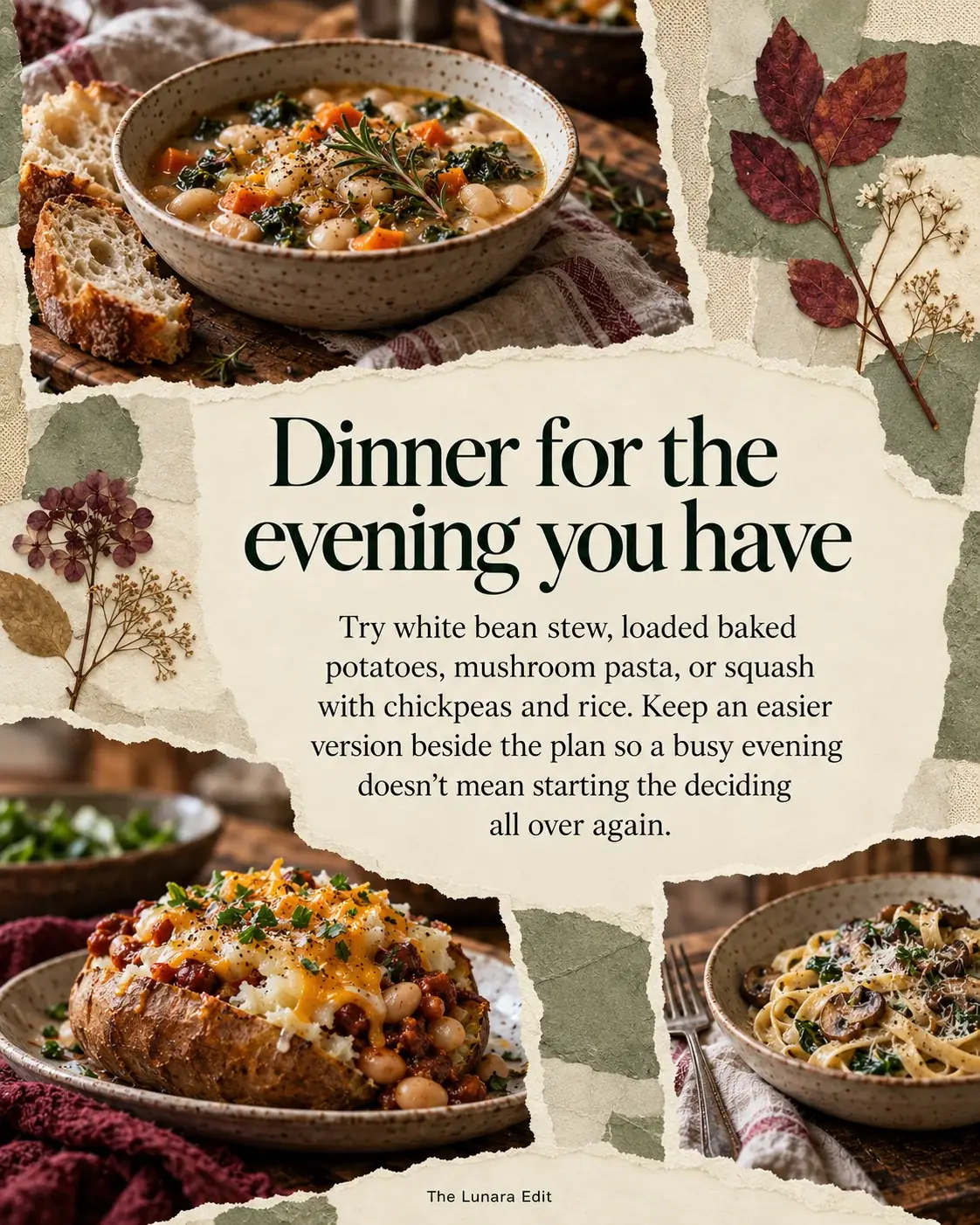
For an evening when you’d enjoy cooking, you could try white bean and rosemary stew, baked potatoes with a few toppings, mushroom and spinach pasta, or roasted squash with chickpeas and rice. Choose one while you’re planning the week, so there’s something to work toward when it’s time to eat.
If other people are helping, give each person a job with a clear finish: grate the cheese, rinse the beans, or put a bowl at each place. An older child might take charge of a familiar side dish while someone else makes the main meal. Choosing the music is a useful contribution too, particularly if the kitchen already has enough people in it.
It also helps to write an easier version beside the dinner you’ve chosen. If everyone’s hungry and you’re already worn out, baked potatoes might become microwave potatoes with beans and cheese, while mushroom pasta might become jarred sauce with frozen spinach. You’ll still have a plan to follow, without having to work out a second dinner from scratch.
Bake pears while dinner is finishing
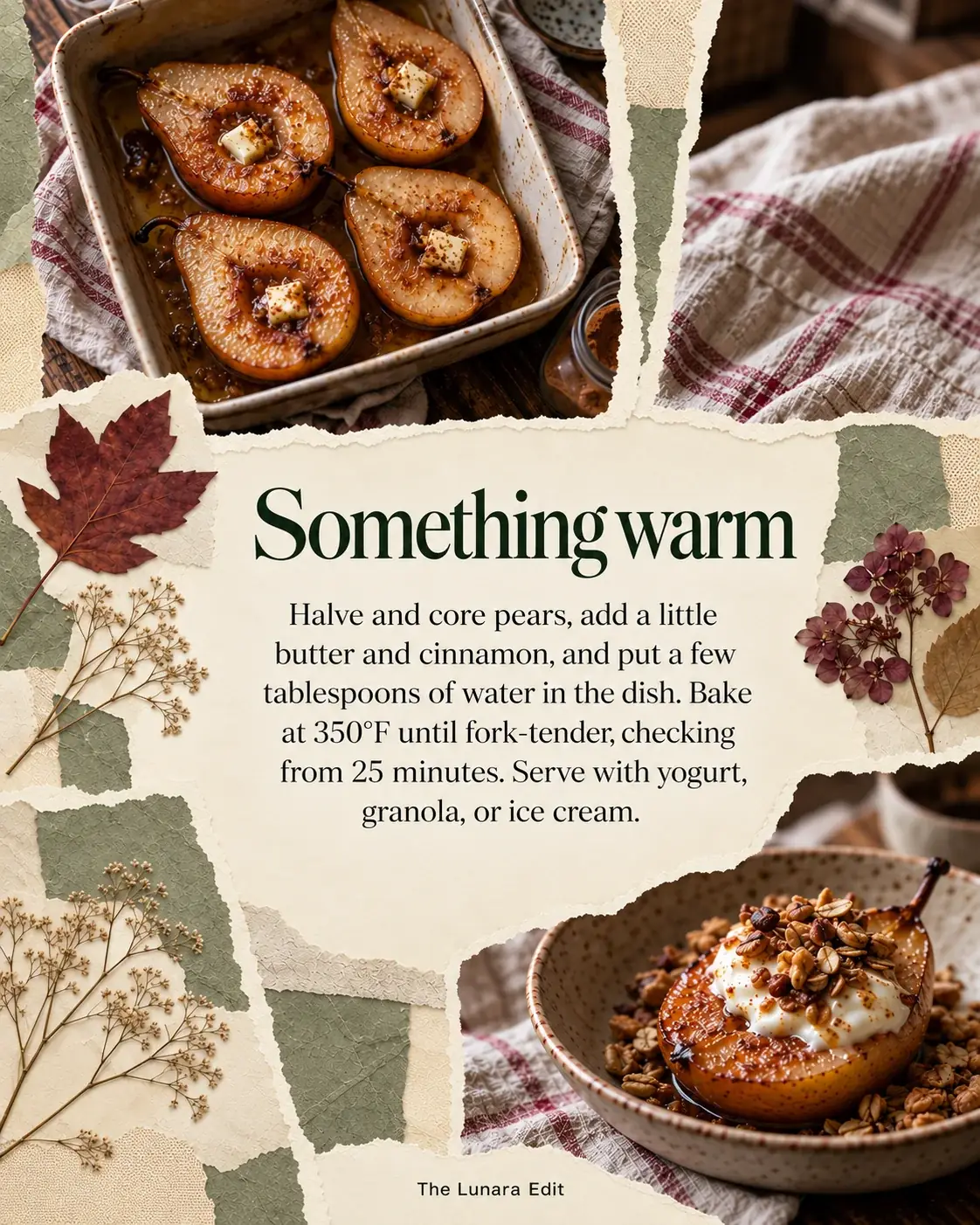
For a small dish of baked pears, halve two ripe pears and scoop out the cores. Set them cut-side up in a baking dish, then put a little butter in each hollow and sprinkle cinnamon over the top. Before the dish goes into the oven, pour a few tablespoons of water into the bottom.
Bake the pears at 350°F, checking from about 25 minutes onward. They’re ready when a fork slips easily into the fruit, so leave firmer pears a little longer if they need it. When you serve them, spoon some of the warm juices over the top and add yogurt, ice cream, or a handful of granola.
If the oven is already full, you could make toast with pear slices and cinnamon instead. Or bring home a bakery pastry, put it on a plate, and sit down with tea, coffee, or cocoa while it’s still warm. There’s a place for that kind of November afternoon here too.
Give a November outing something to notice
Look for the shapes the leaves were hiding
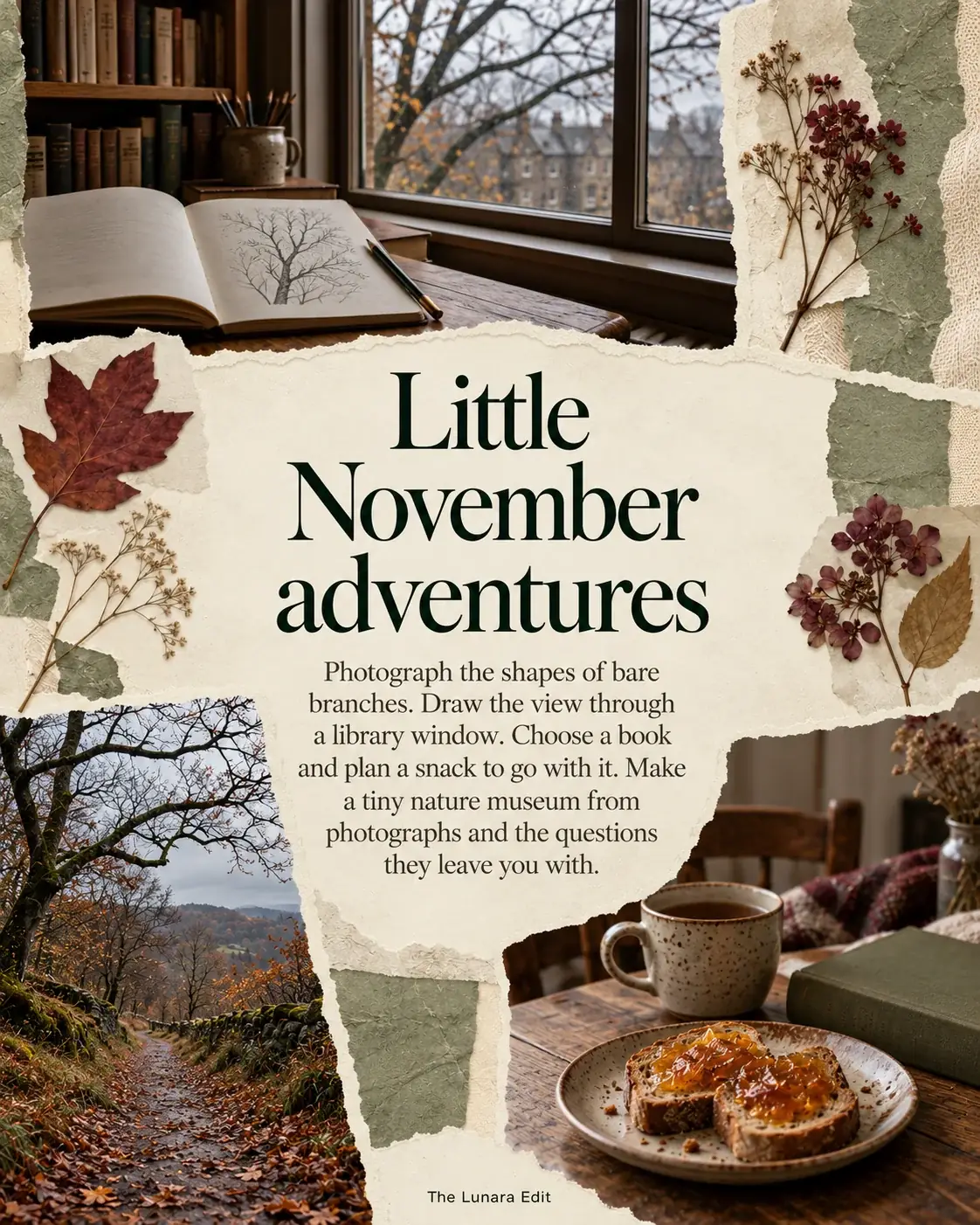
On a familiar route, take a look at the shapes you can see now that there are fewer leaves in the way. Follow the branches with your eyes, then look for seed heads, empty flower stems, and patterns in the bark. Choose three shapes to photograph or sketch. You can do the same thing from an accessible path, a bench, or a window with a view of a tree.
When you look through the pictures afterward, give a few of them very serious titles. “Tree That Has Heard Enough” may deserve a place in the collection, especially if the branches have a particularly exasperated arrangement.
Find a place to sit and draw the view
If you’d like to draw a view but aren’t sure where to start, take a notebook to a library window, a park bench, or a café. Use the window frame or two nearby trees to decide where your picture will end, then draw just what falls inside those edges. Someone who would rather write can describe five details they think another person might miss.
Give a library book a dinner companion
On your next library visit, look for a book with a food, place, or season you’d like to spend time with. Then choose something simple to eat while you read, such as toast and marmalade, a bowl of noodles, or a snack assembled from the cupboard. The food can be part of the story, or simply something you’ll enjoy having beside you.
Make a tiny nature museum without bringing anything home
You can make a tiny nature museum without carrying anything home. Photograph an interesting stone, an empty seedpod, a knot in a tree, or the way leaves have gathered after rain. When you’re back inside, put the photographs on one screen or page and add a label to each. Write where you noticed it and what it made you wonder, so the collection holds your questions as well as the pictures.
Make something you can use again
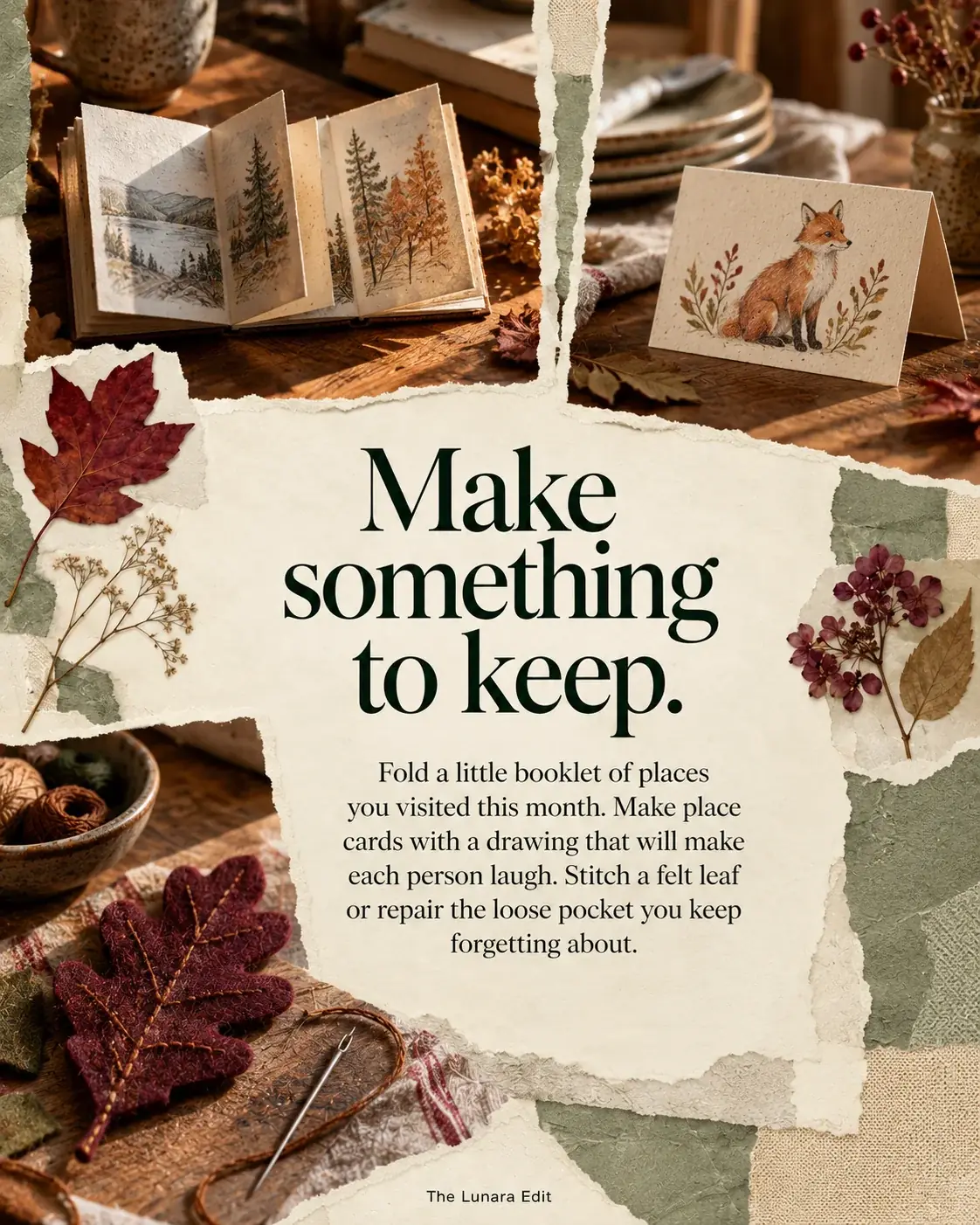
To make a small landscape booklet, fold a sheet of paper in half, then in half again, so the creases divide it into four rectangles. Unfold it and cut along those creases. Stack the four pieces, fold the stack in half, and staple through the middle fold with adult help as needed. You can fill each spread with a place you visited this month or a view you wish you could step into.
For something to use at the table, make a place card with a drawing the person will recognize or find funny. It might be their favorite animal, something from a hobby, or an object that reminds everyone of a particular story. Draw it on a folded scrap of cardstock and write their name underneath, then let them discover it when they sit down.
If you’d rather work with fabric, you could stitch a small felt leaf or repair the loose pocket you keep forgetting about. Put the supplies for that one job together before you begin, and keep them together if you need to stop. That way, coming back to it won’t start with another search for the thread.
Plan an evening with something to do with your hands
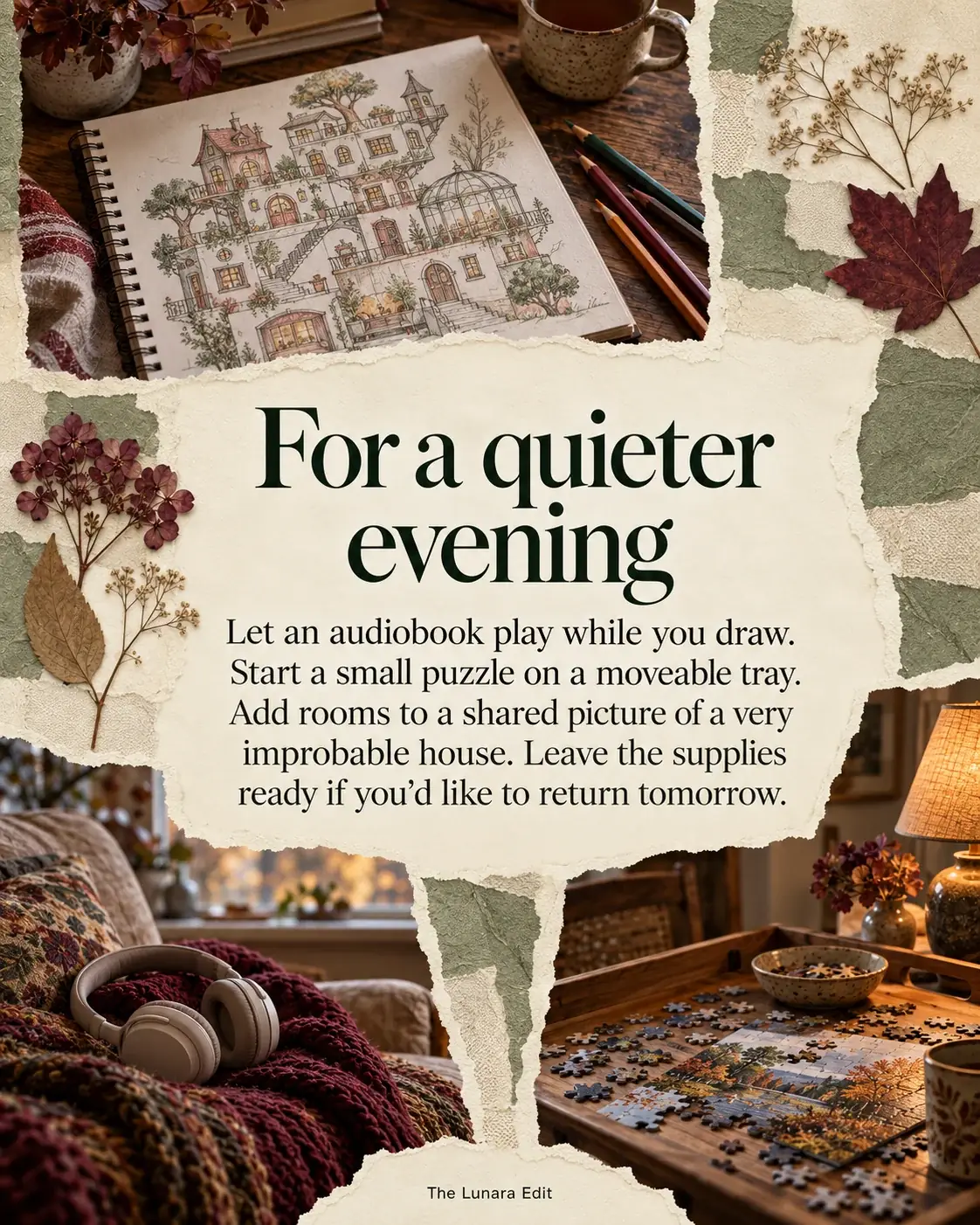
For an evening with something to do while you listen, set out paper and pencils and put on an audiobook. You could each draw your own picture, or pass one sheet around and let everyone add a room to an increasingly improbable house. A small puzzle on a movable tray works well when you want something you can put aside without taking it apart.
If you’re spending the evening on your own, think about where you’d like to stop before you begin: after one page, a few rows of knitting, a sketch, or a chapter. That gives you a little piece to settle into. If you’d like to return tomorrow, leave the materials ready somewhere they can safely stay.
When several people are sharing the room, it helps to choose something they can join for a little while. The drawing can keep growing while someone makes tea or goes to find another book, and a person who wants to sit nearby and listen can do that too.
The November watchlist
If you’d enjoy an evening with Fantastic Mr. Fox, its autumn colors make a lovely match for baked apples or a snack board of crackers, cheese, and fruit. You could put the food together before the film starts, then leave the rest of the evening free for watching.
For Paddington 2, make marmalade toast or put a few sandwiches on a plate. If everyone is comfortable sitting on the floor, spread out a blanket for a picnic; otherwise, bring the plates to the sofa. The sofa is a perfectly respectable picnic location.
If choosing a whole film feels like more of a decision than you want to make, return to an episode of a familiar show while you fold laundry or work on the small project beside you. Check a film’s content and suitability for the people watching, and use whichever rental, library, or streaming option you already have.
Put a few different voices in the reading basket
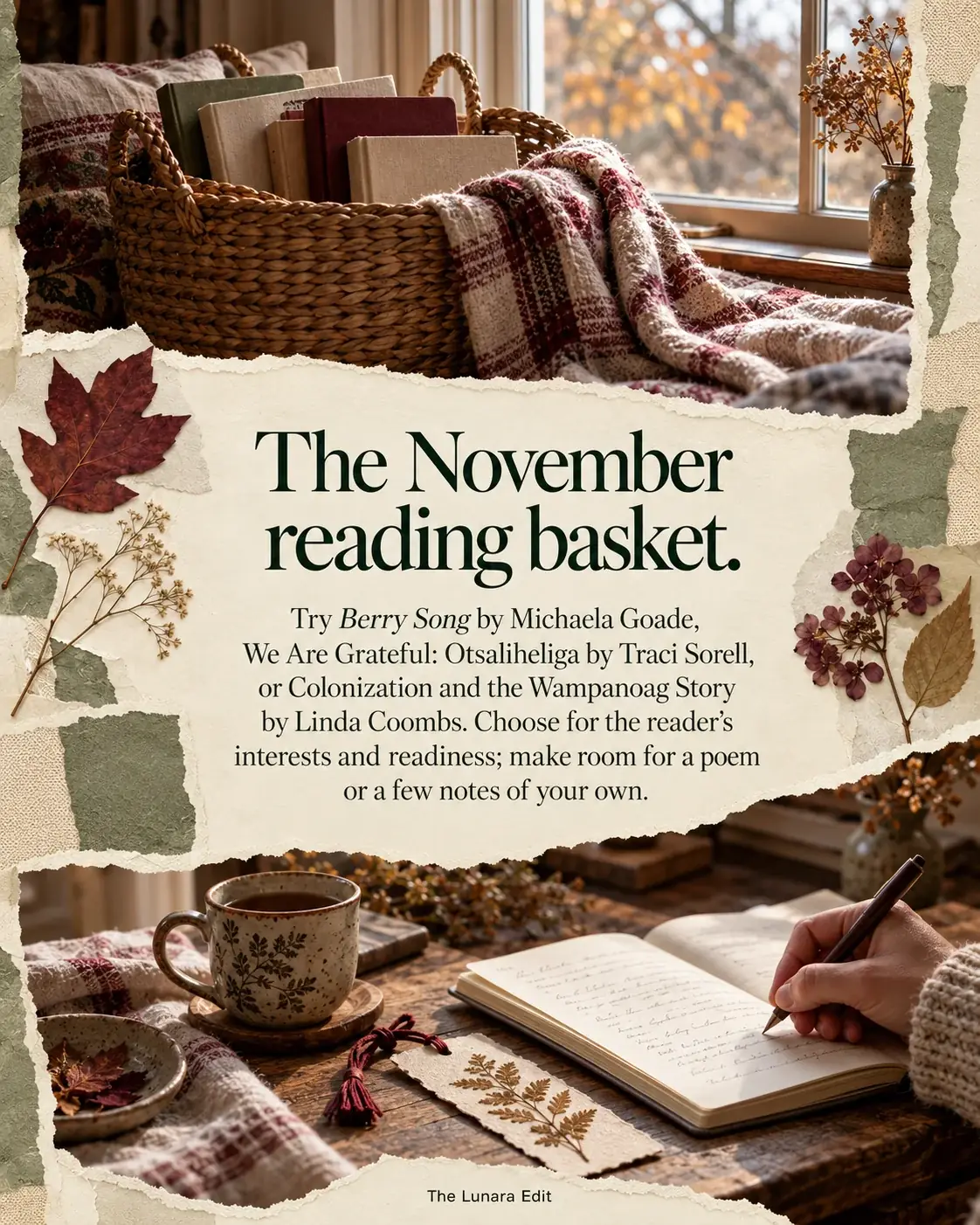
When you’re gathering books for the month, include work by a Native author and take a little time to learn the author’s name and nation. The National Museum of the American Indian’s Thanksgiving reading suggestions include Berry Song by Michaela Goade, We Are Grateful: Otsaliheliga by Traci Sorell, and Colonization and the Wampanoag Story by Linda Coombs. These books serve different readers and purposes, so look through them with the reader’s interests and readiness in mind. A novel or a seasonal poem can sit beside whichever one you choose.
You might keep a notebook in the same basket for the things you want to remember about the month. That could be a question from a walk, something you noticed while reading, or a sentence about an ordinary day. If a younger child has something to add, write down what they tell you or leave room for their drawing.
Make room for a fuller Thanksgiving story
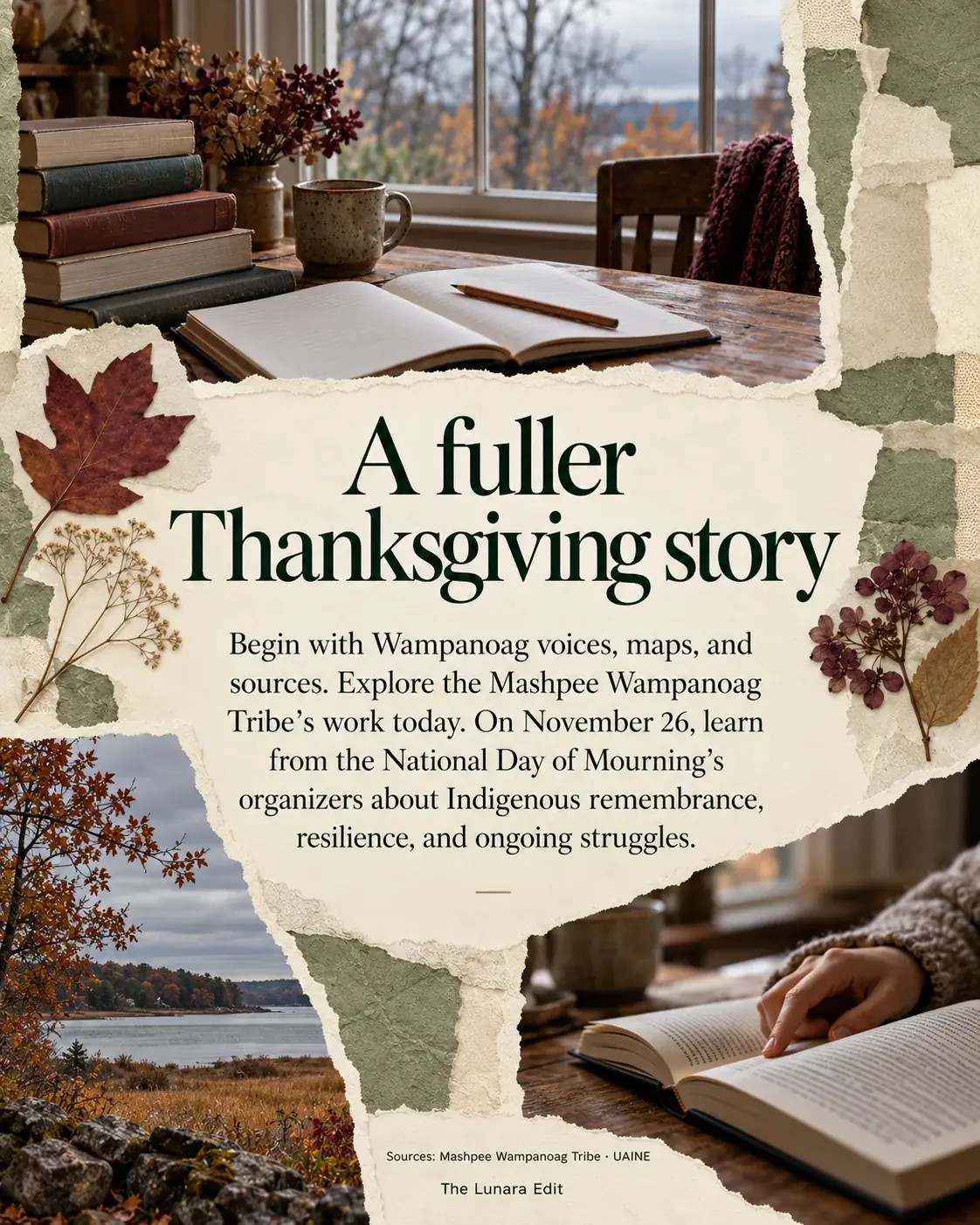
If Thanksgiving is part of your November, spend some time learning about the Wampanoag people whose homeland is central to the story. The National Museum of the American Indian’s “First Thanksgiving” resource brings together Wampanoag perspectives, maps, and historical sources. You could begin by looking at one map together, then read a short section and talk about whose account you’re hearing. Starting with one part gives you something specific to discuss before you move on.
As you learn about the history, make time for what Wampanoag people are sharing now as well. Visit the Mashpee Wampanoag Tribe’s own website and choose something to explore from its language, education, or community news pages.
On November 26, the United American Indians of New England’s National Day of Mourning honors Indigenous ancestors and resilience while confronting genocide, stolen land, and ongoing oppression. Read the organizers’ explanation in their own words, and allow time to talk about what they are asking people to remember and confront.
At your own table, you might ask, “Who helped you through something this year?” and give people time to tell the story behind their answer. Someone may also want to talk about what has been difficult or what they wish were different. If that happens, listen to the answer they’ve given without asking them to find something cheerful in it.
Share one part of a meal
If you’d like some company, invite someone for one part of a meal you’d enjoy sharing. That could be breakfast, dessert, or a bowl of whatever you were already making. A specific invitation helps the other person picture the plan: “Would you like to come over for tea and pear cake on Saturday afternoon?”
For a larger meal, talk through who will do which jobs before the day arrives. Someone could bring bread, someone could clear the table, and someone could pack up the food afterward. Ask about food needs before settling the menu, so people can tell you what would make the meal work for them.
If someone can’t come, ask whether another kind of company would be welcome. You might offer to drop off a portion at an agreed time, have a call while you both cook, or exchange a recipe by message. Choose something you have the capacity to do, then check whether it would be helpful before making the arrangement.
Leave a little help for a busy day
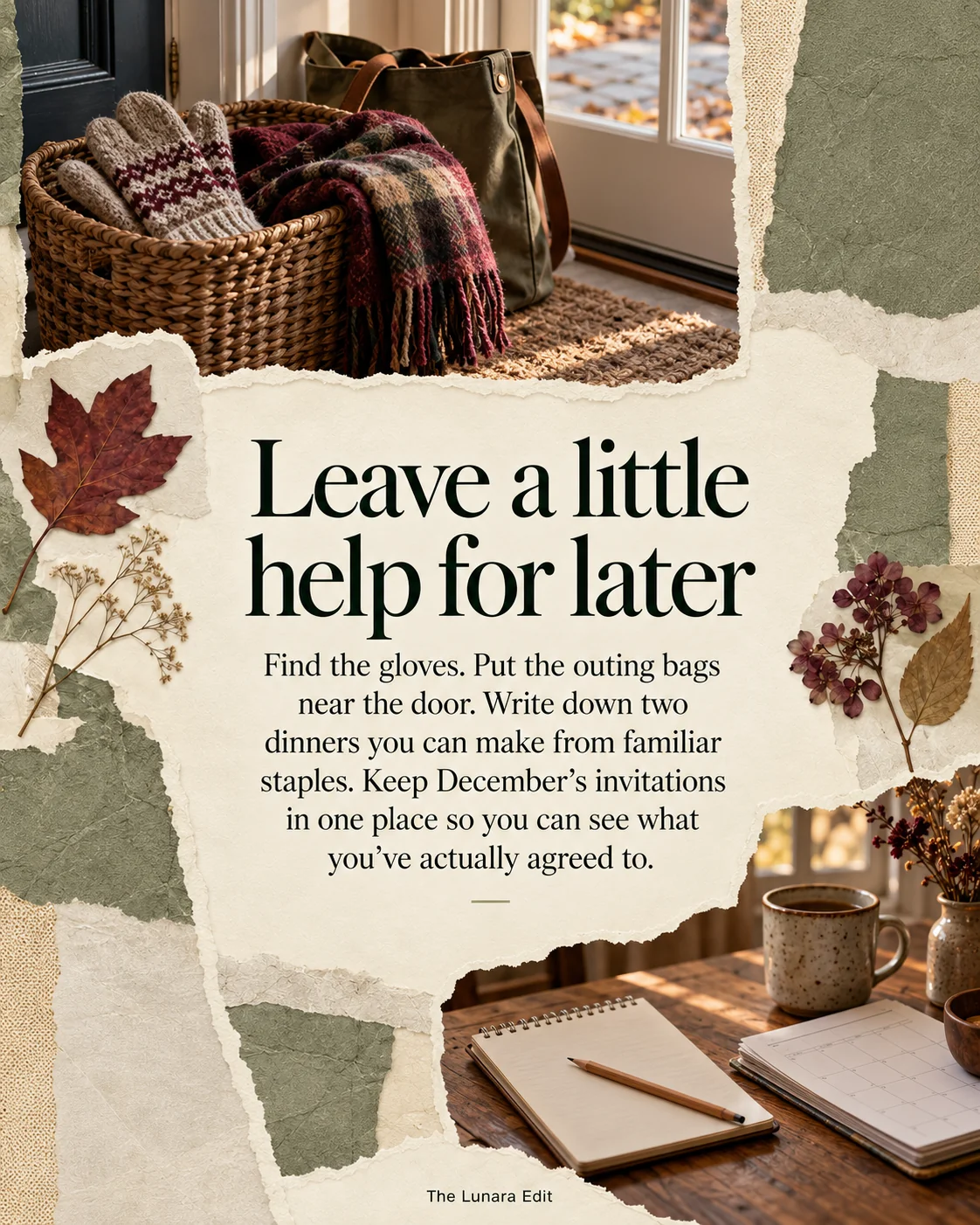
Think about one thing that tends to make a busy morning harder. If it’s finding everyone’s gloves, look for them before the cold morning arrives; if it’s gathering things for an outing, put the bags near the door the night before. You can do something similar with dinner by writing down two meals made mostly from familiar staples and checking what they’re missing before the next grocery trip.
If December invitations are already arriving, keep them in one place while you decide. Mark the plans you’ve actually agreed to, so you can tell the difference between something that sounded nice in a conversation and something that now needs time on the calendar.
While you’re thinking about the week, look for a place to put something you’ve been wanting to do yourself: listen to an album, play a game, take a bath or a walk, or return to the hobby on the shelf. It may be easier to find that time beside a plan you already have, such as after dinner, before the Saturday errands, or while someone else takes a turn with the dishes.
If an evening feels lonely, think about who you’d like to hear from and ask for something specific: “Do you have ten minutes for a call this week?” That gives the other person a clear invitation to respond to, even when neither of you has room to arrange a whole afternoon.
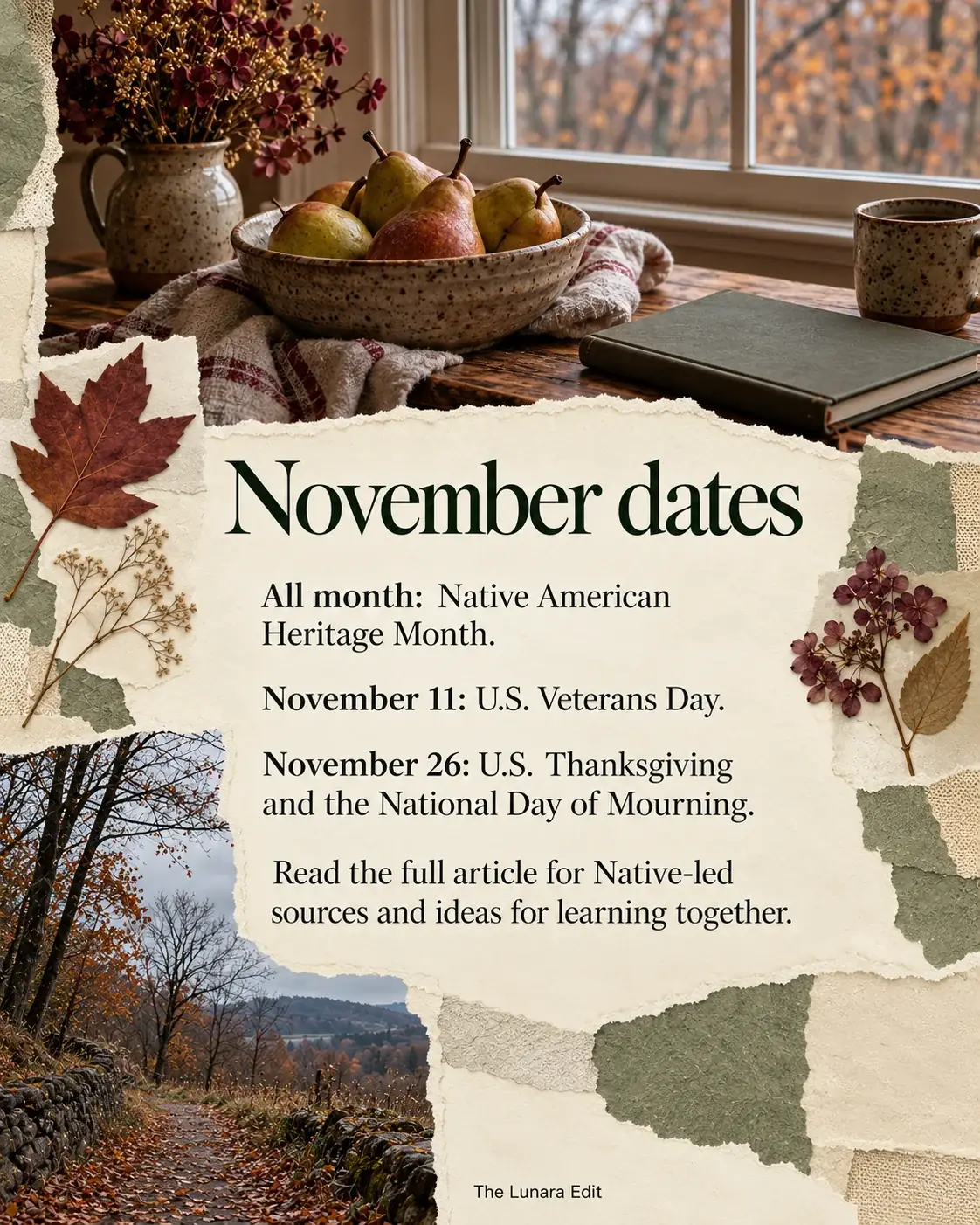
A few November dates to keep in mind
- Throughout November — Native American Heritage Month. Spend time with Native authors, artists, and the work of a named Native nation. Keep those sources in your reading beyond this month.
- November 11 — Veterans Day in the United States. If someone in your life served, ask whether they would welcome a conversation or some company.
- November 26 — U.S. Thanksgiving and the National Day of Mourning. Allow time for the history and Native perspectives alongside any meal or gathering you choose.
What would you like to try?
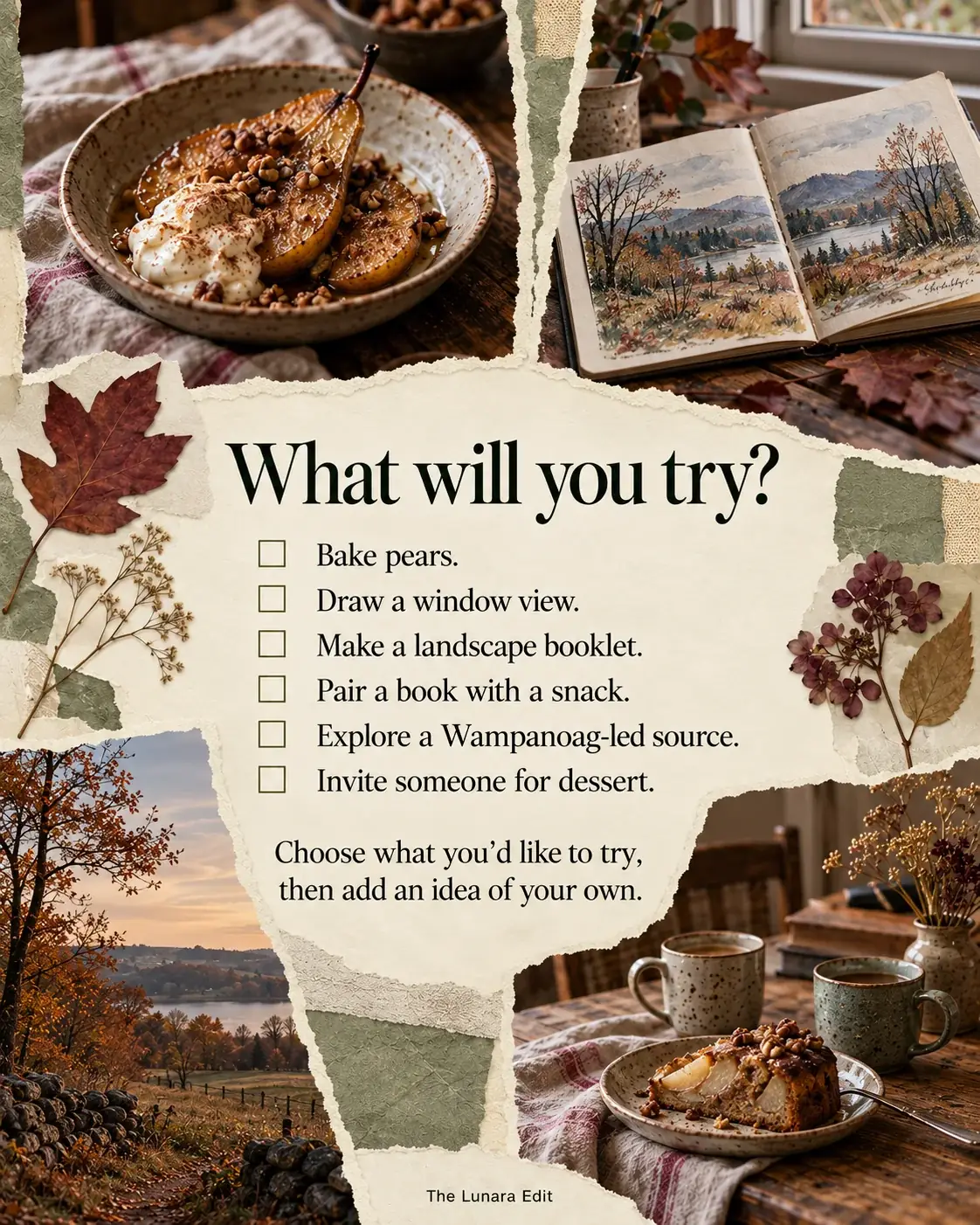
If a few of these ideas sound like something you’d enjoy, select them below. You can choose them one at a time, select all, or clear the list and start again. When you print, only your choices will appear, with empty boxes to check off and space to add an idea of your own.
Choose at least one idea to make your printable list.
A couple of things to talk about: What food or small tradition makes November feel like November to you? As you think about the month ahead, is there a part you’d like to make a little easier?
Sources and further reading
- Seasonal Food Guide, for checking produce by location and time of year.
- National Museum of the American Indian: Rethinking Thanksgiving Celebrations, for the book suggestions and guidance on Native perspectives.
- National Museum of the American Indian: The “First Thanksgiving”: How Can We Tell a Better Story?, for Wampanoag perspectives, maps, and sources.
- Mashpee Wampanoag Tribe, for the Tribe’s own current work and community information.
- United American Indians of New England, for the National Day of Mourning and its November 26, 2026 observance.
- Bureau of Indian Affairs: Native American Heritage Month, for the annual November observance.
- U.S. Office of Personnel Management: 2026 holidays, for November 11 and November 26.
- Searchlight Pictures: Fantastic Mr. Fox, for the film.
- British Council: Paddington 2, for the film.
Browse all fifteen November cards
If you’d like to keep a particular card nearby, open it to read or save at full size. The checklist above is there when you’re ready to choose a few things to try.
Browse all 15 cards